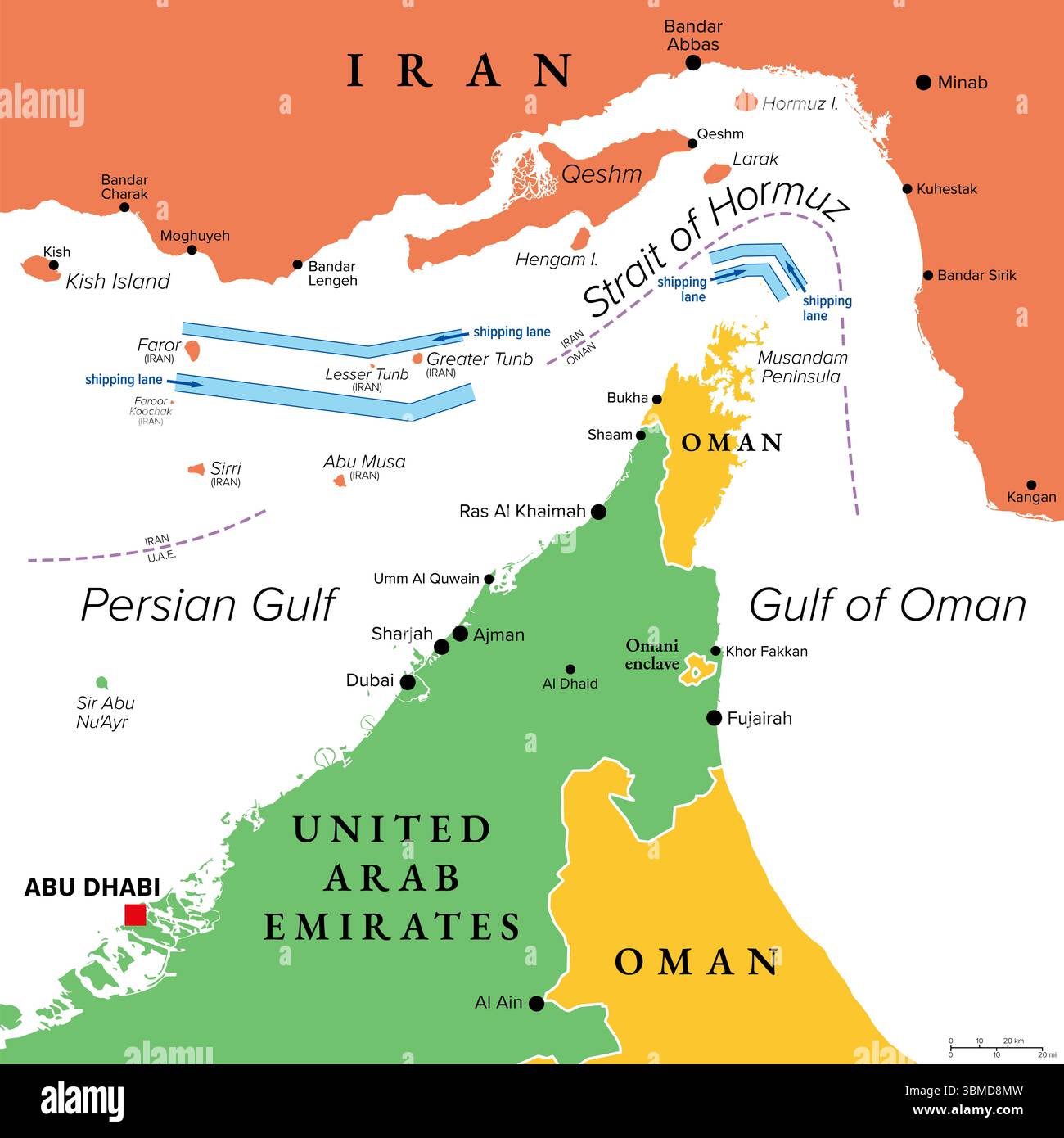
Seventy-seven days into a conflict that has paralyzed the global energy spine, the Strait of Hormuz has transformed from a transit corridor into a geopolitical choke-collar. While President Donald Trump and Chinese leader Xi Jinping attempt to choreograph a "constructive strategic relationship" from the gilded halls of Beijing, the reality on the water remains a jagged mess of naval blockades and "managed transit protocols." The primary query driving global anxiety—whether the world's most vital waterway is truly open—remains unanswered by a simple yes or no. Instead, we are witnessing a selective, state-sanctioned toll system where the price of passage is no longer just insurance premiums, but absolute political alignment.
The optics of the Beijing summit suggest a unified front. Trump claims "we control" the Strait, a bold assertion of American naval supremacy after a month of high-intensity strikes that have reportedly degraded Iran’s conventional capabilities. Xi, meanwhile, emphasizes the necessity of the "free flow of energy." But behind the ceremonial handshakes, a much darker trade-off is being negotiated. China, the world’s largest buyer of Iranian crude, is not just asking for the Strait to open out of a sense of global duty. It is leveraging its position as the only power capable of talking to both the White House and the clerical leadership in Tehran to secure long-term energy discounts and concessions on Indo-Pacific security.
The Myth of Total Maritime Control
Despite Trump’s bravado on Air Force One, the United States does not "control" the Strait in the traditional sense. It manages a precarious blockade. Control implies a predictable environment for commerce, yet current shipping data tells a story of absolute chaos. Since the conflict began on March 4, 2026, global oil production from the Gulf has plummeted by over 10 million barrels per day. Brent crude has danced around the $120 mark, not because the US can’t hit targets, but because Iran’s "mosaic defense" remains lethal.
Tehran has shifted its strategy. Realizing it cannot win a blue-water naval battle, the Islamic Revolutionary Guard Corps (IRGC) has weaponized the geography of the Strait itself. Using "Iranian-managed transit protocols," Tehran is selectively allowing vessels to pass only if they belong to "friendly" nations or those willing to bypass US sanctions. This isn't a blockade in the 20th-century sense; it is a digital and physical filter.
The BRICS Counter-Offensive
While Trump and Xi talk, Iranian Foreign Minister Abbas Araghchi is in New Delhi, working the room at the BRICS summit. His mission is clear: frame the US-led blockade as an illegal act of Western aggression that threatens the economic stability of the Global South. By appealing to India, Brazil, and South Africa, Tehran is attempting to build an alternative economic architecture that ignores the dollar-denominated trade system entirely.
The strategy is working on several fronts.
- Alternative Logistics: Land routes across the Arabian Peninsula through Saudi Arabia and Oman have seen truck traffic surge by 1,000 percent.
- Currency Shifts: Discussions of a BRICS-settled energy currency have moved from academic theory to urgent necessity as India and China look for ways to pay for "distressed" Iranian and Russian barrels without triggering secondary US sanctions.
- Infrastructure Degradation: The cost to restore energy-linked infrastructure in the region is now estimated at $58 billion.
The irony of the current stalemate is that the US military success in "wiping out" conventional Iranian forces has created a power vacuum that the BRICS bloc is more than happy to fill with diplomatic and economic influence.
The Xi-Trump Bargain
What did Xi Jinping actually promise in Beijing? The White House readout claims an agreement that the Strait "must remain open." However, the Chinese version of the same meeting is tellingly silent on Hormuz. It focuses instead on "major international and regional issues" and, crucially, Taiwan.
For Xi, the Iran war is a useful distraction and a powerful lever. He can offer to "moderate" Tehran's behavior—perhaps by convincing them to extend the current shaky ceasefire—in exchange for the US backing off its tech restrictions on semiconductors or reducing its naval presence in the South China Sea. Trump, facing $39 trillion in national debt and an electorate sensitive to $4-per-gallon gasoline, is in a weak position to refuse.
The proposed 20-year freeze on Iran’s nuclear program is the carrot. But as Araghchi noted in New Delhi, the lack of trust is a "main obstacle." Iran has seen how quickly US policy can pivot between administrations. They are not looking for a signature on a piece of paper; they are looking for a structural change in how the global energy market is policed.
The Economic Toll of a "Shaky" Peace
The International Monetary Fund has already warned of a global "adverse scenario" where growth slows to 2.5 percent. This isn't just about gas prices. It's about the systemic collapse of the Gulf Cooperation Council (GCC) economic model. Kuwait, Qatar, and the UAE rely on the Strait for grocery imports as much as energy exports. When QatarEnergy declared force majeure in March, it didn't just hurt the French or German heating markets; it signaled to the world that the era of guaranteed energy security is over.
The US-Israeli combined force may have struck every major missile site, but they cannot bomb a mindset. Iran now views the Strait as co-equal to a nuclear weapon in its deterrence strategy. Even during this ceasefire, the "cleanup work" Trump mentions suggests that the IRGC is already rebuilding underground storage and launch facilities.
A ceasefire that exists only to allow both sides to reload is not a diplomatic breakthrough. It is a tactical pause. The world is waiting to see if the Beijing summit actually results in a "real commitment" or if it is merely a way for two superpowers to manage their own domestic political risks while the Middle East continues to burn.
The definitive truth of Day 77 is that the Strait of Hormuz is no longer a global common. It has been privatized by conflict and politicized by the rivalry between a fading unipolar power and an emerging multipolar bloc. Any vessel entering those waters now carries more than cargo; it carries the weight of a new world order where the rules of the sea are written in Beijing and Tehran as much as they are in Washington.
The next move will not happen in a naval theater. It will happen in the central banks of New Delhi and Shanghai, where the decision to finally decouple from the petrodollar will be made, triggered by the very blockade intended to preserve American influence.