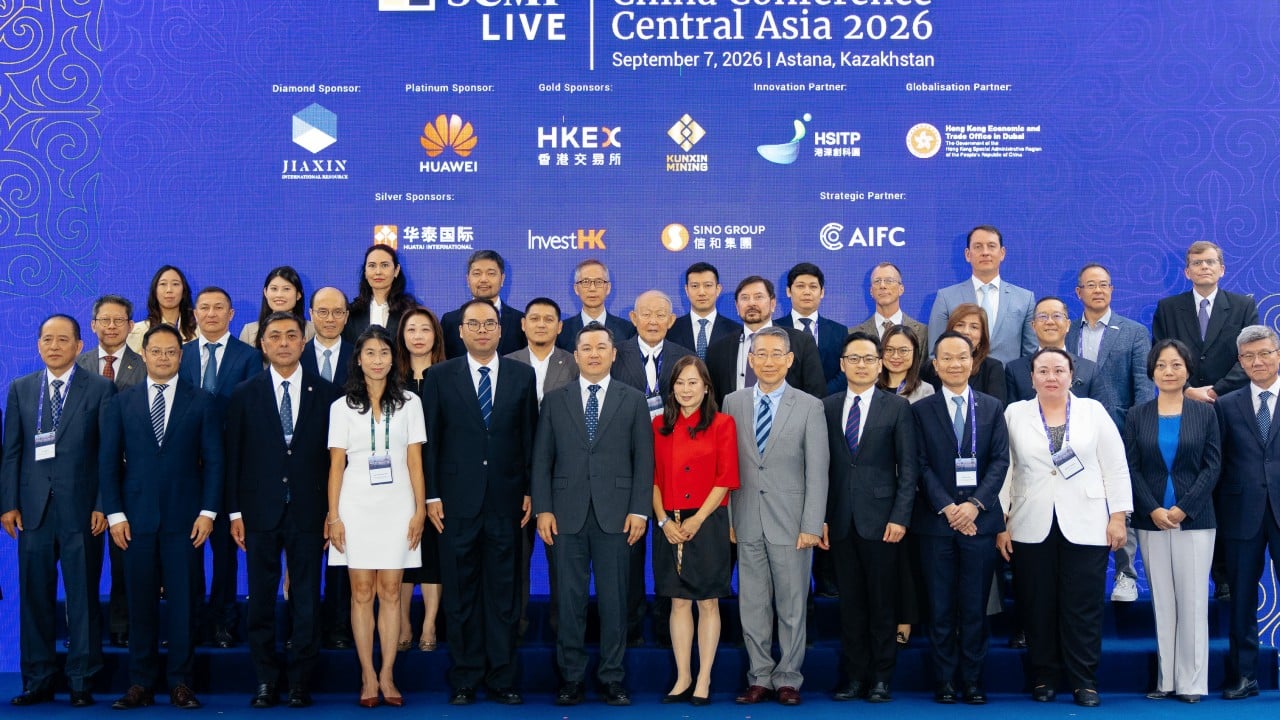
Hong Kong is positioning itself as a trusted partner to drive Central Asia growth through the Belt and Road Initiative, attempting to transform its status from a domestic financial hub into an international connector for post-Soviet energy and trade economies.
Money flows where risk is managed. For decades, the financial machinery inside the Special Administrative Region operated on a simple formula: Western capital, predictable common law, and an open gateway to mainland manufacturing. That formula has fractures. Western institutions are retreating, compliance costs have spiked, and local authorities are desperately searching for alternative horizons. Enter the landlocked expanse of Central Asia. Kazak oil, Uzbek agriculture, and Turkmen gas represent an enormous frontier of untapped capital requirements. Hong Kong wants to intermediate this wealth, acting as the corporate treasury and dispute-resolution center for projects stretching from Almaty to Tashkent.
Yet reality rarely matches the press releases issued from government headquarters.
The Structural Impediment of Capital Controls
Beijing holds the ultimate keys to any cross-border financial expansion. While local officials pitch the territory as an independent facilitator, mainland China maintains strict capital controls that dictate how renminbi and foreign currencies move across the border. Central Asian states want liquidity that can move quickly, convert freely, and hide safely from geopolitical crossfire.
Consider a hypothetical project involving a Kazakh mining consortium looking to raise debt. They need deep pools of capital, predictable arbitration, and minimal political interference. Hong Kong offers the arbitration through its respected common law legal framework. But the capital pools are increasingly tethered to mainland banking directives. When Beijing tightens outflows to protect its own currency reserves, Hong Kong's ability to act as an independent financial dynamo diminishes instantly.
Local leadership talks up bilateral trade agreements, visa-free travel memorandums, and cultural exchanges. These are diplomatic cosmetics. They do nothing to solve the fundamental friction of currency convertibility. Kazakh businessmen do not keep their primary reserves in Hong Kong dollars if those dollars are perceived as downstream proxies for the yuan, especially when Western secondary sanctions loom over any institution dealing heavily with Eurasian transit corridors.
Logistics on Paper Versus Concrete on the Ground
Trade requires physical movement. When officials sign memorandums of understanding regarding supply chain cooperation, they rarely mention the geographical and infrastructural bottlenecks. Central Asia is surrounded by mountains, deserts, and heavily sanctioned neighbors like Russia and Iran.
Goods moving from Kazakhstan to a container ship bound for global markets face an administrative gauntlet. Rail gauges change at borders. Customs declarations take days. Transparency is notoriously low. Hong Kong excels at paperwork, electronic invoicing, and maritime insurance, but none of these white-collar services solve a bottleneck at a freezing border crossing in Khorgos.
Traders operating in these corridors know the score. They rely on informal networks, localized corruption mitigation, and state-backed Russian logistics routes. Hong Kong corporate lawyers sitting in air-conditioned towers in Central cannot draft away the physical and geopolitical realities of moving freight across the Eurasian steppe.
"You can register a holding company in Admiralty in ten minutes," a veteran trade finance executive told me over coffee, requesting anonymity to speak freely. "Good luck getting your money back out of a joint venture in Bishkek when the local political winds shift."
The Sanctions Shadow
Geopolitics casts a long, dark shadow over these grand economic ambitions. Western intelligence agencies are watching the trade data between Chinese territories and Central Asian republics with hawk-like intensity. A sudden, unexplained spike in shipments of dual-use electronics, microchips, and heavy machinery from Hong Kong to Kyrgyzstan or Kazakhstan immediately triggers red flags in Washington and Brussels.
Beijing views Central Asia as its backyard, shielded from Western naval blockades and maritime chokepoints like the Malacca Strait. Rail lines running through Xinjiang and Kazakhstan represent the ultimate strategic safety valve for Chinese energy and commerce. Hong Kong is being drafted into this grand strategy whether its international business community likes it or not.
The danger for the city lies in over-compliance. If international banks operating in the territory decide that the compliance risk of clearing funds for Central Asian resource projects is simply too high, the entire bridge collapses before the first brick is laid. Western financial institutions still clear the vast majority of international transactions. They set the rules of the road. Ignoring them to chase speculative Eurasian growth is a gamble few boardrooms are willing to take.
The Talent Deficit
A financial center is only as good as its people. Hong Kong has suffered a profound brain drain over the past five years, losing thousands of compliance officers, international lawyers, and seasoned trade financiers to Singapore, London, and Dubai.
Who is going to run these complex cross-border transactions? Local graduates are increasingly steered toward mainland integration, while international talent hesitates to plant roots in an environment where the legal boundaries continue to shift. Central Asian markets require specialized knowledge of Russian-influenced legal systems, Turkic languages, and energy sector project finance. This expertise does not currently exist in abundance within the local labor pool.
Importing talent from the mainland helps bridge the gap technically, but it fails to reassure international investors who are looking for a jurisdiction completely divorced from Beijing's direct administrative apparatus. The pitch falls flat when the people structuring the deals look and act like extensions of state-owned enterprises from Shenzhen or Shanghai.
What Real Integration Looks Like
If this initiative is to move beyond mere political theater, several harsh truths must be confronted.
First, currency mechanisms must be decoupled from mainland restrictions, or the city must accept that it is merely a domestic clearing house rather than an international hub. Second, compliance frameworks must withstand Western scrutiny without snapping under pressure. Third, the business community must stop pretending that signing memorandums equals moving merchandise.
Markets do not care about slogans. They care about yield, security, and the rule of law. Until Hong Kong can guarantee that a contract signed in Central Asia will be honored without political interference from either local warlords or mainland commissars, the Eurasian expansion will remain what it is today: a glossy presentation deck looking for a miracle.
The overland trains keep rolling toward Europe through the northern steppes, bypassing the southern maritime ports entirely. Hong Kong is watching from the edge of the map, trying to find a way onto a train that left the station long ago.