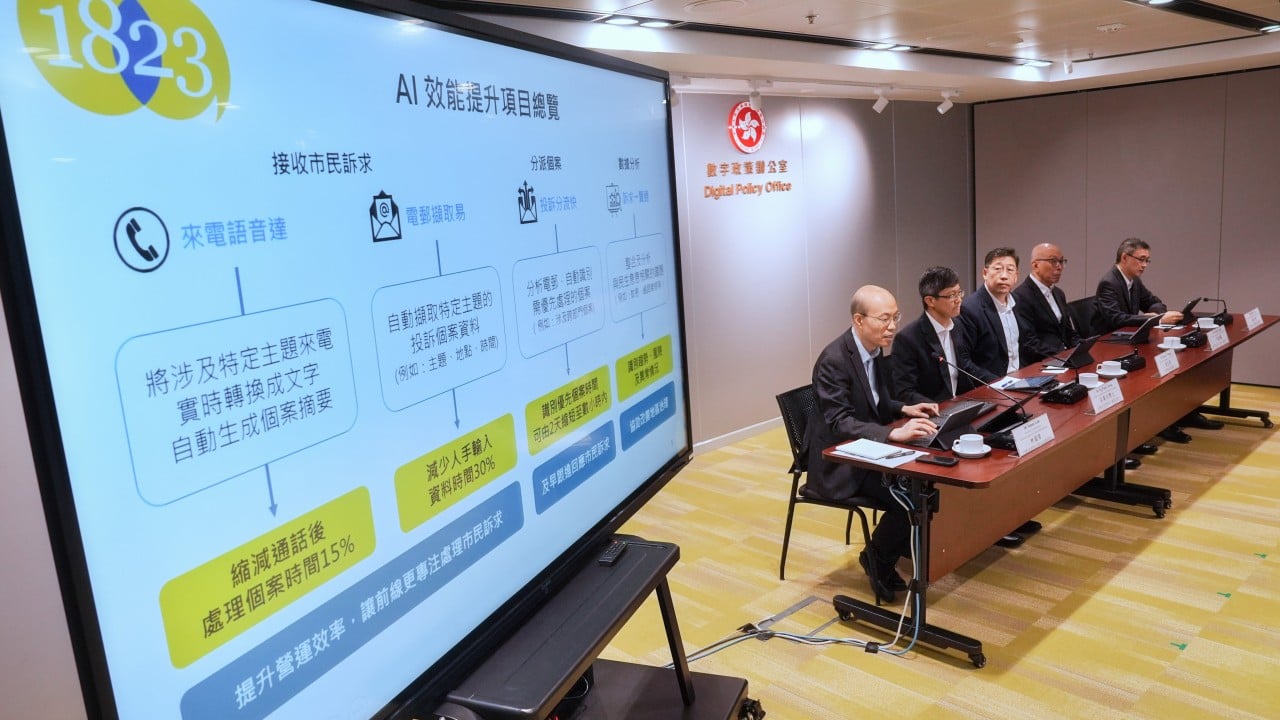
Public hotlines are notoriously frustrating. You call, wait on hold for forty minutes, and get passed between three different government departments before someone hangs up. Hong Kong's 1823 citizen enquiry service handles millions of these headaches every single year. Now, the government wants to overhaul the system using machine intelligence. By the end of the year, artificial intelligence will vet public inquiries on the 1823 platform.
Most people dismiss this as standard bureaucratic tech-speak. That's a mistake. When a major municipal hotline rolls out automated vetting at scale, it shifts how millions of residents interact with local administration. Let's look at what this actually means for everyday users, why the administration is pushing this now, and where things could easily go sideways.
The Reality of Managing Millions of Public Inquiries
If you've ever dialed 1823 in Hong Kong, you know the volume is staggering. Citizens call about everything. Blocked drainage pipes, noisy construction sites, stray animals, messy public transport schedules, and ambiguous tax policies all land in the same queue.
Handling this volume manually breaks human customer service agents. Burnout is high. Response times fluctuate wildly depending on seasonal complaints like typhoon warnings or sudden policy rollouts.
The government isn't adopting automated vetting just to look modern. They are drowning in unstructured data. Thousands of emails, web forms, and voice transcripts flood the system daily. Human operators spend half their shifts categorizing complaints, routing them to the right bureau, and checking if the caller already submitted the exact same ticket last Tuesday.
Automating the initial triage sounds simple on paper. In practice, municipal text is messy. People use slang, mix Cantonese and English mid-sentence, misspell street names, and vent raw frustration instead of stating facts. Teaching a machine to parse an angry message about illegal parking in Mong Kok requires serious natural language processing muscle.
How the AI Vetting Works Behind the Scenes
The upgrade targets the vetting and classification stage. When a public inquiry enters the 1823 ecosystem, the system reads, categorizes, and assesses it before a human ever opens the file.
The software scans for specific keywords, detects the emotional tone of the sender, and matches the query against historical resolution data. If you submit a complaint about a leaking water pipe on a public sidewalk, the tool instantly tags it for the Drainage Services Department, attaches the geographic coordinates, and rates the urgency based on safety hazards.
Incoming Query -> AI Semantic Parsing -> Department Routing -> Priority Tagging -> Human Review
This pipeline cuts down the sorting phase from hours to milliseconds. But speed introduces risk. Machines lack common sense. If a citizen uses sarcastic phrasing or regional idioms, an automated filter might misinterpret a high-priority safety warning as a low-priority query, or vice versa.
That is why human oversight remains critical. The end-of-year rollout doesn't mean robots are running the entire show. It means the software acts as an aggressive filter, sorting the noise so human agents can focus on solving actual problems.
What Other Cities Can Learn From Hong Kong
Municipal tech upgrades usually fail because they ignore user behavior. Cities love buying expensive enterprise software that looks great in PowerPoint decks but crashes when real citizens try to use it.
Hong Kong's approach with the 1823 platform relies on an existing, highly centralized hub. Because a massive portion of municipal feedback already flows through this single channel, the government has a clean, centralized dataset to train its models. Smaller cities with fragmented departments can rarely pull this off because their data sits in isolated silos.
Still, transparency remains a major hurdle. When an algorithm decides your complaint isn't urgent enough to warrant immediate attention, you deserve to know why. If the 1823 platform fails to explain its automated decisions clearly, public trust will evaporate quickly. Citizens hate black boxes, especially when those boxes control municipal services they pay for through taxes.
Privacy Concerns and Data Governance
Whenever a government agency introduces automated data processing, privacy advocates get nervous. Where do these text logs go? Who trains the models? Are third-party contractors skimming local communications to improve proprietary large language models?
The Hong Kong government faces strict scrutiny regarding data security. Public inquiries often contain sensitive personal information, including Hong Kong Identity Card numbers, medical details, financial grievances, and private housing disputes.
To keep this system credible, authorities must enforce local data residency rules and restrict external vendor access. If citizens suspect their complaints are feeding foreign commercial algorithms, participation will drop. Trust is fragile. Once broken in public administration, it takes decades to rebuild.
Moving Forward With Municipal Automation
The push to embed machine intelligence into the 1823 platform by the end of the year marks a turning point for civic tech in Asia. It proves that massive bureaucratic engines can adopt agile software tools if forced by sheer operational necessity.
Expect initial hiccups. Automated systems will miscategorize inquiries during the first few weeks. Call centers will field complaints about robotic misinterpretations. That is normal friction in any major technological transition.
If you interact with local government services in Hong Kong, keep your submissions clear, concise, and factual. Avoid overly poetic language or heavy slang when logging tickets. Clear inputs help the algorithms route your issue faster, ensuring it reaches the right desk without unnecessary delays. Watch how the system handles your next request, and don't hesitate to demand human intervention if the automated response misses the mark.