The rain over New Orleans doesn’t just fall; it hangs. It turns the asphalt of the I-10 into a slick, charcoal mirror that reflects the neon signs of the city and the high-beam anxieties of every driver trying to make it home. Most people on that road are worried about hydroplaning or missing their exit. They aren't looking for a "slammer."
A slammer is a professional. In the underworld of Louisiana insurance fraud, the slammer is the person behind the wheel of a disposable sedan, eyes glued to the side-view mirror, waiting for the silver grill of a Peterbilt or a Kenworth to loom too close. It’s a game of high-stakes chicken where the goal is to lose. You want the impact. You want the whiplash. Most importantly, you want the police report.
For years, this wasn't just a series of random accidents. It was an industry. It was a factory line where the raw material was a staged collision and the finished product was a multi-million dollar settlement check. At the end of that line stood the men who signed the paperwork: the attorneys.
The Anatomy of a Setup
Consider a hypothetical driver named Elias. Elias is an owner-operator. His truck is his mortgage, his daughter’s college fund, and his identity. He’s hauling fifty thousand pounds of freight through the Big Easy, keeping a safe distance, following the rules. Then, a beat-up Toyota Camry cuts sharply into his lane. The brake lights flare.
There is the sickening crunch of reinforced steel meeting cheap plastic. Elias feels his heart drop into his stomach. He’s thinking about his insurance premiums. He’s thinking about his commercial driver’s license.
What Elias doesn't know is that the passengers in that Camry are already rehearsing their lines. They have been "recruited" by a "spotter." Before the glass has even finished settling on the pavement, a phone call is made. Not just to an ambulance, but to a specific law office.
This is where the cold facts of the federal indictment against New Orleans attorneys Danny Patrick Keating Jr. and others begin to bleed into the reality of the American legal system. The scheme was elegant in its cruelty. Between 2015 and 2020, more than fifty "accidents" were staged with tractor-trailers. The "slammers" would intentionally cause the wrecks, then hop out of the car and swap seats with a "passenger" so the person driving—the one who actually knew how to hit a truck safely—wouldn't be on the police report.
The Invisible Tax on the Table
When we talk about insurance fraud, the numbers often feel abstract. We hear about "millions of dollars" and our eyes glaze over. We think it’s a victimless crime against a billion-dollar corporation with deep pockets.
It isn't.
Every time a fraudulent settlement is paid out, the cost is distributed among the rest of us. It’s the "Louisiana Tax." It’s why a mother in Metairie pays some of the highest car insurance premiums in the United States. It’s why a small trucking company goes under because they can no longer afford to keep their fleet on the road. The money doesn't come out of a vacuum; it comes out of the grocery budgets and the savings accounts of every honest person with a driver's license.
Keating wasn't just filing papers. He was the architect of a fiction. He worked with a man named Damian Labeaud, who acted as the "point man" for the collisions. Labeaud would find the trucks, orchestrate the hits, and then funnel the "clients" to Keating’s firm.
The attorneys knew. That is the detail that sticks in the throat. They weren't being misled by dishonest clients; they were coaching them. They were paying the spotters. They were directing the cast of this morbid theater. In some cases, they even encouraged their "clients" to undergo unnecessary medical surgeries—to literally go under the knife—just to inflate the value of the personal injury claim.
The Weight of the Gavel
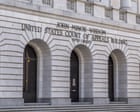
The courtroom in New Orleans is often a place of heavy silence. When the federal prosecutors laid out the evidence, the narrative of the "neighborhood lawyer" fighting for the little guy evaporated.
The FBI and the U.S. Attorney’s Office dubbed the investigation "Operation Glass House." It was a fitting name. The entire structure of these legal practices was built on a transparency that they thought no one would ever look through. They banked on the chaos of the road. They relied on the fact that truck drivers are often from out of town, tired, and easy to blame because of the sheer size of their vehicles.
Keating eventually pleaded guilty to conspiracy to commit mail and wire fraud. He admitted to his role in a scheme that netted millions. But the guilty plea is only a partial ending.
The real damage is the erosion of trust. When a person is actually hurt in a car accident—when they are truly suffering and need the legal system to protect them—they now walk into a room where they are viewed with immediate suspicion. The "slammers" didn't just steal money; they stole the benefit of the doubt from every future victim.
The Long Road Home
Imagine Elias again. He isn't hypothetical anymore; he is the composite of dozens of drivers whose lives were upended by these staged wrecks. After the accident, he lost his job. His company couldn't justify the risk. He spent two years in a fog of litigation, being grilled by attorneys who knew the accident was a lie but treated him like a criminal anyway.
He sits at his kitchen table, looking at a stack of bills, wondering how a fifteen-second encounter on a rainy highway could dismantle a twenty-year career.
The attorneys who orchestrated these plots didn't see Elias. They saw a "deep pocket" attached to a 18-wheeler. They saw an opportunity to exploit a system designed for justice and turn it into a slot machine that always hit the jackpot.
The crackdown on the New Orleans staging ring has resulted in dozens of convictions, from the drivers to the recruiters to the lawyers themselves. It is a massive victory for federal investigators, but the scars on the industry remain. The dashboard cameras you see in almost every truck today? Those aren't there for the scenery. They are there because the road is no longer just a way to get from point A to point B.
It’s a crime scene waiting to happen.
The rain continues to fall on the I-10. The trucks continue to roll, their engines humming a low, steady rhythm against the damp air. The drivers are more cautious now. They watch the cars that hover in their blind spots. They wait for the sudden swerve, the screech of tires, and the shadow of a ghost trying to break their lives for a payday.
Somewhere in a federal prison, a man who once wore a thousand-dollar suit and argued for "justice" is learning the true cost of a staged collision. The ledger is finally being balanced, but for the drivers who were pushed off the road, the debt can never be fully repaid.
They are still out there, gripping the wheel a little tighter than they used to, watching the rearview mirror for the next person trying to crash their way to a fortune.