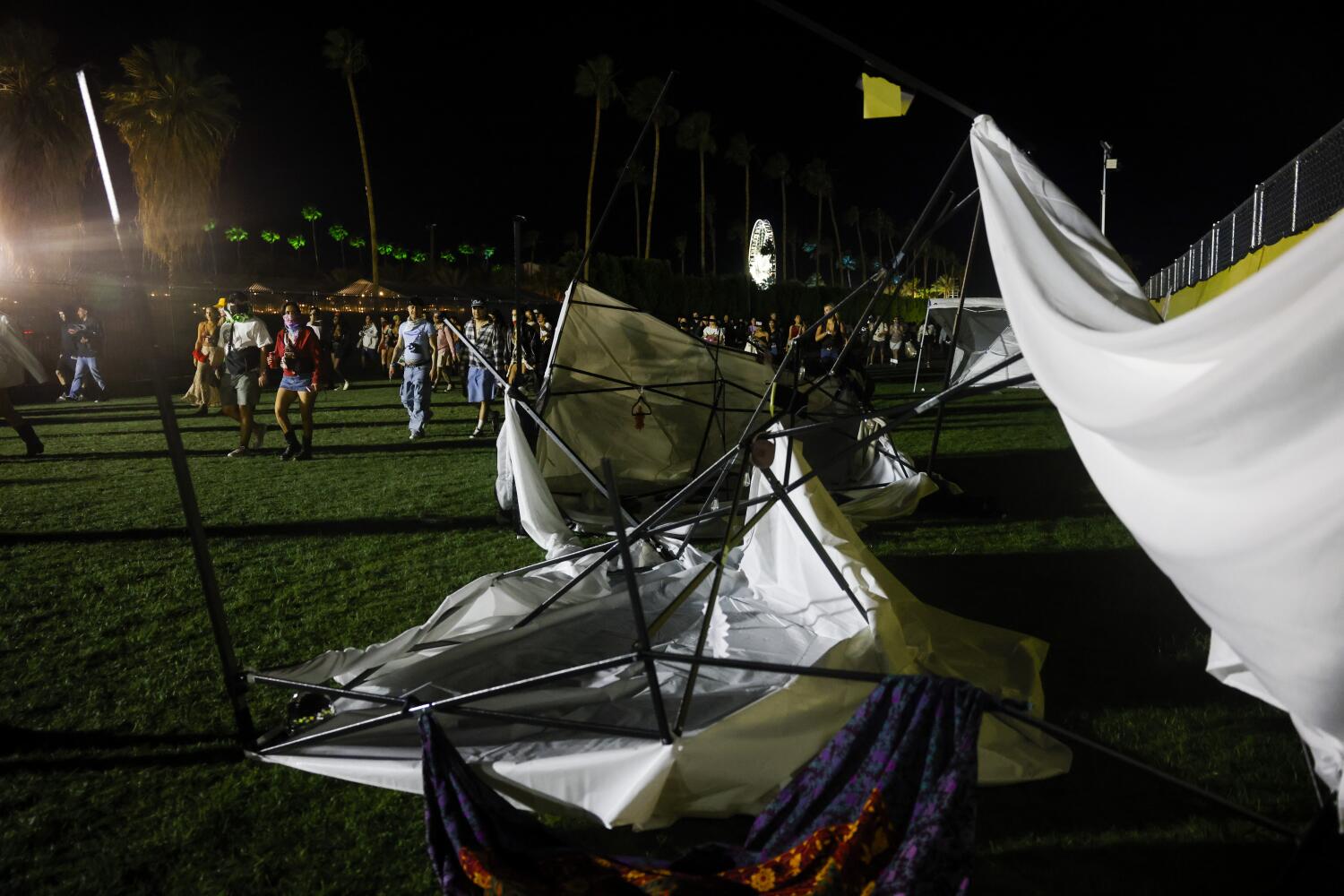
The dust hasn't even settled yet, and honestly, it might not for days. If you were in Indio this weekend, you didn't just attend a music festival. You survived a weather event. Coachella 2026 will be remembered less for its headliners and more for the 60 mph gusts that turned the Empire Polo Club into a literal wind tunnel. It was chaotic. It was dangerous. For thousands of campers, it was a total loss.
We've seen wind in the desert before, but this was different. Usually, the Santa Ana winds play nice for at least a few hours. This time, the pressure gradient over the San Gorgonio Pass stayed locked in, funneling a relentless wall of sand and air directly into the main stages. Security didn't just suggest people seek shelter—they cleared the fields.
Why the Wind Hit Harder This Year
Desert weather is fickle. You expect heat, sure. You expect some grit in your teeth. But the intensity of this specific wind event caught even the seasoned veterans off guard. Meteorologists had signaled a high-wind advisory, but the localized microclimates of the Coachella Valley often amplify these gusts. When the wind hits the open expanse of the polo fields, there’s nothing to stop it.
The geography here creates a natural venturi effect. Air gets squeezed through the mountains and accelerates. On Saturday night, that acceleration peaked just as the sub-headliners were taking the stage. Metal structures began to sway. LED screens, which act like massive sails, became liabilities. Organizers had no choice but to cut the power. It sucks for the fans who paid four figures for a wristband, but a falling light rig is a life-ending event. They made the right call.
The Campgrounds Became a Disaster Zone
If the festival grounds were a mess, the campgrounds were a war zone. Car camping is the soul of Coachella, but it’s also the most vulnerable spot when the weather turns. Easy-ups are basically kites. If you didn't stake your canopy down with heavy-duty steel pegs—the kind you have to hammer in with a mallet—your gear is likely in a palm tree three miles away right now.
I walked through Lot 8 after the first big spike in wind speed. It was heartbreaking. Tens of thousands of dollars in camping gear was shredded. We aren't talking about cheap tents. We're talking about high-end setups and custom decor, all reduced to twisted aluminum and ripped polyester. People were huddling in their cars, watching their "living rooms" tumble across the grass.
The real danger wasn't just losing your stuff. It was the flying debris. A loose tent pole becomes a javelin in 50 mph winds. Several attendees reported minor injuries from flying coolers and chairs. This is why the "no metal stakes" rule is so controversial. Plastic stakes don't hold in the soft desert soil when the wind really picks up, but metal ones are a hazard if they're ripped out. It’s a Catch-22 that the festival hasn't quite solved yet.
How to Survive the Next One
Don't let this weekend scare you off for next year, but let it be a wake-up call. You can't just show up with a basic tent and hope for the best. The desert demands respect. If you’re planning for 2027 or even just trying to salvage the rest of this weekend, you need a strategy that doesn't rely on luck.
- Lower your canopy. When you leave your camp for the festival, drop your Easy-up to its lowest setting. Better yet, take the fabric top off entirely. It takes five minutes and saves you a hundred bucks.
- Weight is everything. Stakes fail. Sandbags don't. Bring heavy-duty bags and fill them with dirt or use 5-gallon water jugs tied to the corners of your structure.
- The pool noodle trick. It sounds weird, but putting pool noodles between your tent fabric and the frame prevents rain from pooling and helps dampen the vibration from the wind, which keeps the fabric from tearing at the seams.
- Invest in a sand-free mat. Use a heavy weave mat as your "floor." It lets the dust fall through but stays heavy enough that it won't flip up and hit you in the face while you sleep.
The Logistics of a Dust-Out
Beyond the physical damage, the logistics of a wind-disrupted festival are a nightmare. When the stages go dark, 125,000 people suddenly have nowhere to go. The shuttle lines become massive bottlenecks. The dust makes visibility nearly zero, which slows down the bus drivers and creates a gridlock that can last until 4:00 AM.
If you're stuck in this, stop trying to leave immediately. Find a permanent structure or a chill-out tent that’s stayed upright. Hunker down. Trying to navigate a dark, dusty parking lot in high winds is how accidents happen. Wait for the peak gusts to pass.
Most people forget about their lungs. A bandana isn't enough when the "Coachella Cough" is actually caused by fine particulate matter and potentially Valley Fever spores kicked up by the wind. You need a proper KN95 mask. It’s not a fashion statement, but neither is an ER visit for respiratory distress.
What Happens to the Lineup
The big question everyone asks is about refunds. Historically, Goldenvoice doesn't do them for weather. It's in the fine print. They'll try to reschedule acts for earlier slots the next day, but with travel schedules and union shifts, it's a jigsaw puzzle. If your favorite artist got blown out, you're likely out of luck unless they're a massive headliner who can pivot to a surprise set on Sunday.
Watch the official app like a hawk. Don't trust the printed set times once the wind starts howling. They'll push notifications about stage changes and safety updates there first. If the cell towers are jammed—which they always are—try to find a WiFi hotspot near the Mojave or Gobi tents.
The wind is part of the Coachella experience. It’s the price we pay for those sunsets and the vast, open desert vibe. But don't be the person who loses their entire camp because they were too lazy to drop their canopy. Take the gear seriously. Respect the gusts.
Check your stakes. Tighten your guylines. If the sky starts looking orange and the palms start leaning, get your stuff tied down or get inside your car. The music will come back, but your tent won't.