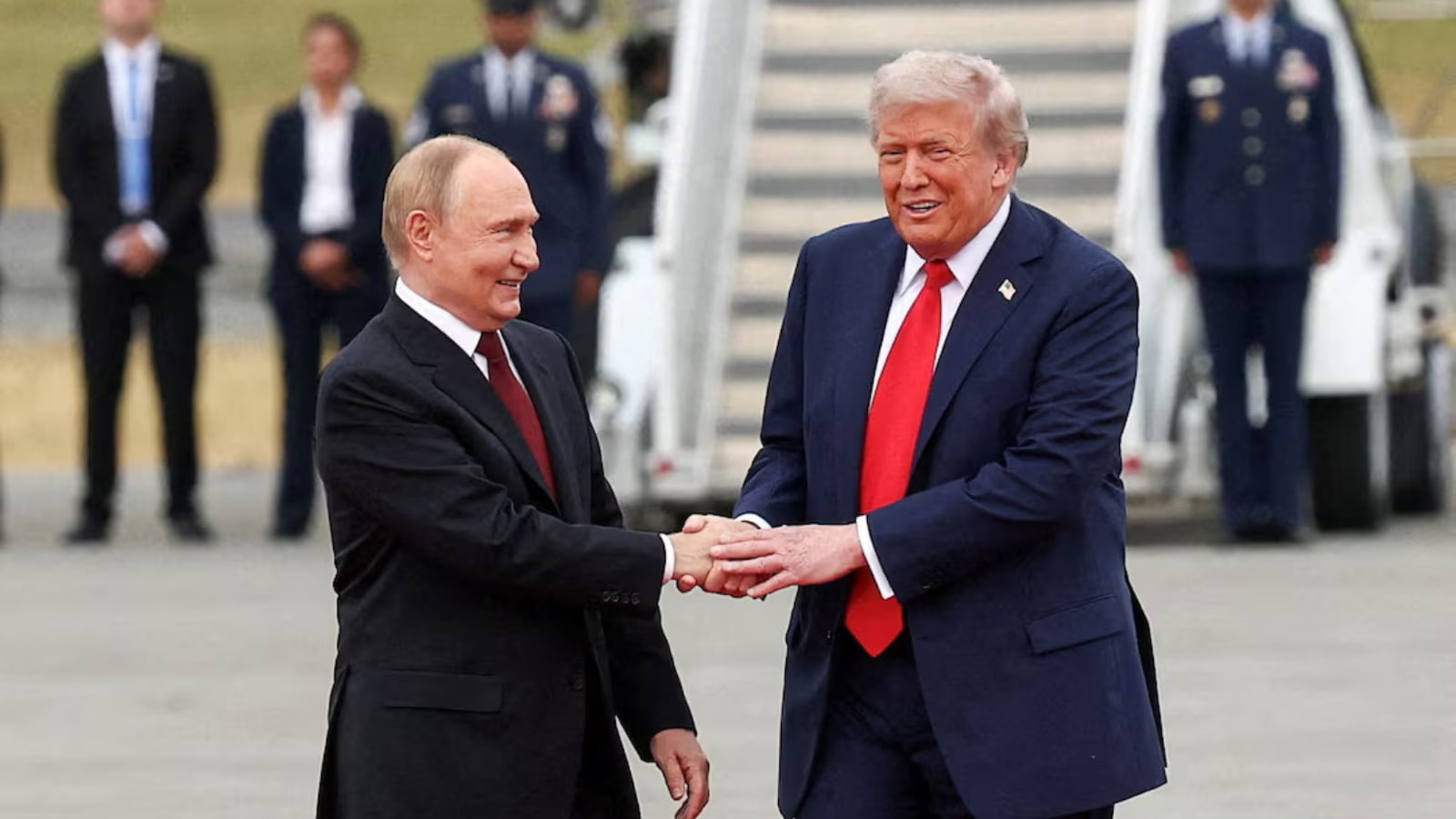
The recent phone call between Donald Trump and Vladimir Putin regarding Iran’s nuclear ambitions and the possibility of a regional ceasefire signals a massive shift in back-channel diplomacy. While the official readouts suggest a standard exchange of views, the reality on the ground points toward a high-stakes realignment of global power dynamics. This is not just a conversation. It is an attempt to rewrite the rules of engagement in the Middle East and Eastern Europe simultaneously, bypassing traditional diplomatic channels that have spent years spinning their wheels.
The core of the discussion centered on preventing Iran from crossing the threshold into a nuclear-armed state, a scenario that both leaders view with varying degrees of alarm. For Trump, the goal is a "maximum pressure" sequel that forces Tehran to the table on his terms. For Putin, Iran serves as a useful but volatile partner; a nuclear-armed Iran would destabilize Russia’s own southern flank and complicate Moscow’s influence in the region. The two leaders are now exploring whether a shared interest in containment can outweigh their competing agendas elsewhere. If you liked this piece, you might want to check out: this related article.
The Secret Calculus of the Moscow Tehran Bond
To understand why this call matters, one must look at the transactional nature of the current Russia-Iran relationship. Since the invasion of Ukraine, Moscow has relied heavily on Iranian drone technology and ballistic missile shipments. This dependency gives Putin a unique brand of leverage. He is perhaps the only world leader who can whisper in Tehran’s ear while simultaneously maintaining a direct line to the White House.
However, this leverage is a double-edged sword. If Putin leans too hard on Iran to scale back its nuclear enrichment, he risks losing the military support he needs for his own war effort. The investigative reality suggests that Putin is using the Iranian nuclear threat as a bargaining chip to secure concessions on the Ukrainian front. It is a cynical, effective piece of geopolitical engineering. He offers to restrain Tehran’s nuclear scientists in exchange for a Western pullback in Eastern Europe. For another perspective on this story, check out the recent update from BBC News.
Ceasefire Prospects and the Reality of Regional Proxies
Talk of a ceasefire sounds promising in a headline, but the mechanics of achieving one are incredibly messy. The conflict in the Middle East involves a web of proxies—Hezbollah, the Houthis, and various militias—that do not always take orders from a central command. A deal between Washington and Moscow might look good on paper, yet it often fails the moment it hits the ground.
History shows us that ceasefires in this region are usually just periods of re-armament. During the call, the discussion reportedly touched on "stability," a diplomatic code word for maintaining the current borders while stopping the active exchange of missiles. Trump’s approach relies on his belief that personal rapport can override institutional hostility. He bets on the idea that he can "make a deal" where the State Department has failed for decades. It is a bold assumption.
The problem remains the "how" of enforcement. Who polices a ceasefire brokered by two men who are distrusted by half the global community? Without a peacekeeping force or a massive shift in Iranian domestic policy, any halt in hostilities is likely to be temporary. The call was an attempt to see if the "big man" theory of history still applies in an era of decentralized, asymmetric warfare.
The Nuclear Threshold and the Point of No Return
Iran has spent the last several years reducing its "breakout time"—the period required to produce enough weapons-grade uranium for a single nuclear device. Intelligence estimates now place that time at mere weeks. This puts a ticking clock on any diplomatic effort. Trump and Putin are acutely aware that if they do not reach an understanding soon, they will be dealing with a nuclear-coded Middle East.
The Enrichment Deadlock
Tehran has consistently maintained its program is for peaceful purposes, but the installation of advanced centrifuges says otherwise.
- Advanced Centrifuges: These machines spin at incredible speeds to separate isotopes.
- Purity Levels: Reaching 60% enrichment is a short technical hop from the 90% required for a bomb.
- International Oversight: The removal of monitoring cameras has left the West flying blind.
Putin’s role here is critical. Russia previously assisted Iran in building the Bushehr nuclear power plant. They have the technical expertise to know exactly how far along the Iranians truly are. If Putin shares that intelligence with Trump, it changes the entire baseline for negotiations. It turns a guessing game into a targeted strike on Iranian diplomatic leverage.
Economic Incentives and the Sanctions Loophole
Sanctions have been the primary tool for the US, but their effectiveness has reached a plateau. Iran has become an expert at "sanction-busting," often with the quiet help of Russian and Chinese financial networks. The phone call likely touched on what it would take for the US to ease these pressures.
For Trump, the play is simple: offer economic relief in exchange for a total dismantling of the nuclear program. For Putin, the play is to ensure that any relief for Iran also benefits the Russian economy. This creates a strange "sanctions-sharing" ecosystem where both pariah states help each other survive Western isolation.
The Shadow of the Ukraine Conflict
It is impossible to separate the Iranian nuclear issue from the war in Ukraine. Putin does nothing for free. If he agrees to help the US contain Iran, he will expect a significant return on investment. This likely involves a "freeze" of the Ukrainian front lines, effectively ceding occupied territory to Russian control.
This creates a moral and political dilemma for Washington. Is stopping an Iranian nuclear bomb worth sacrificing the territorial integrity of a European ally? This is the brutal math of realpolitik. Trump has signaled a willingness to prioritize the Middle East over Eastern Europe, viewing the Iranian threat as more immediate to American interests. Putin is more than happy to facilitate that trade.
Intelligence Sharing and the New Axis
There are whispers in the intelligence community about a newfound level of cooperation between the CIA and the FSB under a potential Trump administration. During his previous term, Trump often expressed a desire to work with Russian intelligence on counter-terrorism. This call revives that ambition.
If the US and Russia begin sharing real-time data on Iranian missile movements or nuclear transport, the regional balance of power shifts overnight. Israel, a key US ally, would be watching these developments with extreme caution. While Israel wants Iran stopped, they are wary of any deal that relies on Putin’s word. The Russians have a long history of playing both sides of the fence in the Middle East, selling S-400 missile systems to one country while maintaining "security coordination" with its rivals.
The Fragility of Personal Diplomacy
The greatest weakness in this entire scenario is its reliance on two individuals. Traditional diplomacy is built on layers of treaties, career diplomats, and institutional memory. This "top-down" approach is fragile. If the relationship between Trump and Putin sours, the entire framework for a Middle East ceasefire or a nuclear deal collapses instantly.
Furthermore, the domestic politics in both countries are volatile. Trump faces a divided Congress and a skeptical media. Putin faces the long-term strain of a war-weary economy. Neither man is operating from a position of absolute, unchallenged strength, despite their public personas.
The Technological Factor in Nuclear Monitoring
Should a deal be struck, the verification process will be the ultimate hurdle. We are no longer in the era of simple physical inspections.
- Cyber Warfare: Stuxnet showed that code can be as effective as a bomb.
- AI Surveillance: Satellite imagery and acoustic sensors can now detect enrichment activity from miles away.
- Blockchain Verification: Some analysts suggest using immutable ledgers to track the movement of nuclear fuel.
Trump and Putin discussed the "how" of monitoring, but the technology required is sophisticated and intrusive. Iran is unlikely to agree to the kind of 24/7 surveillance that would actually guarantee they aren't cheating. This leaves the door open for another "shadow war" where diplomacy happens in public while sabotage continues in private.
The Cost of Failure
If this gamble fails, the consequences are catastrophic. A nuclear-armed Iran would trigger a regional arms race, with Saudi Arabia and Turkey likely seeking their own deterrents. The "nuclear umbrella" that has kept a lid on major global conflicts for decades would be shredded.
The call was a signal that the old ways of handling Iran are dead. The "Maximum Pressure" era is evolving into something more complex, something that involves Moscow as a primary stakeholder rather than a side player. Whether this leads to a historic peace or a spectacular collapse depends entirely on the hidden details of the trade-offs being discussed behind closed doors.
The leverage held by Moscow is the most significant variable. If Putin decides that a nuclear Iran is more valuable as a distraction for the West than a stable Middle East is for Russia, the call was nothing more than a stalling tactic. Trump is betting his legacy on the idea that he can read Putin better than the intelligence agencies can.
Investors and geopolitical analysts should watch the price of oil and the movement of Russian transport ships in the Caspian Sea. Those are the real metrics of whether this "peace" has any legs. The rhetoric of a phone call is cheap; the movement of hardware and capital is where the truth resides.
The move toward a bilateral solution between Washington and Moscow essentially sidelines the European Union and the United Nations. This is a deliberate choice. By narrowing the negotiation to two key players, Trump and Putin hope to eliminate the bureaucratic friction that often kills international agreements. It is a lean, aggressive form of diplomacy that mirrors the corporate world. It is high-reward, but it carries a risk of total systemic failure if one side decides to walk away.
Security in the 21st century is no longer about signing a piece of paper and shaking hands in a garden. It is about the constant, grueling management of conflicting interests. The Trump-Putin call was the first step in a long, dark tunnel. There is light at the end, but the path is littered with the remnants of past failures.
Watch the enrichment levels at Fordow and Natanz. If those numbers don't drop in the next ninety days, the call was a failure. If they do, we are entering a new world order where the traditional alliances of the 20th century are officially relics of the past. Establish a clear channel of verification immediately.