Economic warfare isn't just about freezing bank accounts anymore. It's about turning off the lights. When former Treasury Secretary Steven Mnuchin suggests that "obliterating" Iran's power plants is the only language the regime understands, he isn't just talking about a tactical strike. He's talking about a total shift in how the United States handles its most persistent adversaries. This strategy of "escalating to de-escalate" sounds like a contradiction, but in the world of high-stakes diplomacy, it's a gamble that the Trump administration’s veterans believe is the only way to break a decades-long stalemate.
The logic is brutal. You push the opponent to the very brink of systemic collapse so they have no choice but to sit down and negotiate from a position of total weakness. We've seen this play out with "Maximum Pressure" before, but targeting the actual physical infrastructure—the turbines and grids that keep a country running—takes things to a level we haven't seen since the early days of the Iraq War.
The Logic Behind Maximum Pressure 2.0
If you look at the current state of Middle Eastern geopolitics, the old rules don't seem to apply. Sanctions have hurt Iran's economy, sure, but they haven't stopped the enrichment of uranium or the funding of regional proxies. The argument from the hawks in the room is that we've been too polite. They think the Iranian leadership views Western restraint as a green light for more aggression.
By targeting power plants, the U.S. would be hitting the heart of the IRGC’s industrial complex. It’s not just about making citizens sit in the dark. It’s about stopping the factories, the oil refineries, and the military facilities that rely on a steady flow of electricity. It's a move designed to create immediate, internal chaos that the regime cannot ignore.
Why Power Plants are the New Front Line
Military strategists call this "center of gravity" targeting. If you take out the power, you take out the ability to coordinate. Modern warfare is increasingly moving away from boots on the ground and toward "kinetic" strikes on infrastructure.
- Industrial Paralysis: Iran’s steel and cement industries are massive energy consumers. No power means no production.
- Domestic Pressure: Nothing turns a population against its government faster than the loss of basic utilities.
- Signaling: It tells every other adversary that the U.S. is willing to cross lines previously thought sacred.
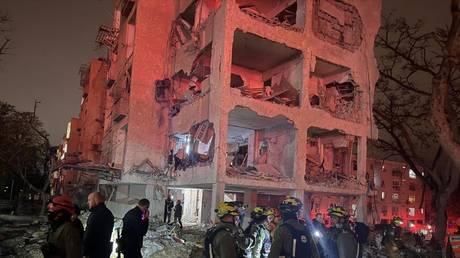
This isn't without massive risk. Taking out a nation's power grid often leads to a humanitarian crisis. Hospitals lose power. Water treatment plants stop working. The line between a strategic military strike and a war crime becomes incredibly thin when civilians start dying because the pumps stopped working.
The Risks of a Spiral Out of Control
The phrase "escalate to de-escalate" assumes your opponent is rational and will fold when the pressure gets too high. But what if they don't? Iran has spent years building a "Grey Zone" capability. If their power plants go dark, they won't just sit there. They have thousands of drones, a massive ballistic missile stockpile, and proxies like Hezbollah that can set the entire region on fire.
There’s also the cyber element. If the U.S. or its allies start blowing up physical plants, Iran will almost certainly retaliate with cyberattacks on Western infrastructure. We've already seen them probe the U.S. power grid and water systems. It’s a dangerous game of tit-for-tat that could easily spiral into a global conflict.
Breaking the Cycle of Failed Diplomacy
For years, the U.S. has swung between the JCPOA (the Iran Nuclear Deal) and "Maximum Pressure." Neither has truly solved the problem. The proponents of the "obliteration" strategy argue that we are stuck in a cycle of half-measures. They think the only way out is through.
Mnuchin’s comments reflect a growing frustration in Washington. The belief is that the Iranian regime treats negotiations as a way to buy time. By taking away their power—literally—you take away their ability to stall. It forces a decision: reform or collapse.
What Happens if the Lights Go Out
If this strategy is ever actually implemented, the immediate aftermath would be unlike anything we've seen in recent history. We aren't talking about a few precision strikes on military bases. We're talking about the systematic dismantling of a nation's energy independence.
- Oil Markets Would Explode: Even the threat of such a strike would send Brent Crude prices through the roof.
- Regional Conflict: Israel and Saudi Arabia would almost certainly be drawn in as Iran looks for targets to hit back at.
- Global Condemnation: The UN and European allies would likely break with the U.S. over the humanitarian fallout.
It’s a scorched-earth policy in the literal sense. The goal isn't just to win a war, but to make the cost of defiance so high that the other side simply gives up. Whether that’s a realistic expectation or a dangerous fantasy remains the biggest question in foreign policy today.
The Reality of Modern Deterrence
Deterrence only works if the threat is credible. By openly discussing the destruction of infrastructure, leaders are trying to restore a sense of fear. They want the Iranian leadership to believe that the "old rules" are gone.
But history shows us that people often rally around the flag when their country is under direct attack. Instead of a popular uprising against the regime, you might end up with a population that hates the West even more. You can't just flip a switch and expect a democracy to pop out of the darkness.
Practical Steps for Following This Conflict
The situation is moving fast. If you want to keep track of where this is headed, you need to watch specific indicators that suggest we’re moving from rhetoric to action.
- Watch the Tanker Rates: High insurance premiums for tankers in the Persian Gulf usually precede military action.
- Monitor Cyber Activity: An uptick in state-sponsored "pings" on U.S. infrastructure often signals that an adversary is preparing for a retaliatory strike.
- Track Congressional Briefings: Look for movement in the House and Senate Foreign Relations Committees regarding the "Authorization for Use of Military Force" (AUMF).
The debate over "escalating to de-escalate" isn't going away. It's the new blueprint for a world where economic sanctions aren't enough and total war is too risky. It’s the middle ground—and it’s a very dark place to be. If the U.S. follows through on this line of thinking, the map of the Middle East won't just be redrawn; it might be completely rewritten in the dark.