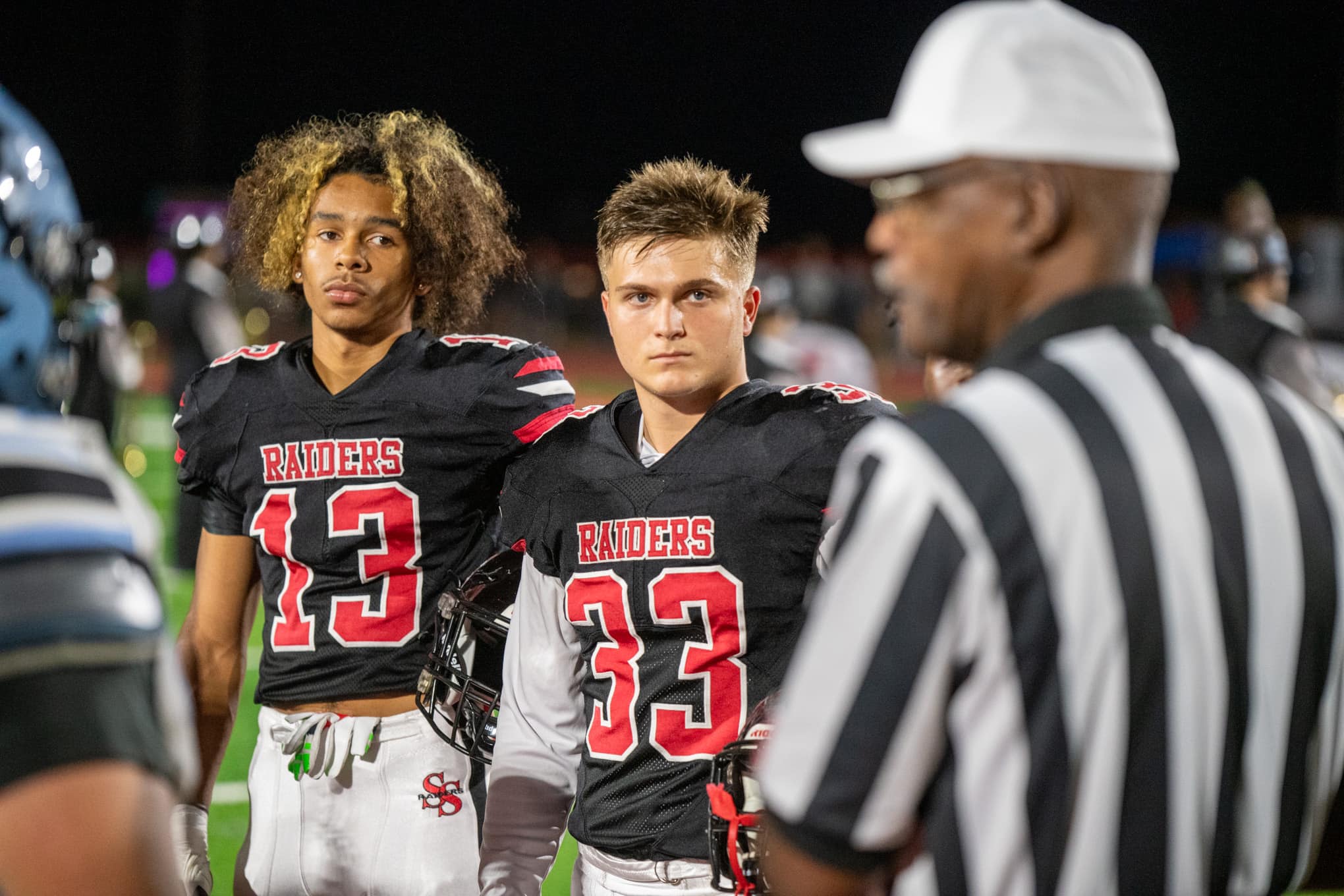
The opening weekend of high school football functions as a stress test for institutional preparation rather than a mere athletic exhibition. Week 0 eliminates the developmental runway standard in other athletic sectors, forcing coaching staffs, athletic departments, and roster architectures to perform under live-fire conditions before systemic inefficiencies can be corrected through routine practice.
Analyzing the structural reality of Week 0 requires examining the intersection of physical readiness, tactical installation velocity, and administrative constraints. Most programs operate under truncated preseason windows mandated by state athletic associations, creating a structural compression where complex schemes must transition from conceptual whiteboards to execution under variable stress in under three weeks. This environment exposes the fragility of poorly organized depth charts and reveals which coaching units prioritize systematic simplification over stylistic complexity.
The Preseason Compression Problem
The primary variable governing Week 0 performance is the ratio of available installation time to tactical complexity. High school programs face severe temporal limitations imposed by mandatory acclimatization periods, heat safety guidelines, and academic calendar intersections that dictate when full-contact sessions may legally commence.
When a coaching staff attempts to install an expansive playbook within a fourteen-day window, error rates compound exponentially once the whistle blows. The operational bottleneck is rarely athletic talent; it is cognitive load. Players forced to process excessive pre-snap adjustments, complex pass protections, or multiple defensive fronts experience paralysis by analysis.
Programs that succeed in Week 0 typically enforce a strict triage of their playbooks. They isolate high-frequency situations—third-and-short, red-zone execution, and two-minute operation—and strip away low-yield variations. This minimalism protects against self-inflicted wounds such as false starts, illegal formations, and dropped coverages, which serve as the primary drivers of negative offensive efficiency during the opening weekend.
Roster Architecture and Depth Decay
Depth is an abstract concept in July; it becomes a quantifiable constraint by the third quarter of a Week 0 contest. High school football rosters are inherently asymmetrical. While elite programs maintain two-way differentiation across most positions, the median program relies heavily on ironman players who transition between offensive skill positions, defensive secondary roles, and special teams coverage units.
The physiological cost of this reliance manifests immediately in the second half of opening games. Without the cardiovascular conditioning forged through consecutive weeks of competitive four-quarter pacing, fatigue degrades mechanics. Tackling angles widen, route depths flatten, and pass-rush leverage disappears.
To mitigate depth decay, sophisticated coaching staffs manage personnel rotations with mathematical precision during the first half, even at the expense of immediate offensive output. Preserving the central nervous system and metabolic reserves of critical athletes until the fourth quarter provides an asymmetric advantage against opponents who burn their primary assets in high-tempo, unstructured sequences early in the game.
Tactical Specialization Versus Structural Adaptability
Week 0 scouting reports are notoriously unreliable. Opponents construct offseason game plans based on graduated scrimmages, returning starter metrics, and historical tendencies from previous coaching regimes. Consequently, the first half of a Week 0 matchup operates as a discovery phase where both sidelines execute real-time diagnostics.
Coaching staffs that rely on static, rigid identities often struggle during this discovery phase. If an opponent implements an unexpected defensive front or utilizes personnel groupings designed to exploit a specific linebacker mismatch, a rigid scheme requires an entire halftime intermission to recalibrate. Conversely, modular tactical frameworks—offenses designed around formation multiplicity with simple blocking rules, and defenses anchored by hybrid position profiles—allow coordinators to adapt within the flow of a single quarter.
The transition from a scripted opening sequence to unscripted situational football separates high-performing programs from those dependent on raw athleticism. Scripted plays exploit pre-match preparation, but the third possession of the first quarter exposes true coaching efficacy. At this juncture, the ability of a quarterback and offensive coordinator to identify coverage rotations and exploit leverage without the benefit of sideline confirmation dictates the trajectory of the contest.
Environmental Variables and Operational Friction
Beyond tactical and physical parameters, Week 0 introduces distinct environmental friction points that disrupt institutional routine. Early-season ambient temperatures frequently push physiological limits, demanding precise hydration protocols and tactical pacing adjustments. Programs lacking the sports science infrastructure to monitor core temperature spikes or electrolyte depletion suffer predictable performance degradation as humidity and heat index values peak.
Simultaneously, administrative logistics—transportation scheduling, uniform compliance, officiating crews working their first live reps of the academic year, and facility readiness—create peripheral stress for players and coaches. Officiating volatility is particularly acute in Week 0. Zebras establish new points of emphasis regarding holding, illegal blocks, and defenseless player contact during these opening games, often resulting in high penalty counts that disrupt offensive rhythm.
Teams that maintain discipline amidst officiating variance avoid self-inflicted field position losses. The accumulation of five-yard and ten-yard infractions creates insurmountable down-and-distance hurdles for high school offenses that lack the passing efficiency required to consistently convert third-and-long situations.
Prioritize baseline execution efficiency over schematic ambition during the opening window. Simplify defensive rule sets to eliminate explosive plays through missed assignments, and restrict offensive play-calling to concepts where execution floor is high. The program that minimizes errors during this period captures an immediate competitive advantage.


