Electrodes in the Brain offer Hope Wrapped in Unspoken Tradeoffs
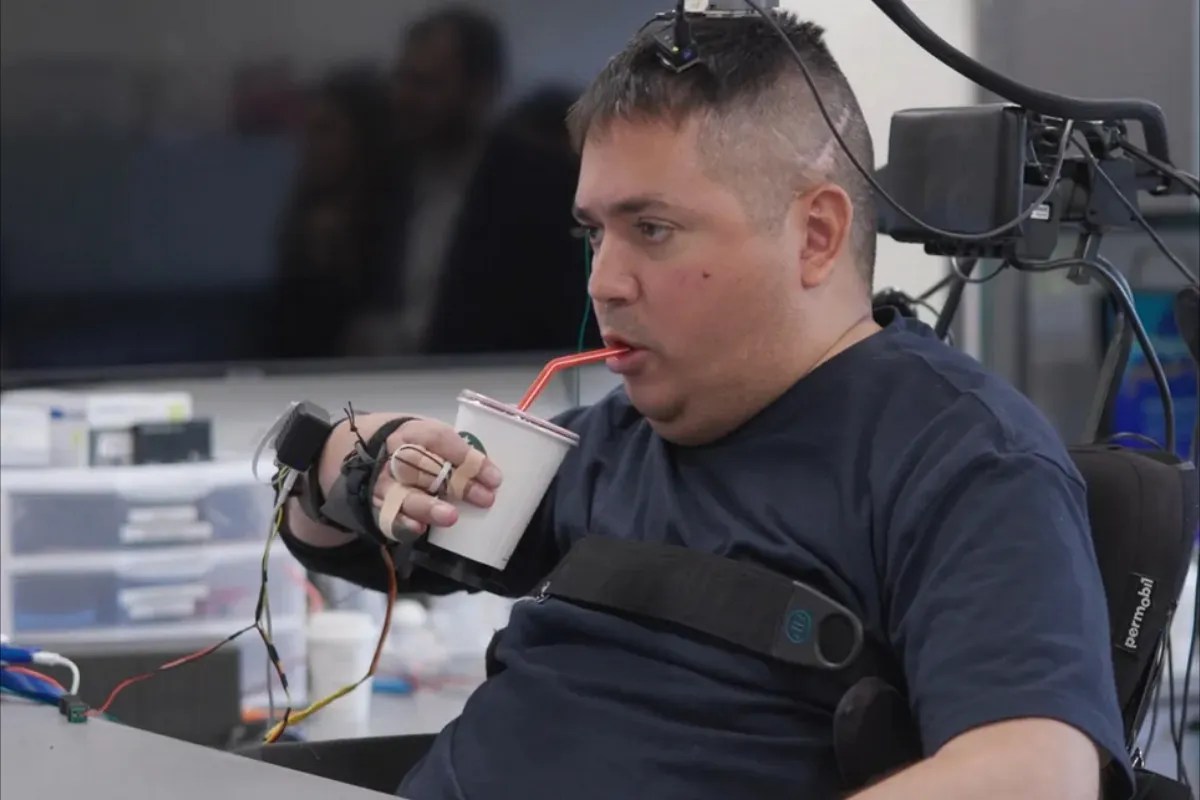
Surgeons drill through the human skull, lay array grids of micro-electrodes directly onto the motor cortex, and run fine wires to processors. Within months, a quadriplegic patient moves their fingers for the first time in years. Headlines celebrate a miracle. The news cycle moves on to the next breakthrough.
What the press releases leave out is the biological cost of keeping electronics inside human tissue. Brain implants restore hand movement by decoding micro-voltage spikes from dying or isolated neurons. They also spark an immediate immune response, coating gold and silicon pins in dense glial scar tissue that degrades signal quality over time. Meanwhile, you can find similar stories here: The Kinematics and Economics of Youth Micromobility Trauma.
Restoring voluntary hand function through intracortical arrays represents a major engineering leap. Yet beneath the miraculous video clips lies a complex reality of surgical risk, hardware decay, and financial dead ends that researchers rarely mention on camera.
How Signal Interception Works on the Motor Cortex
Human hand movement demands delicate neurological orchestration. When spinal cord injuries sever the central pathway between the head and the limb, the brain keeps firing. The signal simply has nowhere to go. To explore the full picture, check out the detailed report by Mayo Clinic.
Neuroscientists bypass damaged spinal tissue by placing arrays directly into the primary motor cortex. These small squares containing dozens of pin-like sensors detect action potentials, the tiny electrical charges created when neurons fire. Algorithms translate those patterns into digital commands. Those commands then travel to external muscle stimulators wrapped around the forearm or directly to robotic prosthetics.
It works. A patient thinks about closing their fist, and the computer forces the hand shut.
The mechanism relies on pattern recognition rather than total biological restoration. Early trials required massive desktop computers and thick cables protruding through an open port in the skull. Modern iterations try to hide the hardware under the skin or transmit data wirelessly, but the fundamental challenge remains unchanged. Electronics operate on steady current; human brains operate on fluid, shifting biology.
The Silent Problem of Glial Scarring and Signal Decay
The human body hates foreign metal. The moment a surgeon inserts micro-electrodes into cortical tissue, the brain reacts to defend itself.
Microglia and astrocytes, the brain's immune sentinels, swarm the insertion site. They attempt to digest the intruder. When chemical breakdown fails, these cells form a thick wall of scar tissue around the electrode tips. This process, called encapsulation, acts as an electrical insulator.
- Year one brings clear signals and precise finger control.
- Year two requires aggressive software recalibration to amplify fading signals.
- Year three often sees whole electrode channels go quiet as tissue walling thickens.
As the scar builds, the distance between the electrode tip and active neurons increases. Software engineers compensate by increasing receiver sensitivity or turning to machine learning models that guess what the brain intended despite missing data.
Guesswork is not control. When a patient tries to pick up a glass of water, a dropped signal does not mean a minor delay. It means a spilled cup or a crushed vessel.
Surgical Risk and the Infection Trap
Opening a skull is never routine. Inserting permanent foreign bodies into neural tissue creates permanent infection vectors.
Percutaneous connectors, ports that pass through the scalp to connect internal arrays to external computers, are continuous entry points for bacteria. Even fully implanted, wireless units carry risks. If a device develops a microscopic defect or if surrounding tissue rejects the housing, removing the implant requires another invasive brain surgery.
Consider a hypothetical scenario where a patient receives an implant that functions flawlessly for forty-eight months. If bacteria colonize the tissue pocket holding the internal telemetry chip, surgeons must remove the entire apparatus. The removal process tears through the very cortical tissue the implant was meant to read, leaving behind permanent tissue damage worse than the original injury state.
The medical establishment accepts this risk in short-term clinical trials. For long-term commercial deployment, the calculus changes drastically.
The Commercial Reality No One Wants to Discuss
Research labs excel at proving concepts. They struggle at long-term maintenance.
Dozens of high-profile medical trials over the past two decades ended not because the technology failed, but because funding ran out. When a startup or research program folds, participants face a terrifying choice: pay out of pocket for specialized medical maintenance, or undergo risky surgery to remove dead hardware from their heads.
Insurance companies remain deeply skeptical. A single neuroprosthetic installation can exceed hundreds of thousands of dollars in surgical, hardware, and rehabilitation costs. Managed care systems routinely refuse to cover procedures deemed experimental, leaving patients stranded between life-changing technology and personal bankruptcy.
Regulatory agencies demand years of safety data. That timeline works against small neurotech firms that burn through venture funding before reaching commercial viability. When those companies go under, their patients lose technical support, software updates, and replacement parts for the computers embedded in their skulls.
Hard Alternatives to Brain Surgery
Cortical implants command media attention because they sound like science fiction. Yet non-invasive and minimally invasive alternatives are making quieter, more sustainable progress.
Spinal Cord Stimulation
Instead of penetrating cortical tissue, surgeons place electrode leads over the epidural space of the spinal cord. By delivering continuous electrical current below the injury site, these systems re-awaken dormant nerve networks. Combined with intensive physical therapy, spinal stimulation has enabled patients to regain voluntary movement without touching the brain.
Surface Electromyography and Machine Learning
Advanced armbands detect faint, residual muscular signals in the upper arm or shoulder. High-speed processors interpret these subtle twitches and translate them into complex hand movements using motorized exoskeletons.
| Approach | Surgical Risk | Signal Longevity | Cost |
|---|---|---|---|
| Cortical Implants | High (Craniotomy required) | Degrades over 2-5 years due to scarring | Extremely High ($200k+) |
| Epidural Stimulation | Moderate (Spinal surgery) | Long-term stability | High ($100k+) |
| Non-Invasive Wearables | Zero | Unlimited (External hardware) | Moderate ($10k - $30k) |
Direct brain implants offer unmatched precision when they work. The question is whether that temporary precision justifies the long-term biological and financial tax.
Where the Technology Actually Stands
Engineers are testing flexible, soft-material electrodes made from conductive polymers designed to move naturally with brain tissue. These flexible threads reduce mechanical friction, delaying the immune response that creates scar tissue. Others are developing fully passive, bio-compatible wireless nodes powered by ultrasonic waves.
These innovations show promise in laboratory models. Translating human trial success into everyday clinical standard of care requires far more than isolated video clips of moving fingers.
True progress will not be measured by how many electrodes fit onto a silicon chip. It will be measured by whether an implant inserted into a thirty-year-old patient still functions reliably, safely, and affordably when that patient turns sixty. Until neuroscientists solve tissue rejection and economic sustainability, brain implants will remain extraordinary scientific achievements that very few human beings can actually live with.