The coffee shops in Muar are usually loud by mid-morning. Porcelain cups clink against heavy saucers, and the scent of condensed milk hangs thick in the humid air. But look closely at the corners of these shops right now, and you will see a quiet, tense waiting.
Consider a man like Uncle Tan. He is a hypothetical shopkeeper, but his anxiety represents thousands across Johor. He runs a small provision store near the causeway. For the last few years, his business has depended entirely on stability. When political instability rocked Kuala Lumpur in the early 2020s, his margins shrank. Now, as Johor heads into an unforced, early state election, Tan is not thinking about grand political coalitions. He is looking at his ledger.
The United Malays National Organisation (UMNO) decided to trigger this state election early, banking on their deep organizational roots in the state. Historically, UMNO has commanded a rock-solid block of roughly 600,000 votes in Johor. By dissolving the state assembly a year ahead of schedule, they made a high-stakes calculation. They want to reclaim their absolute dominance.
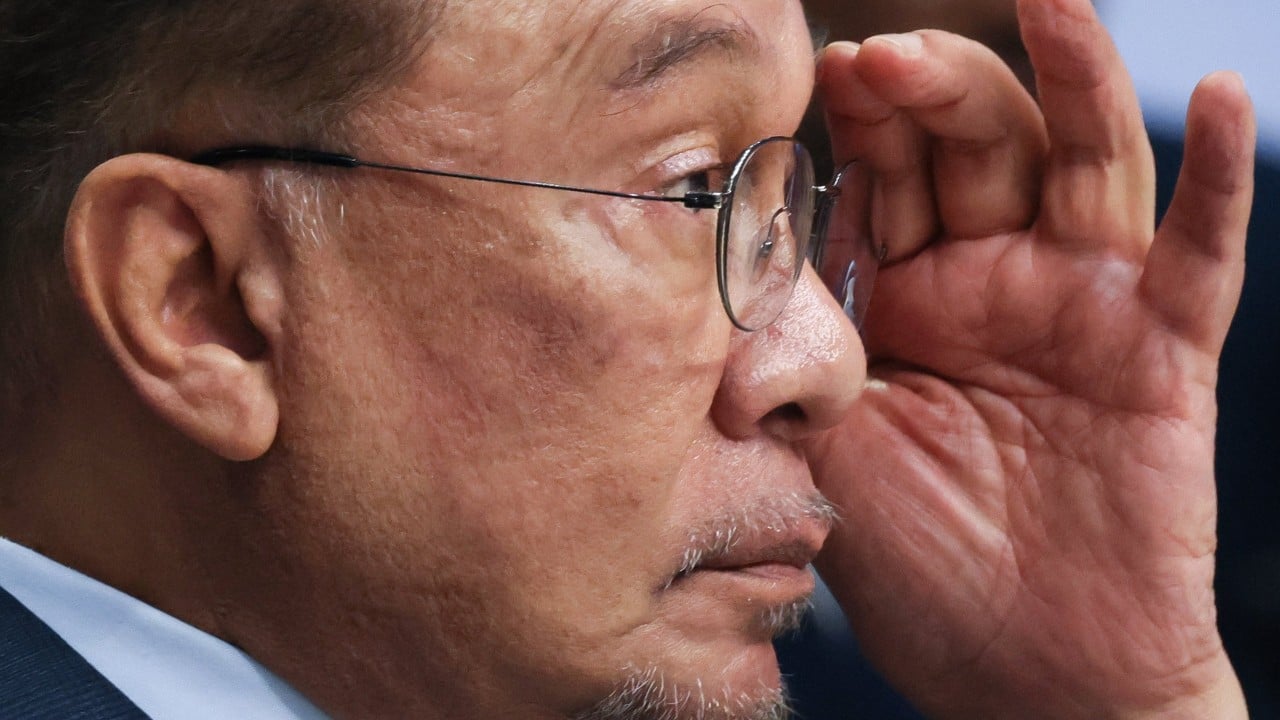
But this calculation has forced an incredibly awkward reality upon Prime Minister Anwar Ibrahim.
At the federal level in Putrajaya, Anwar’s Pakatan Harapan (PH) and UMNO’s Barisan Nasional (BN) govern together in a marriage of convenience. They sit at the same cabinet table. They pass federal budgets together. Yet, down here on the asphalt of Johor, that alliance has completely shattered. UMNO declared it would contest all 56 state seats, forcing direct head-on collisions with Anwar’s own party candidates.
It is a political identity crisis played out in front of an exhausted electorate.
The Chaos on the Ground
Walk into any campaign rally in Ulu Tebrau, and the friction is palpable. Just days ago, the political script was thrown out entirely. Puad Zarkashi, a veteran UMNO heavyweight and the former Johor state assembly Speaker, abruptly quit his party. He penned a blistering letter accusing the local party leadership of losing its independence. Then, he walked straight onto a Pakatan Harapan stage, receiving a public embrace from Anwar Ibrahim himself.
Rebels, defectors, and sudden shifts are turning this race into a labyrinth.
While the ruling federal partners tear at each other locally, Muhyiddin Yassin’s Bersatu party is watching from the wings. Bersatu has focused its campaign heavily on the sharp, everyday pain of inflation and the rising cost of living in Johor. They are placing candidates in critical battlegrounds, forcing a fractured three-way split in Malay voter sentiment.
The problem for Anwar is that a fractured vote benefits the incumbent machinery. UMNO holds a commanding 40-seat majority from the previous assembly. They thrive when voters stay home.
The Battle for the Saturday Vote
This brings us to the actual mechanics of the ballot box, where the stakes turn human.
Anwar recently sparked intense debate when he publicly argued that polling should take place on a Sunday rather than a Saturday. His opponents quickly hit back, accusing the Prime Minister of trying to interfere with the independent Election Commission. Anwar had to defend himself in the Dewan Rakyat, clarifying that his comments were merely a personal view.
But his anxiety is rooted in real mathematics.
Tens of thousands of Johoreans cross the causeway daily to work in Singapore. Many of them work half-day shifts on Saturdays. For a commuter racing against traffic across the bridge, a Saturday voting window is a massive hurdle. Anwar and his ministers, including Saifuddin Nasution Ismail and Anthony Loke, know this. They are trying everything to encourage high voter turnout, because a low turnout plays right into UMNO's hands.
If the working-class commuters cannot or do not return, Anwar’s local candidates face a bleak path.
The Ripple Effect Beyond Johor
What happens in Johor never stays in Johor.
Back in May, during a tense PH retreat, Anwar declared he was entirely prepared to face a snap general election if internal pressures became too intense. It was a rare moment of vulnerability from a leader trying to hold a fragmented federal government together.
If UMNO secures a landslide victory in Johor, it creates a dangerous narrative of unstoppable momentum. It happened before in 2022, when a massive state-level win emboldened UMNO to push for early national polls—a gamble that ultimately cost them the prime ministership and forced them into the current coalition.
For the average citizen buying groceries in Johor Bahru, the grand theories of political analysts matter very little. They see a federal government pulling itself apart at the state level, while local businesses try to gauge whether the ground beneath their feet is stable. Anwar is walking a tightrope, trying to support his local party machinery without completely alienating the UMNO partners he needs to survive in Putrajaya.
The true cost of this election will not be measured just in campaign spending. It will be measured in the trust of voters who look at the ballot paper and wonder who, exactly, is actually running the country.