The rain in Malawi does not sound like rain anymore. It sounds like a rhythmic, heavy thudting against the packed earth, a countdown clock ticking away the remaining hours of a harvest. For Tarcizio, a climate resilience officer working in the fields of East Africa, the sound brings a familiar, tightening knot in his chest. He knows that within forty-eight hours, the fields around him could be transformed into an inland sea, washing away the thin margin between survival and starvation for thousands of families.
A few thousand miles away, in a glass-tower boardroom in Zurich or New York, the sound is different. It is the soft click of a computer mouse tracking the volatile spikes of Brent crude, or the urgent chime of a breaking news alert detailing a fresh escalation in a geopolitical conflict. For a more detailed analysis into similar topics, we recommend: this related article.
These two worlds are bound by a harsh, mathematical reality. There is only so much capital to go around.
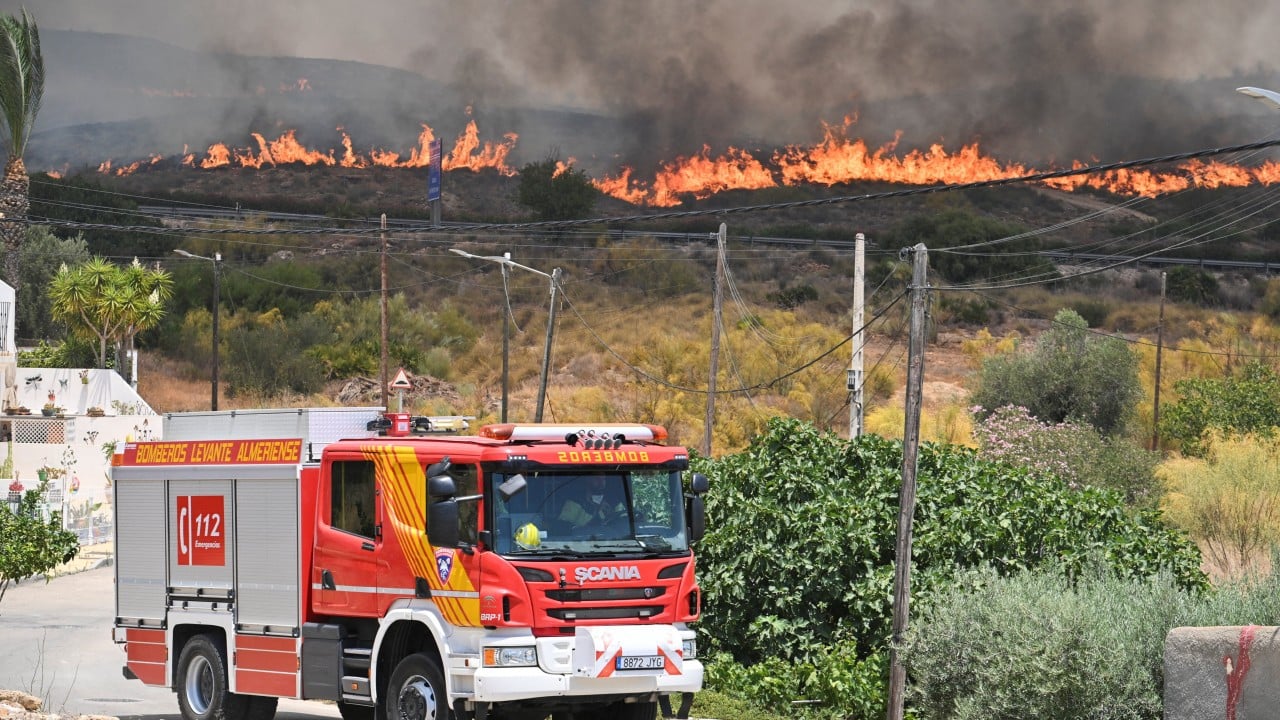
For decades, the global community operated under a comfortable assumption that when ecological disaster struck, humanity would simply write a check to fix it. We treated the planet's worsening symptoms as a line-item expense that could be deferred until the next quarterly budget meeting. But a quiet, devastating shift has occurred. The money is running out, not because the global economy is entirely broke, but because its attention is hopelessly fractured. Climate disasters are no longer waiting their turn in line. They are actively competing with active wars, teetering stock markets, and national security crises for a dwindling pool of global emergency capital. For further background on this development, comprehensive reporting can also be found on The New York Times.
Consider the baseline math. Experts calculate that the funding required to address the loss and damage in highly vulnerable countries now hovers near $937 billion annually. Yet, the central global fund established to handle these exact crises—the Fund for Responding to Loss and Damage—holds a fraction of a percent of that goal in paid-in pledges.
The discrepancy is not a mistake. It is the natural consequence of a world trying to fight too many fires at once.
When a localized flood or a devastating storm hits an emerging market, the immediate economic shock waves are brutal. A severe drought can instantly slice 1.4 percentage points off a developing nation’s economic growth while eating away nearly a percent of its entire GDP in lost tax revenue. Unlike wealthy nations, which can absorb these shocks through massive domestic borrowing or municipal bonds, developing governments possess zero fiscal room to move. They cannot raise expenditures to clean up the mud or rebuild the bridges without plunging themselves into a spiral of sovereign debt.
Instead, they wait for international solidarity. But the international community is looking elsewhere.
A war in eastern Europe or the Middle East commands immediate, visceral attention from global leaders. These conflicts present clear, undeniable threats to energy corridors, shipping lanes, and electoral prospects. When a missile strikes an oil refinery, the financial markets react within seconds. Algorithms shift billions of dollars across borders to hedge against inflation, and governments rapidly approve multi-billion-dollar defense packages. The crisis is loud. It is urgent. It directly threatens the immediate mechanisms of global capital.
A rising tide in the South Pacific or a creeping desertification in the Sahel is a slow, silent thief. It does not create a dramatic spike on a Bloomberg terminal by tomorrow morning. It merely erodes the foundation of a local economy over a decade, making the land unlivable and the people desperate.
But the real problem lies elsewhere. The financial mechanisms that once insulated the global economy from these localized collapses are starting to fracture.
Top executives within the world’s largest insurance institutions have begun issued stark, unvarnished warnings. We are rapidly approaching a threshold where the sheer frequency and intensity of extreme weather events will make many regions entirely uninsurable. Think about the domino effect of that single reality. Without insurance, a commercial bank will not issue a mortgage. Without mortgages, property values collapse. Without property investments, local governments lose their tax base, rendering them incapable of maintaining basic infrastructure.
When the insurance industry pulls back, the entire machinery of modern capitalism grinds to a halt. The economic cost of these extreme weather events over the last ten years has already exceeded $2 trillion. That is not a speculative projection for the year 2050; it is a bill that has already been paid in ruined infrastructure, lost productivity, and shattered lives.
Human beings are hardwired to prioritize the immediate threat over the systemic one. If a tiger is in the room, you do not worry about the termite damage in the floorboards. But what happens when the floorboards give way while you are still staring at the tiger?
This is the psychological trap of our current geopolitical moment. Leaders are forced into a state of permanent crisis management, bouncing from one acute geopolitical flare-up to the next, while the slow-burning ecological crisis accelerates in the background. Every dollar diverted from long-term climate resilience to fund an immediate wartime emergency or a market bailout is a dollar stolen from the future stability of the global system.
It is an exhausting, unsustainable game of fiscal musical chairs.
Back in Malawi, the rain eventually stops, leaving behind a thick, silent layer of silt where a village's food supply used to be. Tarcizio looks out over the mud, knowing that the international news cycle has already moved on to a fresh political scandal or a minor correction in the tech sector. The money required to rebuild this single community will likely never arrive, lost somewhere in the bureaucratic plumbing of an international system designed for a quieter, simpler century.
The global economy is discovering that distraction carries a compounding interest rate. We can ignore the quiet crises for a little while longer, focusing our wealth and our attention on the loudest conflicts of the day. But the planet does not negotiate, it does not watch the news, and it does not care about our competing priorities. It simply sends the bill.