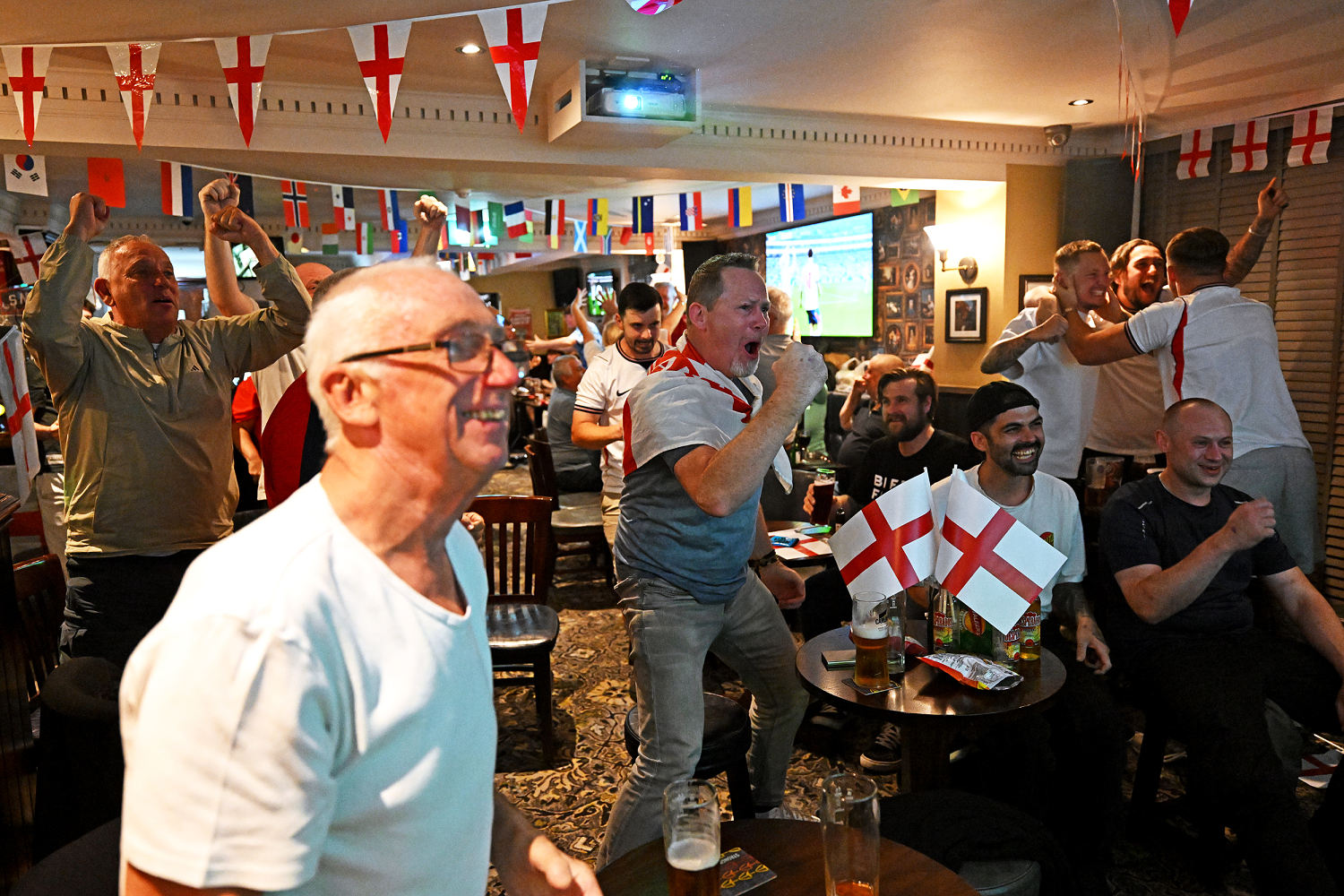
The wooden boards of the bar at The Crown are worn thin in the middle, sanded down by decades of damp glassware and the nervous, sliding palms of people waiting for something to happen.
Behind the taps stands Dave. His lower back has been aching since England’s quarter-final victory over Norway on Saturday night. That was the game where card transactions at his till jumped by 152% at midnight as the country braced itself for extra time. By the time the final whistle blew at nearly 1:00 AM, the floor was sticky with spilled lager, his staff were exhausted, and the cellar was almost entirely empty.
Now, it is Wednesday afternoon. In a few hours, England will kick off against Argentina in a World Cup semi-final.
Statisticians and retail forecasters look at this game and see a massive spike in consumer spending. They talk about a looming, unprecedented surge of 6 million extra pints flowing through British pubs in a single night. They calculate a £455 million splurge on the match alone, counting the monetary flow like water through a dam.
But to understand what those 6 million pints actually mean, you have to look past the spreadsheets. You have to look at the quiet, desperate choreography of the local pub on the biggest night of a generation.
The Mathematics of Hope
To the uninitiated, pouring a pint is a simple physical act: tilt the glass, pull the lever, let gravity do the work. But when millions of people try to perform this ritual at the exact same moment, the national infrastructure of hospitality begins to strain.
Consider the baseline. On a normal, quiet Wednesday evening in July, the British public might consume a predictable, modest amount of draft beer. But a World Cup semi-final is not a normal Wednesday. It is a collective suspension of disbelief.
The sheer scale of this moment is staggering. To reach that projected surplus of six million pints, nearly every pub in the country must operate at peak physical capacity. We are talking about seven million people squeezing into local public houses, standing shoulder to shoulder in the summer heat, their eyes glued to screens that project the hopes of a nation.
The industry calls this an "extraordinary trading event". But for the people behind the bar, it is a marathon. Every glass must be collected, washed, cooled, and refilled.
And then there is the timing.
During a standard evening, foot traffic is a gentle curve. During a World Cup match, it is a series of violent, sudden spikes. Data from previous fixtures shows that transactions don't rise gradually; they explode. There is a massive peak at 7:50 PM, ten minutes before kickoff, as everyone tries to secure a drink so they don't miss the national anthems. Then, a dead, tense silence for forty-five minutes. At half-time, the floodgates open again.
If the game goes to extra time or penalties, the pressure cooker intensifies. During the quarter-final, the midnight hour saw spending skyrocket to 152% above normal levels as fans drank to cope with the sheer, agonizing tension.
The Invisible Stakeholders
Behind the sweeping macroeconomic declarations of a £455 million windfall lies a fragile network of local businesses. For many independent pub landlords, this tournament isn't about luxury or greed. It is about survival.
The past few years have not been kind to the British local. Rising energy bills, supply chain disruptions, and shifting social habits have forced hundreds of historic venues to close their doors forever. A summer tournament run by the national team is the life raft they have been praying for.
Consider what this extra trade represents:
- The Restocking Gamble: Landlords must order hundreds of extra kegs days in advance, betting thousands of pounds of their own capital that the team won't suffer a sudden, heartbreaking exit before the beer is drunk.
- The Licensing Ballet: Pubs rely on government easements and special acts of parliament just to keep their doors open late enough to accommodate the late-night drama of international football.
- The Emotional Tax: Staff are not just serving customers; they are managing the collective psychological state of a room. They are there for the ecstatic, beer-spilling highs and the quiet, devastating lows.
When Emma McClarkin of the British Beer and Pub Association notes that this Wednesday will be more successful than a bank holiday or New Year's Eve, she isn't just celebrating a sales metric. She is describing a brief, vital reprieve for an industry that has been gasping for air.
What We Drink For
At some point tonight, the noise in Dave's pub will rise to a deafening roar. Someone will shout. A glass will shatter. The air will smell of damp carpet, spilled pale ale, and nervous sweat.
The statistical models will record the transaction. They will add another tick to the six million pint estimate. They will register the financial spike and file it away as a successful economic quarter.
But if you look closely at the hands holding those glasses, you see something else entirely.
You see friends who haven't spoken in months, brought together by a shared, irrational belief. You see strangers embracing after a goal, their differences temporarily erased by the trajectory of a leather ball. You see parents and children sharing a quiet, anxious look as the clock ticks into the final minutes of play.
We do not stand in crowded, hot rooms and pay for overpriced lager because we are thirsty. We do it because we are terrified of being alone when the moment of truth finally arrives.
When the final whistle blows tonight, some will drink to celebrate a historic victory. Others will drink to wash away the bitter taste of what might have been. But long after the tills have closed, the kegs are empty, and Dave has finally sat down to rest his aching back, the memory of where we stood, who we held, and what we hoped for will remain.


