We love worshipping our own historical dead ends.
Australia decided to give heritage status to the country's first commercial solar power station, built in 1981 in White Cliffs, New South Wales. The narrative surrounding this decision is predictable. Heritage boards slap a plaque on the site, local politicians pat themselves on the back for being early adopters of green energy, and the public nods along, feeling good about a dusty collection of parabolic dishes that generated electricity for a tiny outback town four decades ago.
It is a celebration of obsolescence.
White Cliffs was not a triumph of engineering foresight. It was a massive, exorbitantly expensive warning sign that we completely ignored. The project utilized parabolic dish collectors tracking the sun to drive a steam engine, which then turned a generator. Sounds clever on paper. In practice, it was a maintenance nightmare of broken tracking mechanisms, dust-caked mirrors, hydraulic leaks, and outrageous capital costs that proved completely non-viable for actual grid expansion.
When you heritage-list a technology that failed every economic and operational stress test of its era, you are not honoring innovation. You are romanticizing a blind alley.
The Myth of the Pioneer
The lazy consensus in energy journalism is that early pioneers like White Cliffs laid the essential groundwork for modern photovoltaic supremacy. This is historical revisionism.
Silicon photovoltaics won the global energy market not because of complex, moving-part concentrating solar thermal setups, but despite them. While the engineers at White Cliffs were busy wiping red dust off parabolic mirrors and wrestling with steam turbines in the middle of nowhere, semiconductor research was quietly making static electricity generation cheap, modular, and practically maintenance-free.
I have spent two decades watching companies and governments pour billions into bespoke, mechanically complex energy projects because they look impressive in architectural renderings. I have seen budgets vaporize on moving parts exposed to the elements. White Cliffs is the patron saint of this delusion. It cost a fortune to build, required constant hands-on technical intervention, and was eventually abandoned and replaced with standard diesel generation before hybrid solar panels finally made sense years later.
Giving it heritage status turns a monument to engineering failure into a pilgrimage site for wishful thinking.
Why Concentrating Solar Thermal Remains a Distraction
Let us address the elephant in the room. Why do people still obsess over thermal collection schemes when flat-panel silicon continues to eat the world?
The argument always pivots to storage. The believers claim that because thermal plants can store heat in molten salt or steam reservoirs, they solve the intermittency problem better than batteries. On paper, that sounds compelling. In reality, mechanical and thermal complexity scales failure rates exponentially.
Let us run a quick thought experiment. Imagine a scenario where you manage a remote industrial facility. You have a choice between a solid-state photovoltaic array with zero moving parts, or a sprawling field of computer-controlled mirrors tracking the sun, pumping high-pressure fluids through miles of insulated piping, feeding a turbine that requires certified mechanical engineers on-site just to keep it from seizing.
Which one survives a dust storm, a lightning strike, or a three-week stretch where the local technician is home sick with the flu?
The market answered this question a long time ago. Utility-scale solar means silicon panels on fixed or single-axis trackers. It does not mean steam whistles and parabolic dishes. By heritage-listing White Cliffs, we are enshrining the exact wrong lessons about how energy infrastructure should be built.
The Danger of Nostalgia in Infrastructure
Infrastructure is not art. It does not deserve preservation simply because it was old and had good intentions. When you freeze a failed technological archetype in amber, you encourage a dangerous form of institutional nostalgia.
Policy-makers look at heritage sites and draw a straight, triumphant line from 1981 to today, pretending that the journey was an inevitable march of progress. It was not. It was a chaotic, brutal Darwinian struggle where thousands of bad ideas died so that a few good ones could scale. White Cliffs should have been left to rust in the desert sun as a permanent reminder of what not to do.
Instead, we have sanitized it. We have turned a monument to economic unviability into a civic trophy.
If you want to understand why modern energy transitions face so much regulatory friction and cost overruns, look right here. We suffer from an institutional romance with complexity. We love things that look intricate, expensive, and difficult to operate because they feel like high technology. Silicon panels look boring. They just sit there silently converting photons into electrons with no moving parts, no steam, and no drama.
Boring is what scales. Boring is what saves money. Complexity is just a tax on competence.
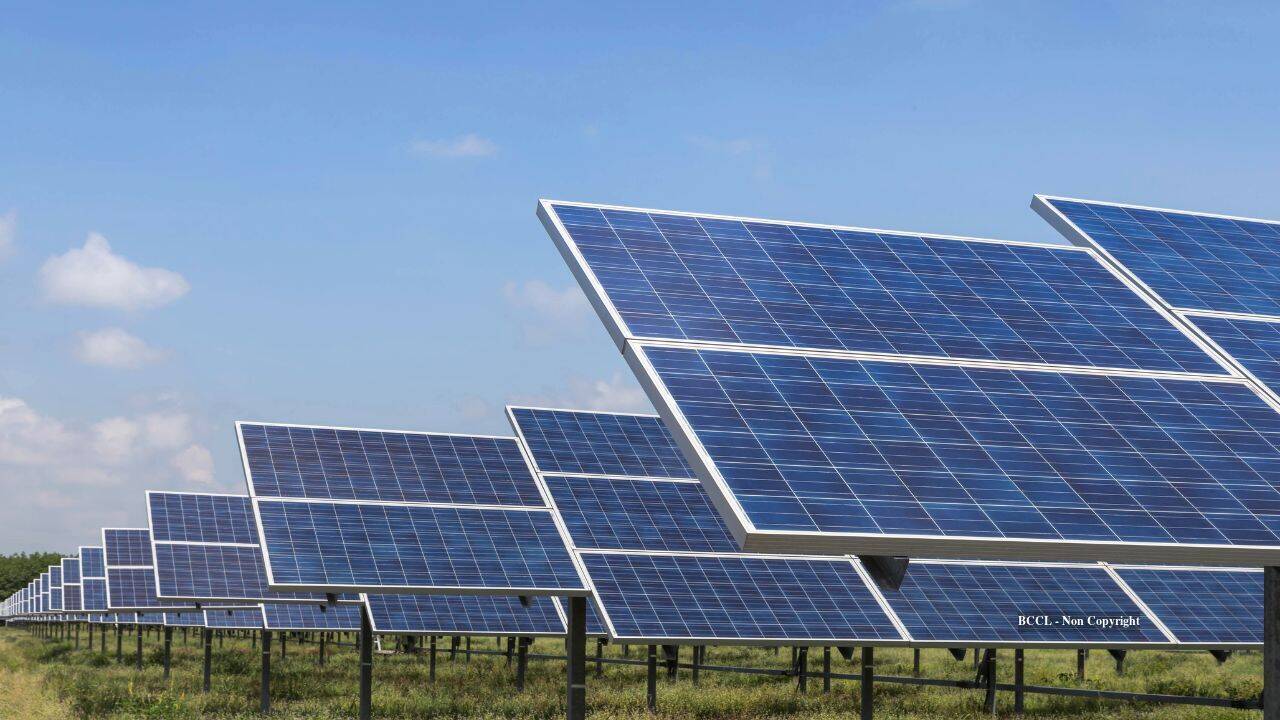
Stop visiting the ruins of failed energy experiments to find inspiration. Go look at a modern, automated, utility-scale photovoltaic farm running smoothly with a skeleton crew and zero moving fluids. That is what success looks like. White Cliffs belongs in a textbook chapter titled Mistakes We Only Need to Make Once.