We love a good genius-prophet narrative.
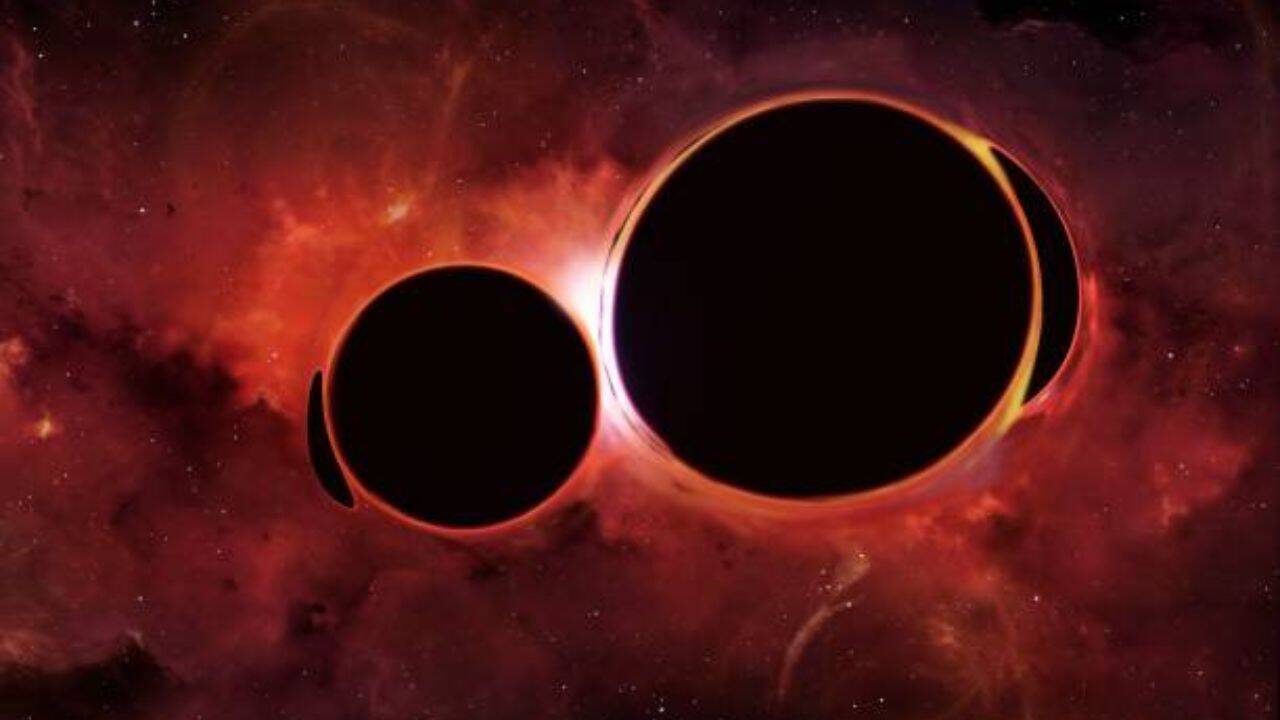
When researchers analyzed the gravitational waves from two colliding black holes 1.3 billion light-years away, the science media went into a collective frenzy. The headline was everywhere: Stephen Hawking’s 1971 black hole area theorem was finally proven right.
It makes for a perfect story. A young, brilliant physicist makes a daring prediction. Fifty years later, a massive laser interferometer in the desert detects a ripple in spacetime, and the history books are vindicated.
But this breathless celebration misses the entire point of what that detection actually means.
By focusing so heavily on the validation of Hawking’s area theorem, we are actively ignoring the far more terrifying, unresolved paradox that this exact discovery drags into the light. We are celebrating the confirmation of a "law" that we already knew had to work, while sweeping the fundamental breakdown of modern physics under the rug.
It is time to stop cheering for a fifty-year-old math proof and start looking at the crisis it leaves in its wake.
The Area Theorem Is Just Thermodynamics in Masquerade
Let’s strip away the mystique. Hawking’s area theorem states that the total surface area of a black hole’s event horizon can never decrease. When two black holes merge, the surface area of the newly formed black hole must be greater than or equal to the sum of the areas of the two original black holes.
People talk about this like it is some bespoke, mystical property of gravity. It isn't.
It is the Second Law of Thermodynamics wearing a dark, heavy coat.
In any closed system, entropy—the measure of disorder—must always increase. Hawking realized that the area of a black hole's event horizon behaves exactly like entropy. If you throw matter into a black hole, the black hole gets bigger. The area increases. If you merge two of them, the final area is larger than the starting parts.
To be brutally honest, if the LIGO and Virgo collaborations had found that the event horizon area decreased during the GW150914 merger, it wouldn't just mean Hawking was wrong. It would mean the Second Law of Thermodynamics was broken. It would mean you could build a perpetual motion machine in your garage.
We didn't just prove Hawking right; we confirmed that the universe didn't suddenly stop functioning at the most basic level imaginable. Celebrating this as a shocking revelation is like throwning a parade for gravity because an apple fell out of a tree. Of course the area increased. If it hadn't, our entire understanding of physics would have dissolved instantly.
The Elephant in the Event Horizon
Here is the nuance the breathless coverage skipped: Hawking’s area theorem only works in a universe where black holes are completely black and eternal.
But they aren't.
Just a few years after proposing the area theorem, Hawking himself realized something devastating. When you apply quantum field theory to the curved spacetime around an event horizon, you find that black holes must emit a faint glow of thermal radiation.
We call this Hawking radiation.
Because of this radiation, black holes slowly lose mass. And as they lose mass, their event horizons shrink. Eventually, they evaporate entirely.
Do you see the massive, glaring contradiction?
- The Area Theorem (1971): Black hole surface area can never decrease.
- Hawking Radiation (1974): Black holes evaporate, meaning their surface area must decrease.
By celebrating the 1971 prediction as some ultimate truth of the cosmos, we are validating a model of black holes that Hawking himself proved was incomplete just three years later. The area theorem only holds true if we ignore quantum mechanics. The moment we bring quantum mechanics into the room, the theorem is violated.
This isn't a neat victory for physics. It is a stark reminder of the massive chasm between General Relativity (which rules the very big) and Quantum Mechanics (which rules the very small). The two theories are fundamentally incompatible, and black holes are the battleground where they actively tear each other apart.
The Information Paradox Just Got Worse
If you want to look at the real, unresolved crisis that this merger highlights, you have to look at the Information Loss Paradox.
If a black hole evaporates via Hawking radiation, that radiation is completely thermal. It is random static. It carries no information about what fell into the black hole. If you throw a hard drive full of data or a highly ordered star into a black hole, and the black hole eventually evaporates into random hiss, that information is permanently erased from the universe.
This violates a sacred tenet of quantum mechanics: unitarity. Unitarity dictates that the past must always be reconstructible from the present. Information cannot be destroyed.
So, we are left with three deeply uncomfortable possibilities:
- Information is truly destroyed. (Quantum mechanics is fundamentally wrong).
- Information escapes during evaporation. (General relativity is fundamentally wrong, or Hawking's radiation calculation is missing something massive).
- A remnant is left behind. (A tiny, Planck-sized remnant contains infinite information, which violates other laws of physics).
This is the real story. Every time we observe a black hole collision and confirm that relativity works perfectly on the macro-scale, we are cementing our path toward this brick wall. We are confirming that the engine of relativity is running flawlessly, even though we know it is driving us straight off a quantum cliff.
Why the "Cosmic Collision" Is Actually a Warning
The detection of GW150914 was an engineering marvel. Measuring a distortion in spacetime smaller than the width of a proton over a four-kilometer distance is a triumph of human ingenuity.
But do not let the hype fool you into thinking we have solved the physics of black holes.
The data we gathered from that 1.3-billion-light-year-old collision is highly filtered. We are analyzing the "ringdown"—the final, quiet settling of the merged black hole—using approximations and models. We are fitting the data to the equations we already have, hoping to find a mismatch.
Instead of celebrating that the mismatch didn't show up in this specific, coarse measurement, we should be deeply worried about why we still cannot see the quantum structure of spacetime. We are looking at these objects through a thick, blurry lens, and because the blurry image matches our blurry theory, we are declaring victory.
It is lazy consensus at its finest.
The Real Question We Should Be Asking
Instead of asking, "How did Hawking predict this fifty years ago?" we should be asking: Where does the smooth geometry of General Relativity break down?
Because it has to break down.
At the center of a black hole, relativity predicts a singularity—a point of infinite density and zero volume. "Infinite" is not a physical property; it is a mathematical red flag. It is the universe's way of telling us that our equations have divided by zero and stopped working.
The area theorem is a beautiful piece of classical physics. But classical physics is an illusion.
Until we can observe the quantum structure of the event horizon itself, we are just rearranging deck chairs on a sinking theoretical ship. The real breakthrough won't be confirming that a black hole behaves exactly how Einstein and Hawking said it would on the macro-level. The real breakthrough will be finding the exact point where their equations fail.
Stop cheering for the confirmation of old theories. Start looking for the cracks. That is where the actual physics of the future is hiding.