The rain in Paris does not care about geopolitics, but the two men stepping into the warmth of the Élysée Palace certainly do. Emmanuel Macron adjusts his cuffs. Narendra Modi offers a practiced, warm embrace. To the casual observer, this is the standard choreography of international diplomacy—the cameras flash, the flags flutter, and the press corps mutters about bilateral trade agreements.
But look closer at the hands being shaken. Look at the lines on the faces. This is not a meeting about traditional borders, steel tariffs, or naval fleets.
This is a quiet, desperate scramble for the digital nervous system of the next century.
France and India are currently locked in a fierce, high-stakes race to secure artificial intelligence investment. They are deploying a weapon older than any computer network: pure, calculated personal charm. They are doing this because they both know a terrifying truth that few politicians are willing to say out loud. If you do not own the infrastructure of AI today, your nation becomes a mere colony of someone else’s code tomorrow.
The Weight of the Silicon Monopoly
To understand why a French president and an Indian prime minister are spending their political capital courting tech executives, we have to look away from the gilded mirrors of Paris.
Consider a hypothetical software engineer in Bengaluru named Priya. She is brilliant. She spends fourteen hours a day writing optimization algorithms. But every time her startup trains a new model, they must pay a massive, recurring tax to a handful of cloud computing giants based in Seattle or Silicon Valley. The servers aren't hers. The raw processing power isn't her country's. Priya is building the future, but she is renting the tools to do it from a digital landlord across the ocean.
This is the invisible asymmetry of the modern world.
Right now, a staggering percentage of the world’s advanced AI infrastructure is concentrated in the United States and China. It is a duopoly of computation. For countries like France and India, this concentration of technological power feels less like progress and more like an existential threat.
Macron sees France as the cultural and intellectual fortress of Europe. He watches American tech firms vacuum up European data, train models on European literature, and then sell those models back to French businesses. It galls him.
Modi looks at India’s 1.4 billion people—a massive, vibrant population rapidly moving online—and sees a goldmine of data that could fuel the most powerful AI systems on earth. He knows that if India merely supplies the raw data while American corporations build the actual intelligence, India loses the ultimate economic war.
So, the charm offensive begins. It is a mixture of state dinners, tax incentives, and late-night appeals to ego.
Two Paths to the Same Summit
The strategies of the two leaders diverge sharply, reflecting the distinct anxieties of their respective nations.
Macron’s approach is elite, hyper-focused, and deeply European. He invites tech billionaires and top-tier researchers to Versailles. He speaks the language of philosophy, regulation, and sovereign pride. France has successfully nurtured startups like Mistral AI, pitching the country as a bridge between American capital and European regulatory safety. Macron’s message to investors is simple: Come to Paris, because we offer stability, elite mathematical talent, and a gateway to the entire European market without the chaos of Silicon Valley.
It is working, up to a point. Hundreds of millions of euros have flowed into Parisian tech hubs. Mistral AI became a darling of the venture capital world almost overnight, valued at billions. France proved that it could build models that rival the best of California.
But across the globe, Modi is playing a completely different game. His scale is unimaginable to a European leader.
When Modicourts AI investment, he does not just offer talented engineers; he offers a human sea. He points to India’s Digital Public Infrastructure—the Unified Payments Interface (UPI) that allows a vegetable vendor in Delhi to accept digital payments instantly via a QR code. India has spent the last decade building a digital highway that reaches the poorest citizens.
Modi’s pitch to the tech titans of the world is grander and more urgent: Do not just build AI to help wealthy corporations optimize their supply chains. Come to India to build AI that can diagnose diseases in rural clinics where there are no doctors. Build AI that can translate agricultural data into thirty different languages for farmers who cannot read.
This isn't just altruism. It is a shrewd business proposition. By positioning India as the definitive testing ground for AI in the Global South, Modi wants to ensure that the next generation of AI architecture is built on Indian terms, trained on Indian data, and hosted on Indian servers.
The Cold Reality of the Math
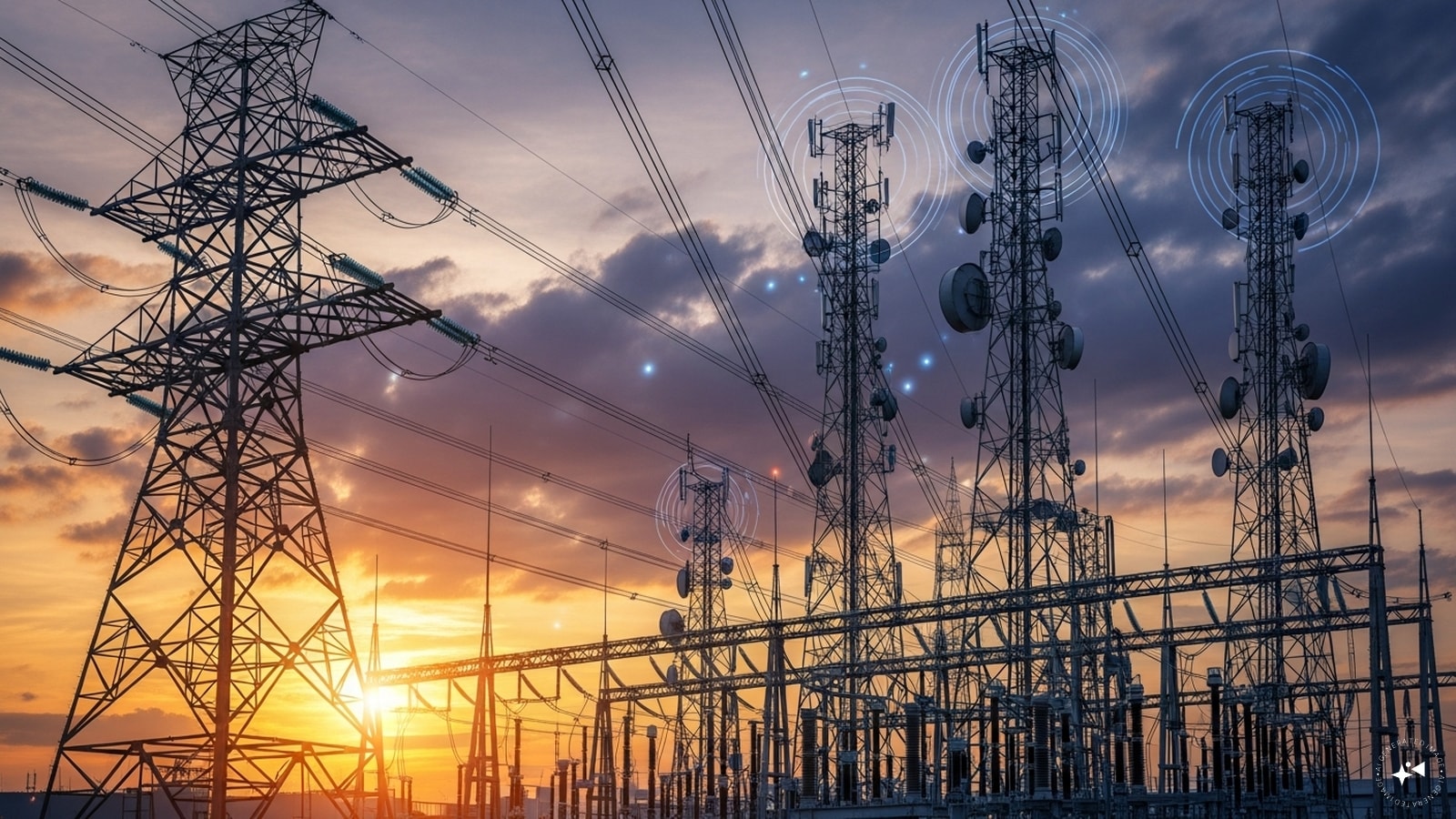
Beneath the grand speeches and the diplomatic smiles lies a brutal mathematical reality. AI does not run on charm. It runs on electricity, water, and graphics processing units (GPUs).
To train a single, state-of-the-art large language model requires thousands of specialized microchips running continuously for months. These chips consume enormous amounts of power. The data centers that house them require millions of gallons of water just to keep from melting down.
This is where the grand visions of Macron and Modi hit a wall of hard infrastructure.
- The Energy Crunch: France has a massive advantage here due to its reliance on nuclear power. It can offer tech companies relatively clean, stable, and abundant electricity to run data centers.
- The Capital Deficit: India has the human capital, but building the physical data centers requires billions of dollars of upfront investment. The Indian government has approved an AI Mission with a budget of over $1.2 billion, aiming to fund supercomputing infrastructure, but that is a drop in the bucket compared to the capital being deployed by private American firms.
The question that haunts both leaders is whether their charm can bridge the financial chasm. Can a warm handshake from a prime minister or a dinner invitation from a president convince a venture capitalist to risk billions of dollars outside of the traditional tech ecosystems?
The Human Stakes of the Race
It is easy to get lost in the numbers, the valuations, and the geopolitical chess moves. But the real reason this race matters is found in the quiet moments of ordinary lives.
Consider what happens if France and India fail to secure this investment.
If Europe and the Global South lose the AI race, the entire world's intellectual output will be filtered through the cultural lens of a few zip codes in California and Beijing. When a student in Marseille or a student in Mumbai asks an AI assistant about history, philosophy, or economics, the answer will be shaped by the values, biases, and political pressures of those two dominant powers.
It is a subtle, pervasive form of soft power. It is the colonization of thought.
I remember talking to a young researcher in Paris who left a high-paying job at a major American tech firm to return home and work for a French AI startup. He told me he left because he was tired of translating his culture into a language the American models could understand. He wanted to build an AI that understood the nuance of French law, the cadence of French literature, and the specific rhythm of European life.
"If we don't build it," he told me, "someone else will build a version of us that fits into their spreadsheet."
That is the fear driving Macron. That is the fear driving Modi.
Beyond the Bilateral
The race is changing the very nature of diplomacy itself. Presidents and prime ministers used to spend their time negotiating with other heads of state. Now, they spend just as much time lobbying CEOs who control more computing power than entire continents possess.
The Élysée Palace and the parliament buildings in New Delhi have effectively become tech incubators. The policy decisions made in these buildings over the next few months will determine where the next generation of intellectual property is owned.
Will the wealth generated by artificial intelligence be distributed globally, or will it accumulate in the same few hands that grew wealthy off the smartphone era?
The charm offensives will continue. There will be more photos of Macron looking earnest, more images of Modi smiling beside Silicon Valley executives. They will announce new partnerships, new research centers, and new investment funds.
But the real victory won't be measured by the press releases. It will be measured years from now, when the hypothetical engineers like Priya in Bengaluru or the researchers in Paris look at the systems they are using. If they are building on infrastructure owned by their own nations, trained on their own terms, and reflective of their own cultures, then the charm offensives will have succeeded.
The rain eventually stops in Paris. The flags are put away. The diplomats go home. But in the quiet data centers scattered across Europe and Asia, the servers keep humming, processing the data that will define who rules the world tomorrow.