Maps lie. They tell us that borders are hard black lines, that mountains are walls, that geography is destiny. But stand in Tashkent as the evening air cools and the scent of roasting cumin drifts from a courtyard, and you realize maps are just fiction drawn by people who never learned how to listen.
Distance is not measured in miles. It is measured in memory.
For centuries, the Silk Road did not just move silk and spices. It moved breath, ideas, and the quiet understanding that nations thousands of miles apart could look at the same night sky and share a common pulse. Yet, in the modern era, we grew lazy. We let the noise of global politics crowd out the ancient whispers of kinship. We forgot how to look across the steppes.
Then came a quiet morning in Tashkent, and a ceremony that rewrote the vocabulary of modern diplomacy.
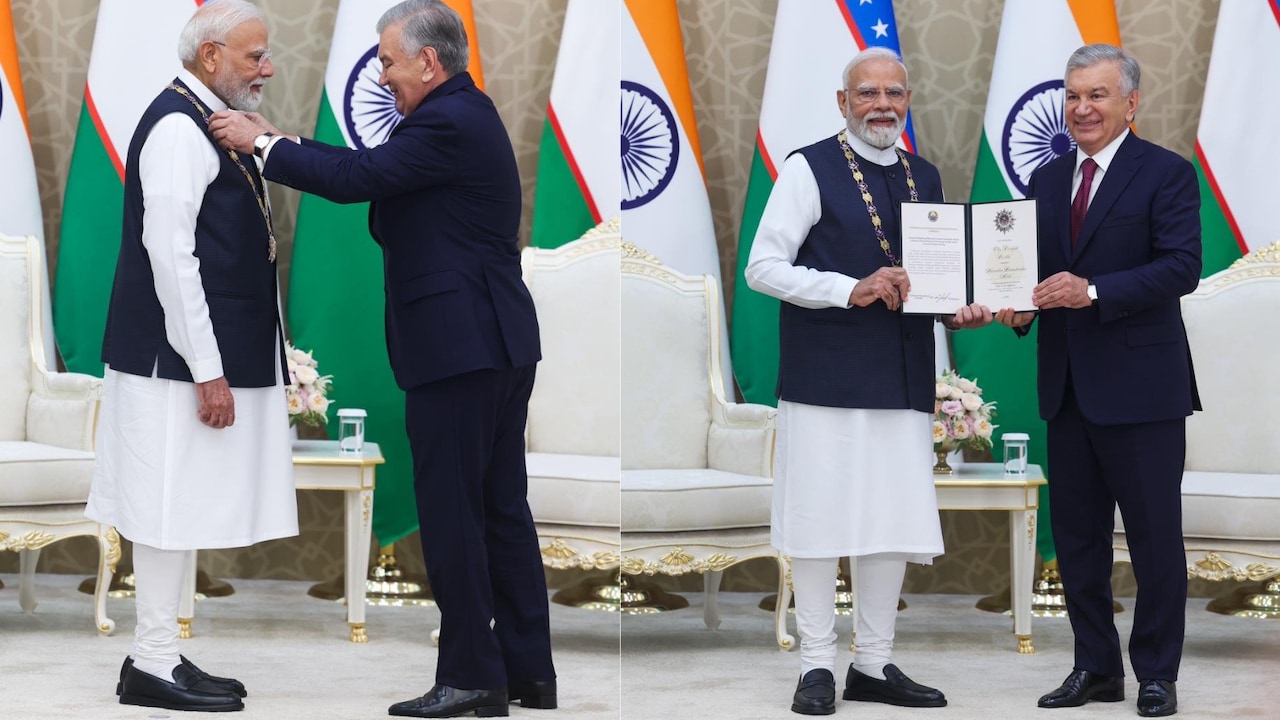
Prime Minister Narendra Modi stood in a grand hall, surrounded by the quiet gravity of history. Around his neck rested the Order of the Supreme Friendship, Uzbekistan’s highest honor for foreign leaders. To a casual observer scrolling past a morning news feed, it was just another shiny medal, a routine exchange of diplomatic courtesy between two dignitaries in tailored suits.
They missed the point entirely.
To understand why this moment matters, you have to strip away the press releases and look at the human cost of isolation. Picture a young student sitting in a university library in Samarkand, staring at an ancient manuscript written in a script that bridges Persian, Turkic, and Indian roots. Picture an engineer in Gujarat designing pharmaceutical networks meant to save lives thousands of miles away in Central Asia. These are not statistics in a trade agreement. They are heartbeats.
For years, the connection between India and Central Asia felt like a radio station tuned just slightly off frequency. The signal was there, humming with potential, but static kept drowning out the music. Trade routes were choked by geopolitical gridlock. Air corridors were indirect. Cultural exchanges were occasional rather than constant.
Diplomacy often feels cold because it is written by people who treat human relationships like spreadsheet cells. But leadership, at its highest and rarest form, requires an act of radical empathy. It requires stepping into a room and convincing millions of people they belong to a shared story.
When Uzbekistan conferred its highest distinction on Modi, it was not merely acknowledging a politician. It was honoring a stubborn refusal to let geography dictate estrangement. It was a formal nod to years of quiet, persistent labor—revitalizing connectivity, opening up educational corridors, and treating Central Asia not as a buffer zone between superpowers, but as an ancient partner ready for a modern renaissance.
Consider what happens when nations actually decide to trust each other.
The Chabahar port project in Iran, championed relentlessly over recent years, stopped being a geopolitical talking point and started becoming a lifeline. Suddenly, the landlocked markets of Uzbekistan had a direct, breathing window to the Indian Ocean. Trucks rolled. Cargo moved. But more importantly, anxiety receded.
Think about the medical tourists arriving in New Delhi from Tashkent, clutching the hands of loved ones desperate for specialized healthcare they could not find closer to home. They find doctors who speak to them with patience, in hospitals that feel worlds away from the sterile coldness of bureaucratic medicine. That is what foreign policy looks like when it finally remembers it is dealing with human beings.
We live in an age that worships cynicism. We are trained to look at every handshake with suspicion, to hunt for the hidden angle, the cynical trade-off, the transactional trap. It is safer that way. Cynicism protects us from disappointment.
Yet, history is rarely made by cynics. It is forged by stubborn romantics who look at a broken map and refuse to accept the creases.
The ceremony in Tashkent was a reminder of that stubbornness. It was a bridge built across mountains that empires had spent centuries trying to turn into barriers.
When the medal was placed around the Indian leader's neck, the cameras flashed, the diplomats smiled, and the journalists scribbled their notes. But beneath the institutional polish, something older and heavier shifted. The ghost of every merchant who ever drove a camel through the freezing passes of the Pamirs was watching. The scholars who translated texts between Sanskrit and Sogdian would have smiled.
Because borders are temporary. Friendships forged in mutual respect outlast governments.
The air in Tashkent grew dark as the ceremony concluded. Out in the city streets, fountains caught the amber glow of streetlamps, and families walked arm-in-arm beneath ancient plane trees. Somewhere out there, a train rattled along a northern track, carrying goods and dreams toward a southern sea. The map was the same as it had always been, yet everything had changed.