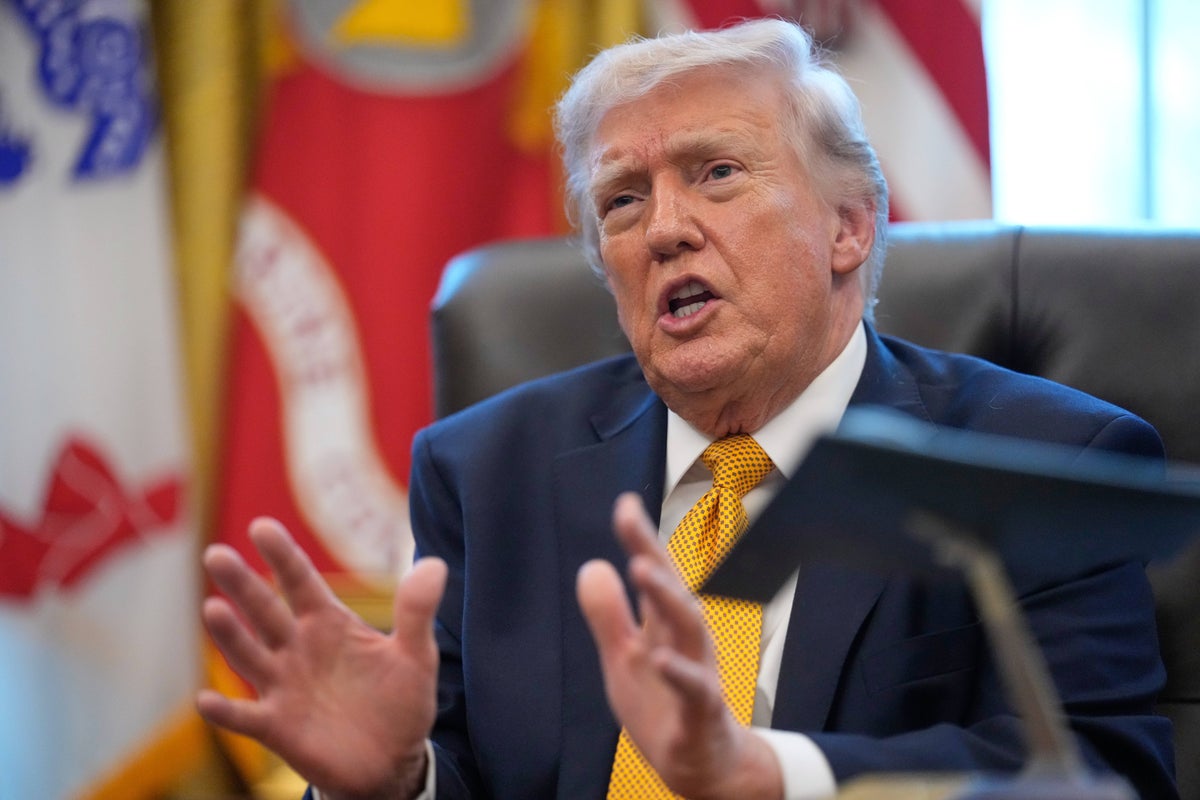
The air in the arena always smells the same. It is a thick cocktail of ozone, expensive hairspray, and the electric, jagged anticipation of a crowd waiting for a punchline. When Donald Trump stands behind a podium, he isn’t just delivering a speech. He is conducting an orchestra of grievances. He knows exactly which note to hit to make the room vibrate.
On this particular night, the target wasn't a policy or a white paper. It was a person. Specifically, the silver-haired, camera-ready Governor of California, Gavin Newsom.
But Trump didn't lead with an insult. Not at first. He led with a promotion.
The Sarcastic Coronation
"The President of the United States, Gavin Newscum," Trump declared, the intentional mispronunciation of the surname landing like a rhythmic slap. The crowd roared. It was a masterclass in the theater of the absurd. By referring to Newsom as the sitting President, Trump wasn't acknowledging power; he was weaponizing the idea of it.
Think about the psychological weight of that moment. In Trump’s rhetorical universe, words are rarely literal. They are tools of disorientation. By calling Newsom the President, he was telling his audience that the actual occupant of the Oval Office, Joe Biden, was a ghost—a mere placeholder for the man Trump views as his most aesthetically symmetrical rival.
It was a backhanded compliment wrapped in a barbed-wire insult. He mocked Newsom’s intelligence in the very next breath, suggesting the Governor was all "packaging" and no "product." This is the core of the American political spectacle: the tension between how a leader looks and what a leader knows.
The Aesthetic War
To understand why this specific jab resonates, you have to look at the two men as characters in a long-running television drama.
Donald Trump is the quintessential New York developer—loud, brash, gold-plated, and unapologetically jagged. Gavin Newsom is the California archetype—polished, articulate, seemingly carved from a block of high-end marble. They represent two different versions of the American Dream, or perhaps two different versions of the American Nightmare, depending on which side of the aisle you occupy.
When Trump mocks Newsom’s "IQ," he is tapping into a deep-seated resentment felt by millions of Americans who look at the gleaming streets of San Francisco or the tech corridors of Silicon Valley and feel excluded. To Trump’s base, Newsom’s polish isn't a sign of competence. It is a mask for failure.
Consider a hypothetical voter in a shuttered factory town in Ohio. To them, Newsom looks like the man who would fire them with a smile. Trump knows this. By calling him "President," he is painting a picture of a future where that polished, California sensibility governs everything. He is using Newsom as a visual shorthand for a brand of liberalism that his followers find both alien and threatening.
The Invisible Stakes of the Name Game
Politics is often a game of nicknames. "Crooked Hillary." "Little Marco." "Sleepy Joe." These aren't just schoolyard taunts; they are branding exercises designed to reduce complex human beings to a single, digestible flaw.
With Newsom, the strategy is shifting.
Trump is no longer just trying to diminish his opponents. He is trying to choose them. By elevating Newsom to the hypothetical status of "President" during a rally, Trump is effectively bypassing the current administration to pick a fight with the man he thinks represents the Democratic future.
It’s a gamble.
If you tell a story long enough, people start to believe the premise. By constantly framing Newsom as the "real" power or the "future" threat, Trump might be doing Newsom’s campaign work for him. He is giving the California Governor a national platform, confirming that in the eyes of the Republican heavyweight, Newsom is the one who matters.
The Mirror Effect
There is a strange irony at play here. Both men are obsessed with their public image. Both understand the power of a viral clip. When Trump mocks Newsom’s intelligence, he is engaging in a projection of sorts. He is attacking Newsom’s "low IQ" because Trump himself values "genius" above almost all other traits.
In this hall of mirrors, facts often get lost. The actual data regarding California's economy, its homelessness crisis, or its tax structure becomes secondary to the narrative of the "Shiny Governor" versus the "Gravely Real Outsider."
The truth is somewhere in the messy middle. California is both a powerhouse of global innovation and a cautionary tale of urban struggle. Newsom is both a skilled administrator and a politician who has occasionally stumbled over his own optics—most notably during the infamous French Laundry dinner during the height of pandemic restrictions.
Trump doesn't need to debate the nuances of California’s high-speed rail project. He just needs to make the crowd laugh at the guy who looks like he belongs in a hair gel commercial.
The Sound of the Crowd
Rhetoric has consequences. When a former President stands on a stage and mocks the intelligence of a sitting Governor while simultaneously pretending he holds the highest office in the land, it blurs the lines of reality for the electorate.
It turns governance into a grudge match.
The human element here isn't just the two men on the screen. It’s the person sitting in the stands, or the person watching the clip on their phone during a lunch break. They are being invited into a story where there are no shades of gray—only winners, losers, geniuses, and "low-IQ" pretenders.
We are living through an era where the "vibe" of a politician often carries more weight than their voting record. Trump understands this better than anyone. He isn't selling a policy platform; he is selling a feeling of superiority. By laughing at Newsom, he allows his audience to feel like they are "in on the joke."
But the joke has a sharp edge.
As the sun set over that rally, the echoes of the laughter faded, leaving behind a familiar tension. The spectacle had succeeded. The clips were already circulating. The names had been called.
The American political theater had simply moved to the next act, leaving the audience to wonder if they were watching a tragedy, a comedy, or a rehearsal for a reality we haven't yet learned how to navigate.
The lights go down, the buses roll out, and the silver-haired man in Sacramento prepares his rebuttal, while the man with the microphone moves on to the next city, looking for the next name to transform into a weapon.