The Sound of 1974
The static came first. It was a thick, crackling hiss that drifted out of heavy wooden radio sets into the humid evening air of Port-au-Prince. Then came the voice of the commentator, faint and warbling, bouncing across thousands of miles of Atlantic ocean from a stadium in West Germany.
For a few fleeting days in the summer of 1974, Haiti stopped.
Emmanuel Sanon scored a goal against Italy. He bypassed Dino Zoff, a goalkeeper who had not conceded a goal in over a thousand minutes of international football. For six minutes, Haiti led the world. It did not matter that the Les Grenadiers ultimately lost that match, or the ones that followed. What mattered was the sudden, blinding realization that a small Caribbean nation, so often defined by its hardships, could stand on the grandest stage of human achievement and make the giants blink.
Then, the curtain fell.
Fifty-two years of silence followed. To understand what happened this week, you have to understand the weight of those five decades. A generation grew old waiting for the static to clear again. Children grew into grandparents without ever seeing the red and blue jersey walked onto a World Cup pitch. The 1974 tournament became a myth, a bedtime story told by elders to cynical youths who had come to believe that global sports glory belonged exclusively to wealthier, more stable corners of the Earth.
The wait is over.
The Invisible Stakes of a Ninety Minute Game
To the casual observer, a World Cup qualification is a sporting statistic. It is a line item in a spreadsheet of international fixtures. But football in Haiti has never been just about football.
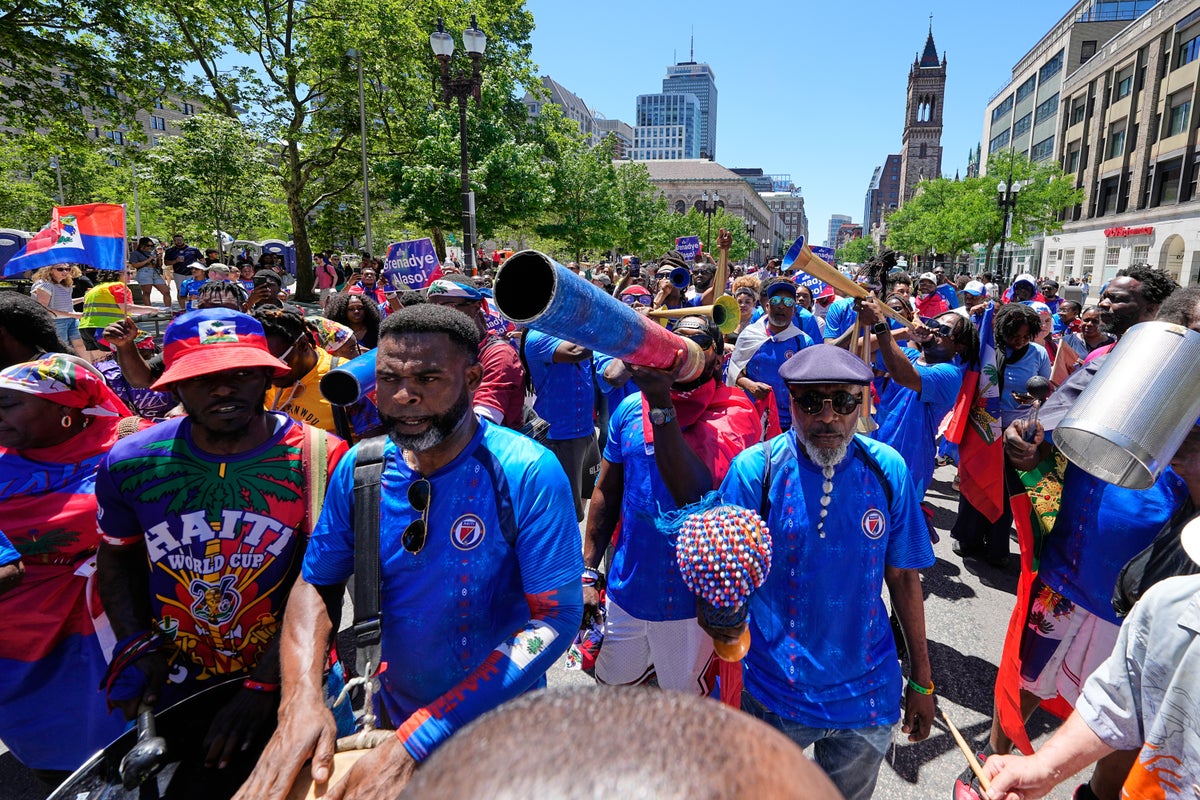
When the final whistle blew, securing the country's return to the world stage after fifty-two years, the reaction was not a standard sports celebration. It was an exorcism of prolonged disappointment. People poured into the streets of Delmas and Pétion-Ville, not because they suddenly loved tactics or goal differentials, but because the victory offered a rare, beautiful currency: dignity.
Consider a hypothetical fan named Jean-Pierre. He is twenty-four years old. His entire life has been bracketed by headlines of political upheaval, economic stagnation, and natural disasters. He knows the look of pity that crosses a stranger's face when he mentions where he is from. For Jean-Pierre, the national team is the only institution that does not ask for his patience, his sacrifice, or his resilience without giving something back.
When Les Grenadiers win, Jean-Pierre is no longer a bystander to history. He is a protagonist.
The pitch becomes a leveler. Wealthy federations can afford state-of-the-art training facilities, GPS tracking vests, and armies of sports psychologists. Haiti’s path was forged through makeshift camps, disrupted travel schedules, and the sheer, stubborn refusal to be intimidated. On the field, the grass is the same length for everyone. The ball behaves according to the same laws of physics. For ninety minutes, the geopolitical hierarchy dissolves.
Building a Team in the Shadows
The journey to this qualification was not a smooth cinematic montage. It was a grueling, often invisible struggle fought by players who carry the hopes of a fractured nation on their shoulders while managing their own personal anxieties.
Many members of the current squad ply their trade in foreign leagues, scattered across Europe and North America. They hold dual citizenships and comfortable contracts. Yet, when the call comes, they fly back. They step into an environment where the pressure is immense. They are not just playing for a trophy; they are playing for the mental health of a population desperate for a reason to smile.
The tactical evolution of the team over the qualification cycle defied the odds. The coaching staff had to stitch together a cohesive system with limited preparation time, often adapting to logistical nightmares that would cause elite European clubs to strike in protest. They relied on a rigid, counter-attacking blueprint that maximized their electric pace on the wings while anchoring the defense with a discipline that Haitian teams of the past sometimes lacked.
It was ugly at times. There were matches where they chased the ball for seventy minutes, suffocating the opposition's space, waiting for a single mistake.
But there is a distinct beauty in survival. The team mirrored the character of its supporters. They absorbed pressure, bent without breaking, and struck with lethal precision when the window of opportunity cracked open.
The Ghost of Sanon is Put to Rest
For over half a century, Emmanuel Sanon’s ghost haunted Haitian football. Every striker who wore the number 10 jersey was compared to him. Every failed qualification campaign was measured against the yardstick of 1974. It was a beautiful memory that had slowly curdled into a psychological burden.
The current generation of players has finally broken the curse.
By securing this qualification, they have shifted the conversation from the past tense to the present. The kids playing barefoot in the dust of Cité Soleil today no longer have to watch grainy, black-and-white archival footage to see people who look like them competing at the highest level. They have heroes who exist in high definition.
The economic impact of this achievement, while secondary to the emotional resonance, cannot be ignored. The influx of FIFA preparation funds, the sudden spikes in jersey sales, and the global media spotlight offer a tangible lift to the local sports infrastructure. But the true dividend is psychological.
A nation's self-image is a fragile thing. It is built on the narratives it tells about itself. For too long, the narrative surrounding Haiti has been dictated by external observers focusing exclusively on trauma. This victory rewrites the script, positioning the country as a source of excellence, talent, and unyielding competitive spirit.
The Sunday We Earned
As the sun sets over the Gulf of Gonâve, the party continues. It is a celebration that will likely stretch for weeks, bleeding into the actual tournament preparations. The skepticism that usually colors daily life has been temporarily suspended.
There are no illusions about the challenges ahead. The World Cup will pit this team against global superpowers with vastly superior resources. There will be agonizing defeats and moments of intense vulnerability. The gap between the elite and the developing football world remains vast.
But that is a worry for tomorrow.
Tonight, an entire diaspora is unified. From the vibrant neighborhoods of Miami and Montreal to the crowded alleys of Port-au-Prince, millions of people are looking at the same map, pointing to the same destination, and feeling the same collective surge of pride.
Fifty-two years is a long time to hold your breath. This week, an entire nation finally exhaled, the sound of their joy echoing far louder than the static of a long-ago radio.