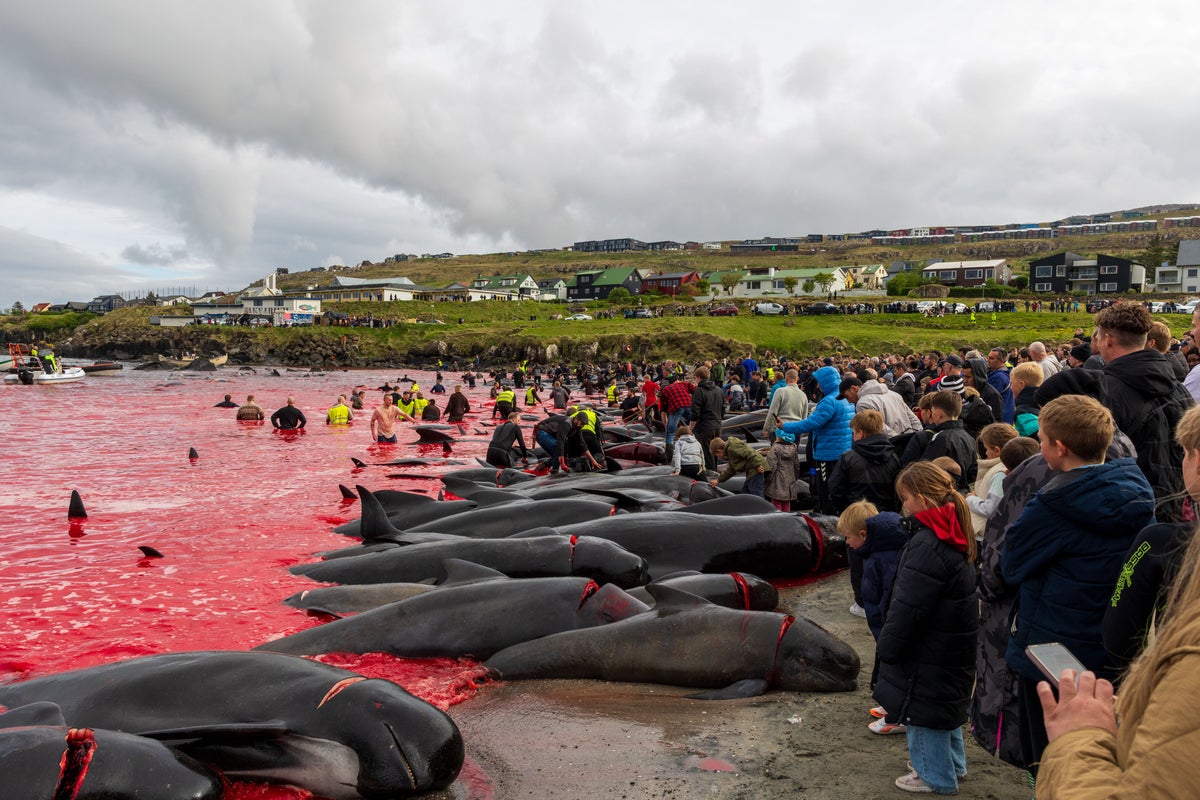
Every summer, the pristine fjords of the Faroe Islands undergo a transformation that triggers global outrage. The sea turns a deep, visceral crimson as hundreds of long-finned pilot whales and white-sided dolphins are driven ashore and slaughtered by hand. To the outside world, captured in viral social media clips and frantic activist press releases, this practice—known as the grindadráp or "grind"—looks like an archaic, bloodthirsty massacre. Yet, this localized ritual persists in an era of global conservation dominance because it is deeply tied to North Atlantic survival, modern geopolitical friction, and a fierce rejection of cultural homogenization.
Understanding the grind requires moving past the sensationalized headlines of blood-red waters. This is not a commercial enterprise driven by corporate profit, nor is it a secretive, lawless poaching operation. It is a highly organized, legally regulated community event that challenges Western assumptions about meat consumption, sustainability, and environmental stewardship.
The Mechanics of a Communal Slaughter
The grind is entirely opportunistic. There is no set season, no commercial fleet, and no financial profit. When a pod of pilot whales is spotted near the coast, the news spreads quickly through local communication networks.
The operation moves with military precision. Boats form a semi-circle behind the pod, driving the marine mammals toward a designated, government-approved beach. Once the whales are stranded in the shallows, shore-based participants secure them using a blunt blowhole hook, which does not pierce the flesh, and pull them closer. The kill itself is executed using a specialized spinal lance designed to sever the spinal cord and surrounding arteries, cutting off blood flow to the brain instantly.
While activists argue the process causes immense terror and prolonged agony, Faroese authorities maintain that the actual killing takes a matter of seconds per animal. The entire pod is often dispatched in under half an hour.
What happens next separates the grind from almost every other form of modern animal agriculture. The meat and blubber are not sold in supermarkets or exported to high-end foreign markets. Instead, the entire catch is divided among the participants and the local community according to a complex, centuries-old calculus overseen by local officials. It is a pure subsistence system. For the Faroese, a single successful hunt secures free, high-protein food for thousands of residents, reducing the island nation's dependence on expensive, carbon-heavy imported meat.
The Sovereign Right to the Sea
Outside pressure to ban the grind has historically backfired, primarily because of how the Faroese view their place in the world. The Faroe Islands are a self-governing archipelago within the Kingdom of Denmark. While they rely on Denmark for defense and foreign affairs, they maintain strict autonomy over their fisheries and marine resources.
International anti-whaling campaigns, often led by well-funded Western NGOs, are frequently viewed by locals as a form of cultural imperialism. The Faroese point out an blatant double standard in global outrage. Western nations condemn the slaughter of whales while simultaneously ignoring the industrial-scale suffering inherent in factory farming. To the islanders, harvesting a wild animal that has lived a free life in its natural habitat is fundamentally more humane than raising pigs or chickens in cramped, artificial enclosures before sending them to mechanized slaughterhouses.
This defensive posture has transformed the grind from a simple food-gathering tradition into a symbol of national sovereignty. Giving in to international boycotts or celebrity-led campaigns feels, to many Faroese, like surrendering their identity to outsiders who do not understand the realities of North Atlantic isolation.
The Looming Threat from Within
While external protests fail to move the needle, an invisible enemy poses a far greater threat to the future of the grind. That enemy is chemical pollution.
Because pilot whales sit near the top of the marine food web, they accumulate high concentrations of heavy metals and industrial toxins through a process known as biomagnification. Decades of industrial activity in Europe and North America have filled the oceans with mercury, polychlorinated biphenyls (PCBs), and long-lasting plastics. These pollutants drift northward, settling in the blubber and organs of the very whales the Faroese rely on for sustenance.
The medical reality is stark. Chief Medical Officer of the Faroe Islands, Høgni Debes Joensen, along with other local scientists, issued explicit warnings that pilot whale meat and blubber contain too much mercury and PCBs to be safe for human consumption. They noted that regular ingestion leads to cognitive deficits in children, increased rates of Parkinson's disease, and immune system suppression.
+-------------------------------------------------------------------+
|               The Biomagnification Dilemma                        |
+-------------------------------------------------------------------+
|  Industrial Pollutants (Mercury, PCBs)                            |
|             ↓                                                     |
|  Absorbed by Plankton & Small Fish                                |
|             ↓                                                     |
|  Consumed by Larger Predatory Fish                                |
|             ↓                                                     |
|  Concentrated in Pilot Whales (Top Predators)                     |
|             ↓                                                     |
|  Human Ingestion (Leads to neurological and developmental risks)  |
+-------------------------------------------------------------------+
This internal public health debate has created a generational divide that external protests never could. Younger Faroese, more attuned to global health data and possessing access to a wider variety of imported foods, are gradually consuming less whale meat. The tradition is not being forced out by foreign activists; it is slowly eroding from the inside as the meat becomes a toxic liability.
Population Realities and Ecological Balance
A central argument of global conservation groups is that the grind pushes whale species toward extinction. However, marine biology data presents a more nuanced reality.
The long-finned pilot whale population in the eastern North Atlantic is estimated to be around 780,000 individuals. The Faroese hunt takes an average of 600 to 1,000 whales per year. Mathematically, this represents less than 0.1% of the regional population, a harvest rate that international marine scientific bodies generally consider well within the bounds of biological sustainability.
However, the debate shifted dramatically when a hunt targeted an unusually large school of Atlantic white-sided dolphins, resulting in the death of over 1,400 animals in a single day. The sheer scale of that specific event shocked even some local residents and strained the logistics of the traditional distribution system. It exposed a weakness in the opportunistic nature of the grind: without hard caps on individual hunt sizes, the system can produce wasteful, unmanageable surpluses that damage the nation's reputation without providing proportional societal value.
In response to the domestic backlash following that incident, the Faroese government implemented an annual provisional catch limit explicitly for white-sided dolphins, capping the harvest at 500 animals. This move demonstrated that while the islands reject foreign dictates, they are capable of internal course correction when their actions conflict with their own conservation principles.
The Hypocrisy of Global Food Systems
The international fury directed at the Faroe Islands reveals a deeper disconnect in how modern societies view food production. Most consumers in developed nations are entirely insulated from the violence required to sustain their diets. Meat arrives wrapped in plastic, stripped of any visual connection to a living being.
The grind forces onlookers to confront the raw, unedited reality of death required to consume meat. There are no walls, no hidden kill floors, and no corporate PR campaigns to sanitize the process. It happens in the open air, witnessed by families and children.
If the global community wishes to meaningfully address ocean conservation and the welfare of cetaceans, focusing exclusively on a sustainable, non-commercial subsistence hunt in the North Atlantic misses the broader crisis. Commercial fishing bycatch, climate change, and plastic pollution kill vastly more marine mammals every year than the Faroese lances ever will. Shaming an island community for harvesting its local waters allows industrial nations to ignore their own, far more destructive footprints on the global ocean ecosystem.