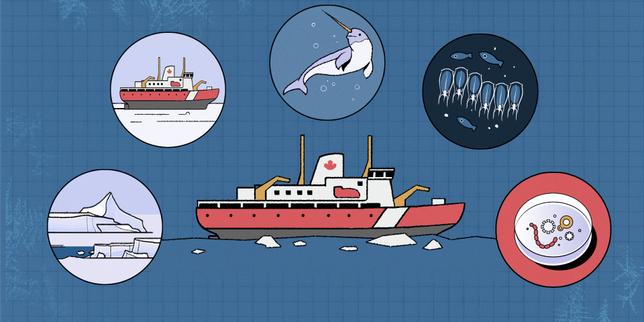
Every summer, wealthy journalists board icebreakers, sip lukewarm coffee in thermal gear, and stare blankly at calving walls of blue ice in Greenland. They return with breathless prose about monumental retreat, weeping glaciers, and an impending aquatic apocalypse. It sells copy. It feeds the anxiety machine. It is also fundamentally missing the point.
Focusing exclusively on the visible collapse of tidewater margins is a lazy proxy for understanding planetary-scale cryospheric dynamics. I have watched millions in grant funding and corporate offset capital chase the surface theater of calving fronts while ignoring the rigid mechanics governing basal friction and subglacial hydrology. The mainstream narrative treats these ice sheets like fragile sculptures melting in a microwave. They are not. They are hyper-dense, highly dynamic fluid-rock systems operating under immense thermodynamic and tectonic constraints. If you enjoyed this piece, you might want to read: this related article.
Let us strip away the eco-melodrama and examine the physical reality.
The Flawed Premise of Linear Retreat
The lazy consensus tells us that every meter of ice lost from a major outlet glacier equals a direct, linear escalation of global sea-level threat. That assumption collapses the moment you examine bedrock topography. For another angle on this event, check out the recent coverage from BBC News.
Glaciers like those plunging into Disko Bay or the northeast streaming systems do not retreat uniformly. They unground. There is a vast mechanical difference between a floating tongue snapping off due to warming ocean currents and the actual mass loss of grounded inland ice. When a marine-terminating glacier retreats, it often hits a reverse-sloping bedrock trough that stabilizes its grounding line for decades, only to experience rapid, catastrophic ungrounding when local bathymetry shifts.
Counting surface icebergs is like diagnosing a heart condition by counting gray hairs. It tells you the system is aging, but it tells you nothing about the velocity of the underlying pathology.
The Subglacial Blind Spot
Surface meltwater gets all the press because it makes for dramatic drone footage. Rushing blue rivers plunging down moulin shafts look terrifying. The common wisdom dictates that this water lubricates the bedrock, sliding the entire mega-tonne beast faster into the Atlantic.
Except nature is rarely that simple.
Detailed GPS networks and borehole telemetry over the past decade show that subglacial plumbing systems are self-organizing. Early in the melt season, water does indeed act as a lubricant, speeding up flow. But as the volume surges, the immense hydraulic pressure carves out efficient, tunnel-like drainage networks—known as canals or cavities—that actually depressurize the bed. The ice slows down.
When you read that a glacier sped up twenty percent after a warm week, you are reading a snapshot of a transient hydrological shift, not a permanent acceleration vector. The system adapts, drains, and stabilizes.
The Bathymetry Reality Check
Why do certain outlets surge backward into the fjords while neighbors fifty kilometers away remain relatively pinned? It comes down to underwater topography.
- Threshold Depths: Ice afloat in water loses contact with the bed once its thickness drops below the buoyancy threshold.
- Trough Geometry: Narrow fjords create lateral drag that holds ice in place; wide, overdeepened basins promote rapid destabilization once warm water breaches the sill.
The ocean does the heavy lifting here, but not through simple atmospheric warming melting the surface. It is the intrusion of subsurface Atlantic water masses—deep, relatively warm currents driven by large-scale wind stress patterns—that melts the ice from below at the grounding line. Surface air temperatures could drop below freezing for a decade, and these deep marine-terminating glaciers would still retreat if warm subsurface water keeps licking their underbellies.
Blaming warm summers for every meter of lost ice ignores the marine engine driving the bus.
The Cost of Misdirected Panic
When corporations and governments base their adaptation strategies on surface optics rather than bedrock mechanics, they waste billions. We see coastal defenses engineered for worst-case uniform sea-level rise projections while regional land uplift, post-glacial rebound, and localized gravitational shifts are treated as footnotes.
Greenland is rising. As the colossal weight of the ice sheet diminishes, the underlying mantle slowly rebounds like a memory foam mattress recovering from a knee. In some regions, local crustal uplift actually outpaces global sea-level rise. You cannot capture that nuance with a camera crew filming a crumbling ice cliff.
Stop looking at the calving front. Start mapping the subglacial sills and the oceanographic pumps driving deep water onto the continental shelf.
The ice is not surrendering to the summer sun. It is locked in a slow, brutal physics fight with the Atlantic Ocean, and we are losing the argument because we refuse to look past the surface spray.