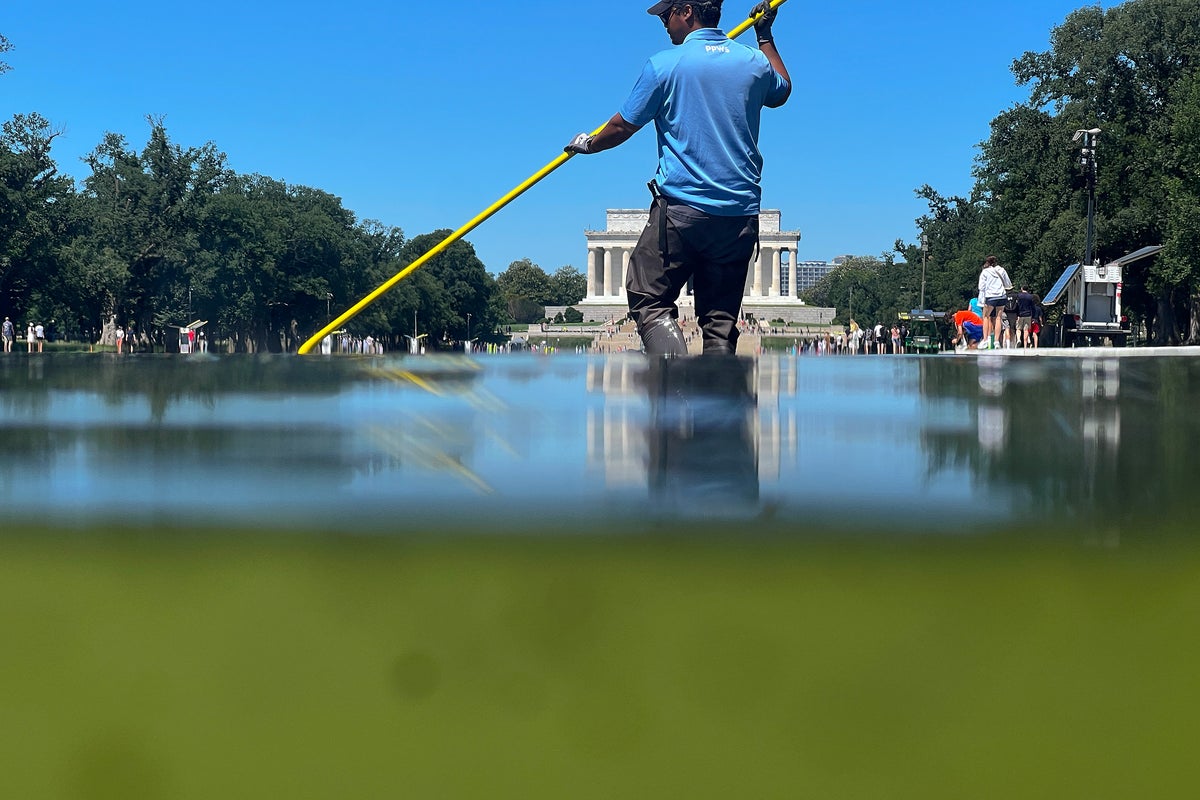
On a blazing midsummer afternoon in Washington, D.C., tourists gather at the edge of the Lincoln Memorial Reflecting Pool. They expect a mirror. They want to see the sky, the clouds, and the towering white obelisk of the Washington Monument cast perfectly upon a pristine sheet of water.
Instead, they often find soup. Thick, pea-green, and choked with algae. Building on this theme, you can find more in: The Knock on the Door at 2:00 AM.
Water has a way of exposing human hubris. You can pass a law, sign an executive order, or brag to a crowd of thousands about a grand renovation, but the microscopic organisms living in the water do not care about politics. They only care about sunlight, warmth, and nutrients. When those elements align, they multiply by the billions.
For decades, keeping this iconic body of water clean has been an invisible, grueling battle. In late 2017 and through 2018, that battle became a quiet catastrophe hidden behind the scenes of a high-profile political victory lap. Analysts at BBC News have provided expertise on this situation.
President Donald Trump stood before crowds and boasted about the sweeping renovations under his administration, claiming the pool had been fully fixed, upgraded, and restored to pristine glory. The public narrative was one of swift, decisive victory over nature and bureaucracy.
The view from the plumbing trenches told a completely different story.
Internal National Park Service documents later revealed that while the speeches were being delivered, the newly installed, expensive algae-removing devices were failing miserably. They were not working correctly. The technology meant to save the pool from turning into a swamp was choked out by the very organism it was built to destroy.
Imagine standing on the concrete lip of the pool. To understand why this matters, look past the politicians and consider the people who actually have to manage the muck. Think of a hypothetical maintenance supervisor—let's call him Jim. Jim doesn't care about electoral college maps. Jim cares about the dual-strainer filtration systems and chemical balances.
Every morning, Jim walks the perimeter. When the pumps fail, he is the one who hears the grinding gears. He is the one who watches the green film creep across the surface from the edges inward, swallowing the reflection of Abraham Lincoln's monument.
The technology deployed to fight this green tide relied on specialized filtration and chemical treatment systems designed to disrupt the life cycle of the algae. On paper, it was a flawless defense mechanism. In reality, the systems suffered from chronic malfunctions, blockages, and operational errors.
The contrast between public proclamation and operational reality is a pattern as old as architecture itself. A leader stands at a podium and declares a project finished. The ribbon is cut. The cameras flash. But water is heavy. It leaks. It breeds life where life is inconvenient.
The Reflecting Pool holds roughly 6.7 million gallons of water. It is shallow, averaging only about two feet deep. This design makes it a massive solar collector. The sun beats down on the concrete bottom, heating the water to temperatures that resemble a bathtub. Add in some nitrogen from bird droppings and runoff from the surrounding lawns, and you have a paradise for algae.
Without constant, aggressive filtration, the pool transforms from a national symbol into a stagnant pond within days.
When the specialized removal devices began to fail, the National Park Service staff found themselves caught in a vice. On one side was the official narrative that the renovations were a triumph. On the other side was a clogged intake pipe and a rising tide of slime.
The engineers tinkered with the flow rates. They cleaned the filters manually, hours of backbreaking labor under the humid D.C. sun, trying to force a broken system to live up to a press release. They adjusted the chemical inputs, trying to find a balance that would kill the bloom without harming the local wildlife or creating an acidic hazard in the middle of the National Mall.
The documents painted a picture of quiet frustration. Emails traded back and forth between engineers and administrators documented the persistent downtime of the equipment. While the public looked at the water and wondered why it looked so turbid, the bureaucrats were staring at maintenance logs filled with red ink and unresolved mechanical errors.
The true cost of this disconnect is not measured just in taxpayer dollars spent on faulty equipment, though that number is significant. The real cost is the erosion of trust in the infrastructure we see every day. If we cannot keep a shallow, self-contained pool of water clear in the front yard of the nation's capital, it raises uncomfortable questions about the invisible infrastructure we cannot see—the water mains, the bridge footings, the electrical grids hidden beneath our feet.
The battle against the algae eventually forced a return to older, more rudimentary methods. When the sophisticated technology failed, human sweat had to fill the gap. Crews used skimming nets and temporary chemical treatments, treating the symptom because the cure was broken in a pump room.
The sun still sets behind the Lincoln Memorial, casting long shadows across the National Mall. The water reflects the orange and purple hues of the sky, but if you step closer, right up to the granite edge, you can see the faint green filaments dancing just beneath the surface, waiting for the pumps to slow down again.