The air at ten thousand feet doesn’t just feel thin. It feels fragile. Up here, in the oyamel fir forests of Michoacán, the silence is so heavy it rings in your ears. Then, the sun breaks through a cloud.
Suddenly, the trees begin to melt.
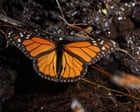
What looked like rusted iron or dead leaves clinging to the bark begins to shiver, then peel away in fluttering sheets. Millions of monarch butterflies, previously huddled for warmth in clusters so dense they can snap a tree limb, take to the sky. It is a sound like falling water. It is a sight that defies the cynical logic of the modern world. How can something that weighs less than a paperclip travel three thousand miles from a backyard in Ohio to a specific mountain ridge in Mexico they have never seen before?
For years, the answer was: they might not do it much longer.
The numbers were a gut punch. We watched the migratory maps shrink. We saw the illegal logging scars on the mountainsides. We felt the erratic sting of climate change—storms that froze millions of wings in a single night. But the latest census from the forests offers something we haven't dared to feel in a decade.
Hope.
The monarch population in Mexico’s overwintering grounds has surged by 64%.
The Calculus of a Comeback
Statistics in conservation are often used as shields or weapons. In this case, the math is a heartbeat. To understand a 64% jump, you have to understand how we count them. You don't count individual butterflies. That would be like counting the grains of sand in a dune. Instead, scientists measure the area of forest they cover.
Last year, the monarchs occupied roughly 2.1 hectares. This year, they’ve claimed 3.42 hectares.
To a casual observer, that sounds small. A hectare is about two and a half acres. We are talking about a total footprint that could fit inside a few professional sports stadiums. But for a species that was spiraling toward a "quasi-extinction" threshold, this expansion is a massive, colorful gasp of air.
It wasn't luck. It was a massive, cross-continental conspiracy of kindness.
Consider a woman named Elena. She lives in a small village near the butterfly sanctuaries. For her grandfathers, the butterflies were the souls of the departed returning for the Day of the Dead. For her father, the forest was a source of timber—a way to put food on the table when there were no other jobs. Today, Elena is part of a community patrol. She doesn't carry a chainsaw; she carries a clipboard and a sense of fierce ownership.
The surge in numbers is directly tied to people like her. When the local communities were given a stake in the butterflies’ survival—through eco-tourism and sustainable farming subsidies—the illegal logging dropped. The trees stayed standing. The butterflies had a bed for the winter.
The Invisible Highway
The story of the monarch isn't just a Mexican story. It’s a North American epic.
The 64% increase we see on the mountaintops today is the result of what happened months ago in suburban milkweed patches in Kansas and abandoned railway tracks in Ontario. To get to Mexico, a monarch needs a highway. Not of asphalt, but of nectar.
Imagine trying to drive across the country with a gas tank the size of a thimble and no map. You’d need a gas station every few miles. For a monarch, a gas station is a flowering plant. For years, we were tearing down the stations. We paved the meadows. We sprayed the "weeds" with herbicides until the landscape was a sterile green desert.
The rebound tells us that the "Waystation" movement is working. Millions of people—regular people with small gardens and window boxes—started planting milkweed. They stopped using neonics. They realized that a "perfect" lawn is a biological dead zone.
This 64% jump is a receipt. It’s proof that collective, uncoordinated action by millions of individuals can actually move the needle on a global scale.
The Fragility of a Win
Numbers can be deceptive. While we celebrate this spike, we have to acknowledge the baseline. In the 1990s, these same forests would be carpeted in orange across twenty hectares. We are still a long way from the "safe zone" of six hectares that scientists believe is necessary to keep the migration resilient against a single catastrophic weather event.
One freak ice storm in Michoacán could still wipe out the progress of a decade.
The stakes aren't just about a pretty insect. The monarch is the "canary in the cornfield." If the environment becomes too harsh for a creature that has survived for millennia, it is becoming too harsh for us. They are pollinators. They are a link in a chain that holds our own food systems together.
But there is a deeper, less "practical" reason why this 64% matters.
In a world that feels increasingly fragmented and cynical, the monarch migration is a reminder of a grander order. It is a piece of magic that actually exists. To lose it would be to admit that we have broken the world so thoroughly that even the sun-seekers can’t find their way home.
A Shifting Canopy
The wind picks up. The temperature drops by a few degrees as a cloud obscures the sun. Almost instantly, the air clears. The millions of wings that were just filling the sky return to the trees. They fold themselves shut, revealing their pale, veined undersides.
They vanish.
The forest goes back to being green and brown, hiding its treasure in plain sight. They are waiting. They are resting for the journey north that begins in a few weeks. They will lay eggs on the underside of milkweed leaves in Texas, and their children will continue the flight, and their grandchildren after them.
We often think of conservation as a series of losses—a slow slide into the dark. But every now and then, the light catches the wings just right.
The 64% increase isn't a victory lap. It’s a signal. It tells us that the earth is still listening. It tells us that when we stop taking and start tending, the life we thought was leaving us can find its way back.
The orange clouds are still flying. For now, that is enough.
Would you like me to find local milkweed varieties native to your specific region so you can contribute to the next migration season?