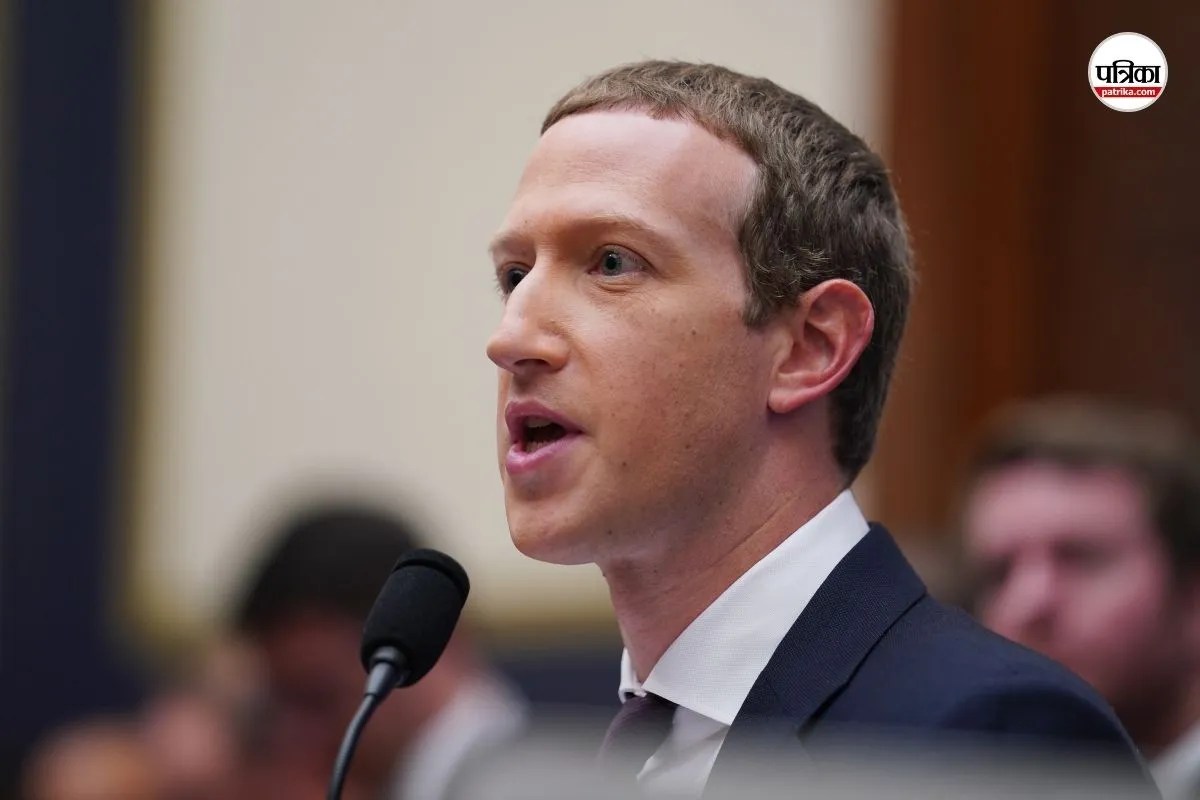
The headlines are bleeding with panic. "Big Tech is losing its soul," they scream. Every time a senior researcher at Google DeepMind or a VP at Meta packs their bags to start an AI lab with a generic Latin name, the industry treats it like a funeral. They frame it as a talent war that the incumbents are losing. They claim the "Big Three" are becoming stagnant graveyards where innovation goes to die under the weight of middle management and compute-quota bickering.
They are wrong.
The narrative that OpenAI, Anthropic, and the newest wave of "GPU-rich" startups are raiding the Big Tech pantry misses the most cynical—and brilliant—reality of the 2026 AI economy. This isn't a brain drain. This is an outsourced R&D experiment funded by venture capital.
The Myth of the Innovator's Dilemma
The common consensus suggests that Meta and Google can’t innovate because they are trapped by their existing business models. People love to cite the "Innovator's Dilemma," arguing that Google won't kill Search and Meta won't kill the Feed.
I’ve spent fifteen years watching these cycles. In the early 2010s, we saw the same "mass exodus" toward mobile gaming and crypto. What actually happened? The giants let the pioneers do the expensive, messy, and legally risky work of finding product-market fit. Once the path was cleared, the giants simply paved over it.
When a top researcher leaves Google to start an LLM-native productivity suite, they aren't "escaping." They are moving into a high-risk sandbox that Google itself cannot afford to maintain. If the startup fails, the talent flows back to Mountain View with three years of "battle-tested" experience paid for by Andreessen Horowitz. If the startup succeeds, Google buys them, or more likely, builds a superior version using their massive internal distribution advantage.
VCs are Paying Big Tech’s Training Costs
Consider the economics of a modern AI researcher. At Meta, a top-tier engineer might cost $1.2 million annually in total compensation. They require access to a cluster of $H100$ or $B200$ GPUs that costs tens of millions to maintain.
When that researcher leaves to launch a startup, the financial burden shifts instantly.
- The incumbent saves the salary and equity burn.
- A Venture Capital firm writes a $100 million check for "seed" funding.
- The startup spends 80% of that check on cloud credits—often back to Google Cloud or Microsoft Azure.
Big Tech isn't losing talent; they are converting expensive employees into high-margin cloud customers. This is a circular economy where the "departing" talent is effectively a high-level salesperson for the incumbent’s infrastructure.
The "Safety" Ploy
OpenAI and Anthropic were founded on the premise of "safety" and "alignment," ostensibly because the big firms were too reckless or too slow. This was a masterful branding exercise, not a structural shift.
The "safety" argument provided a moral high ground for talent to jump ship while chasing 100x equity returns. But look at the trajectory. As soon as the "safe" startups hit a certain scale, they mirrored the exact corporate structures they fled. They seek multi-billion dollar partnerships with the same giants they claimed were the problem.
If you think a researcher leaving OpenAI for a new "distributed intelligence" startup is an act of rebellion, you’re being played. It’s a career arbitrage. They are resetting their equity clock.
The Compute Ceiling
The industry pretends that "talent is all you need." This is a lie. In the current era of scaling laws, talent is a distant second to compute and data.
$$Total Intelligence \approx (Compute)^{a} \times (Data)^{b} \times (Algorithms)^{c}$$
In this equation, $a$ and $b$ are the dominant exponents. A brilliant researcher at a startup with 500 GPUs is significantly less productive than a mediocre engineer at Google with 50,000 GPUs. The "exodus" of talent often hits a brick wall called the "Compute Ceiling."
I have seen brilliant teams leave Microsoft, raise $50 million, and realize within six months that they cannot even afford to train a base model that competes with the "slow" corporate version they left behind. The "nuance" the media misses is that these startups aren't building better models; they are building better interfaces. They are wrappers. And wrappers are easily discarded.
Why the "People Also Ask" Section is Wrong
If you search for why AI researchers are leaving, you’ll find questions like:
- Is Big Tech losing the AI race?
- Why are AI startups more innovative?
These questions assume that "innovation" is the goal. For a trillion-dollar company, the goal is Stability and Rent-Seeking.
They don't need to be first; they need to be the only ones left standing when the VC subsidies run out. The "innovation" happening in startups is currently a series of expensive A/B tests. Big Tech is watching the results from the sidelines, waiting to see which features actually stick.
The Brutal Truth of "Founder" Status
Most of these "departing stars" aren't founders in the traditional sense. They are technical leads who realized they can get a "Founder" title and a massive secondary stock sale before the model ever reaches a profit.
It is a glorified exit strategy. The industry is currently built on a "Flip to Big Tech" model. You leave Google to start a company so that Google can buy you back two years later for $500 million. This isn't a drain; it's a retention bonus with extra steps and a tax-efficient structure.
The Infrastructure Trap
We are entering a phase where the complexity of maintaining AI systems at scale exceeds the capabilities of a 50-person startup. It isn't just about training the model. It's about the "boring" stuff:
- Data pipelines and cleaning.
- Content moderation at the hardware level.
- Legal indemnity for copyright infringement.
- Global latency optimization.
Startups are great at the "zero to one" phase. They are terrible at the "one to one billion" phase. The staff leaving Big Tech are finding this out the hard way. They trade the bureaucracy of a large firm for the existential dread of a high-burn startup that can’t pay its power bill.
The Re-Entry Phenomenon
Watch the "Boiling Frog" effect. In the next 24 months, we will see a wave of "Acqui-hires" that the media will frame as Big Tech "regaining their lead."
It’s not a regain. It was a planned harvest.
The smartest move for a Big Tech CEO today isn't to fight to keep their best researchers. It’s to encourage them to leave, let them burn through $200 million of someone else's money to solve a specific technical bottleneck, and then buy the team back when the venture market cools.
Stop mourning the "loss" of talent. Start watching who is paying for the GPUs the "rebels" are using. The house always wins because the house owns the electricity.
If you are a founder thinking you are "disrupting" the giants by poaching their staff, realize you are likely just acting as their externalized R&D department. They aren't scared of you. They are waiting for you to finish the hard part.
The brain drain isn't a bug. It's a feature of the most predatory and efficient corporate ecosystem ever devised.