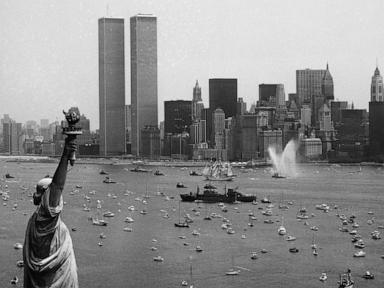
America celebrated its 200th birthday in 1976 by staging a massive, national distraction. On July 4, 1976, millions of citizens watched towering tall ships glide past the Statue of Liberty, cheered a red, white, and blue train packed with historical relics, and bought millions of commemorative tin cans. The conventional historical narrative frames the United States Bicentennial as a triumphant moment of national healing, a sunny pause between the trauma of the Vietnam War and the economic malaise of the late 1970s. This view is fundamentally incomplete. The Bicentennial was not a spontaneous outburst of organic national pride, but a highly engineered, aggressively commercialized project designed to rebuild institutional trust and sanitize a fractured history.
To understand the mechanics of the celebration, one must examine the depth of the societal crisis preceding it. The early 1970s shattered the average citizen's faith in the state. The Watergate scandal forced a president to resign, the Vietnam War ended in a humiliating and costly withdrawal, and the economy buckled under stagflation. Trust in government hit historic lows. Also making news lately: The Razor Edge of a Broken Promise.
The federal response was the creation of the American Revolution Bicentennial Administration. Rather than funding a single, centralized world's fair, the government decentralized the operation, licensing the official Bicentennial star logo to private entities. This tactical pivot transformed patriotism into a consumer commodity.
Madison Avenue quickly realized that guilt and political exhaustion could be leveraged into retail sales. Corporate sponsors flooded the market with branded nostalgia, using the anniversary to scrub away the political cynicism of the era. More details regarding the matter are covered by The New York Times.
| Bicentennial Initiative | Commercial/Institutional Mechanism | Underlying Purpose |
|---|---|---|
| The American Freedom Train | Corporate-sponsored 26-car traveling museum visiting 48 states. | Blended national artifacts with corporate branding to democratize access to history. |
| Official Logo Licensing | Federal approval of the Bicentennial star for consumer products. | Generated private revenue while plastering patriotic symbols on everyday goods. |
| Operation Sail | International parade of tall ships in New York Harbor. | Reframed a near-bankrupt New York City as a vibrant global cultural hub. |
The American Freedom Train served as the physical manifestation of this corporate-patriotic synthesis. Bankrolled by major corporations including PepsiCo, General Motors, and Prudential, the 26-car train carried historical artifacts across the contiguous United States. Over seven million Americans stood in long lines to glimpse George Washington's copy of the Constitution, a moon rock, and Judy Garland's dress from the Wizard of Oz.
The curation was telling. By placing a piece of lunar geology and a Hollywood costume alongside the foundational documents of the republic, the exhibit flattened American history into an uncritical timeline of continuous progress. It offered a comforting illusion. The presentation implied that the systemic failures of the present were mere glitches in an otherwise flawless machine.
This commercial sanitization extended down to the grocery store aisle. Consumers could purchase 50 different state-themed cans of 7-Up, Bicentennial-branded breakfast cereals, and red, white, and blue beer mugs. Even the creator of the Pet Rock attempted to cash in with a themed version of his product. This was patriotism stripped of intellectual obligation. One did not need to engage with the complex legacy of the American Revolution; one only needed to buy the commemorative merchandise.
Pop culture provided the visual aesthetics for this reconstructed national identity. The iconic 1976 poster of actress Farrah Fawcett in a red swimsuit, posed before a blue and white blanket, became an overnight cultural phenomenon. Selling millions of copies, the image offered an idealized, uncomplicated version of the "All-American" archetype. It was bright, optimistic, and entirely disconnected from the grim realities of urban decay, industrial layoffs, and political disillusionment that defined the decade.
While mainstream television networks broadcasted hours of uncritical celebration, significant segments of the population rejected the official narrative. The gloss of the Bicentennial could not hide deep structural inequalities. Comedian Richard Pryor captured this widespread skepticism on his album released that year, pointedly noting the hypocrisy of celebrating freedom in a nation built on racial subjugation.
For millions of Black Americans, Native Americans, and anti-war activists, the Bicentennial was a forced march through a history that ignored their lived experiences. Activist groups organized counter-demonstrations, pointing out that the lofty ideals of 1776 remained unfulfilled promises in 1976.
The legacy of the Bicentennial is not found in the fireworks that illuminated New York Harbor, nor in the collectible quarters that still circulate in change. The true legacy is the blueprint it created for modern corporate sponsorship. The event demonstrated that the language of national identity could be successfully adapted to serve corporate public relations and state-sanctioned distraction. It proved that when a nation is too exhausted to confront its structural flaws, a heavy dose of nostalgia and consumerism can effectively fill the void.