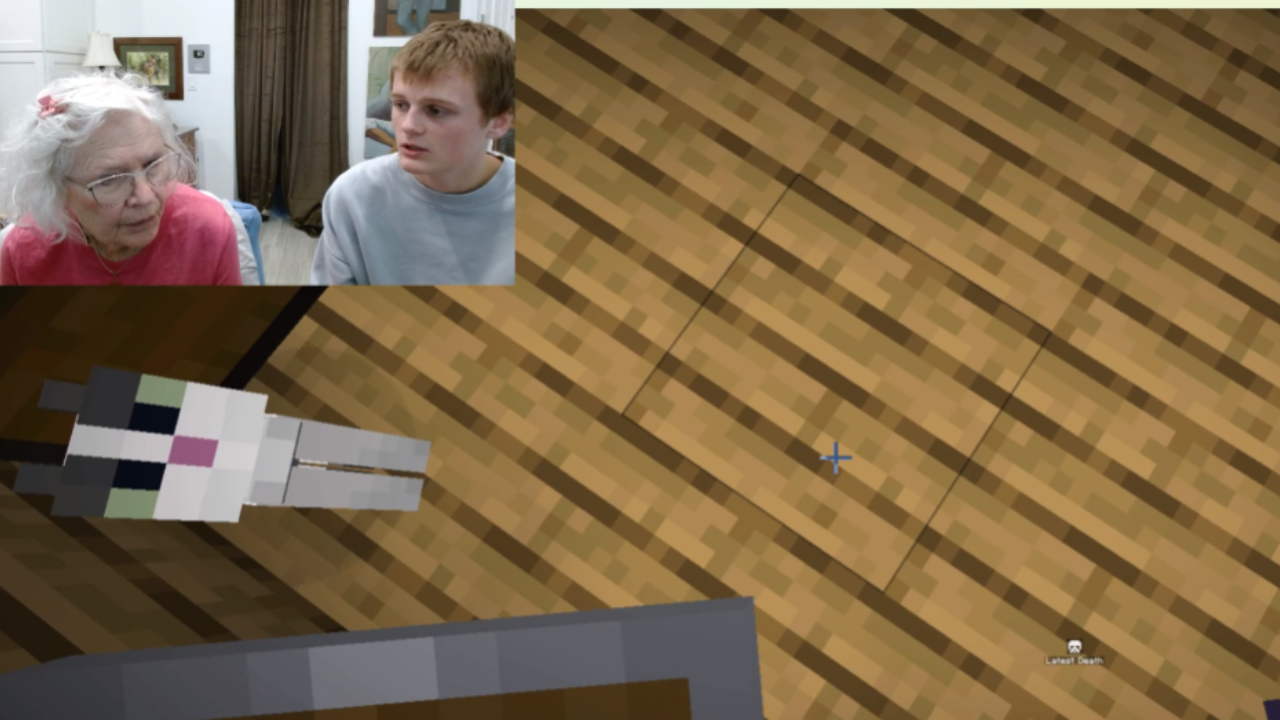
The headlines write themselves. An 81-year-old grandmother, battling cancer, gets swatted while raising money for charity on a Minecraft stream. The internet reacts on cue: outrage at the anonymous trolls, tears for GrammaCrackers, and a collective demand for police departments to "do better."
It is a neat, comforting narrative. It pits a pure-hearted creator against faceless internet monsters while treating the tech platforms hosting the horror as passive bystanders.
That narrative is completely wrong.
The tragic disruption of GrammaCrackers’ fundraiser is not just a failure of local law enforcement or a symptom of online malice. It is the predictable, systemic output of an industry infrastructure designed to maximize engagement at the cost of physical safety. We treat swatting like a freak natural disaster. It is time to start treating it like what it actually is: a design feature of the modern live-streaming economy.
The Misdirection of Platform Sympathy
Every time a high-profile swatting occurs, platforms issue the same boilerplate press releases. They condemn the bad actors. They promise to cooperate with law enforcement. They tweet expressions of solidarity.
Do not buy the performance.
Live streaming operates on a business model that prioritizes instantaneous, unvetted interaction. Platforms built their empires on the friction-free onboarding of users. They wanted maximum scale, and they achieved it by making it incredibly easy for anyone, anywhere, to broadcast their location, reactions, and personal lives in real time.
The core mechanics of Twitch, YouTube, and Kick—live chat, immediate donation alerts, viewer counts, and algorithmic amplification of high-drama moments—are optimized to turn viewer behavior into immediate creator reactions. When a swatter calls a hoax threat into a creator's local police department, they are exploiting the platform's primary feature: zero-latency feedback. The swatter gets to watch their crime unfold live, feeding off the panic, confusion, and disruption.
By maintaining platforms that prioritize raw, unmoderated immediacy over user verification and security, the tech giants are actively subsidizing the mechanics of swatting. They take their cut of the subscription and ad revenue generated by the drama, while leaving the creator to deal with the heavily armed police officers at their front door.
The Myth of the Anonymous Troll
The media loves to paint swatters as tactical geniuses or elite hackers operating from the dark web. This mystique shields platforms and law enforcement from scrutiny.
The reality is far more embarrassing. Most swatting incidents do not require sophisticated hacking. They rely on basic social engineering and open-source intelligence (OSINT).
Imagine a scenario where a malicious viewer wants to target a streamer. They do not need to breach a secure database. They just need to clip a stream where a delivery driver accidentally reads an address aloud, cross-reference a public voter registration database, or look up a property deed via county records based on a view outside a window.
[Public Stream Clues] + [Public Property Records] = High-Risk Swatting Target
The streaming industry has conditioned creators to believe that "building a community" requires total transparency. Creators are encouraged to stream their homes, their families, and their daily routines for hours on end to prove authenticity. This structural demand for radical transparency creates an asymmetrical security vulnerability. The creator must be perfectly guarded 100% of the time; the bad actor only needs to catch one slip-up.
Why Law Enforcement Registries Are a Band-Aid
In response to the growing epidemic, several states and municipalities have introduced anti-swatting registries. The concept is simple: streamers register their addresses with local police, noting that they are high-profile internet personalities prone to hoax calls. When a threat comes in, dispatchers see the flag and approach with caution rather than a tactical swat team.
It sounds logical. In practice, it is a dangerous band-aid that shifts the burden of public safety entirely onto the victim.
I have spoken with cybersecurity experts who review these systems, and the flaws are glaring. First, these registries are highly fragmented. A registry in Seattle does nothing for a creator living in a rural county three states over. Second, they rely on the competency of underfunded, under-trained local dispatchers to correctly interpret the flag during a high-stress, fast-moving call.
More dangerously, these registries create a false sense of security. If a caller reports that a streamer has actively transitioned from a passive broadcast to an active shooter situation, no police chief is going to risk public safety based on a "streamer flag." The tactical team is still going through the door.
We are asking local police departments—organizations structurally designed for physical, localized threats—to solve a distributed, digital infrastructure problem. It cannot work.
The Brutal Reality of Hardening Your Security
If platforms will not protect you and the police cannot protect you, the responsibility falls squarely on the individual. This is the uncomfortable truth the gaming industry refuses to tell aspiring creators: if you want to stream for a living, you must sacrifice the very lifestyle the platforms market to you.
True operational security (OPSEC) for a public figure is expensive, isolating, and exhausting. It means:
- Corporate Shielding: Never owning property in your own name. Every asset must be held under an anonymous LLC or a blind trust managed by an attorney.
- Network Isolation: Utilizing commercial-grade business internet lines with static, masked IPs, completely separated from your personal devices.
- Digital Dislocation: Using VOIP numbers, masked mailing addresses, and PO boxes located at least two towns over from your actual residence.
- Physical Fortification: Upgrading residential entryways to withstand breaching attempts long enough to communicate with dispatchers via a dedicated, verified emergency line.
GrammaCrackers was streaming a Minecraft cancer fundraiser from what appeared to be a standard residential setup. She was doing a beautiful thing. But the industry chewed her up because the barrier to entry for streaming is zero, while the barrier to entry for personal safety is thousands of dollars and a degree in privacy infrastructure.
Stop Asking the Wrong Questions
After the GrammaCrackers incident, the internet asked: How could someone do this to an elderly cancer survivor?
That is a useless, emotional question. Cruelty exists. It will always exist. The real question we should be asking is: Why do streaming platforms allow unverified, untraceable accounts to interact with live broadcasts in ways that can be leveraged for real-world violence?
We demand two-factor authentication to protect our credit cards, yet we allow multi-billion-dollar streaming platforms to broadcast live video feeds of vulnerable individuals without requiring any real-world identity verification for the viewers interacting with them.
If a nightclub allowed anonymous, masked individuals to scream at performers, throw items, and call hoax bomb threats from the back row without ever checking IDs at the door, the city would shut that venue down in a heartbeat. Yet, Twitch and YouTube operate this exact model every single day under the guise of "open internet principles."
The industry does not need more charity streams to heal the community. It does not need more emotional tweets from platform CEOs. It needs a total overhaul of the relationship between live broadcasts and unverified viewer interaction. Until platforms are held financially and legally liable for the real-world violence facilitated by their architecture, elderly grandmothers will continue to face down tactical teams in their own living rooms.
Turn off the charity alerts. Stop praising the platforms for their hollow statements of support. Demand accountability from the corporations hosting the chaos, or accept that you are participating in a digital bloodsport.