A filmmaker named Elias stands on a jagged ridge in the Pacific Northwest, shivering as the dawn light begins to bleed across the horizon. In his freezing hands, he holds a small, gray plastic brick—a DJI Mavic. To Elias, this isn't a geopolitical pawn or a focal point of international trade disputes. It is his livelihood. It is the eye that allows him to capture the scale of the world in a way his ancestors could only dream of. He flicks a switch. The motors hum a high-pitched, digital tune.
Six thousand miles away, in the gleaming skyscrapers of Shenzhen, engineers are not thinking about the mist on the pines. They are thinking about survival. They are locked in a relentless sprint, out-innovating not just their neighbors, but a global superpower that is increasingly determined to shut their doors.
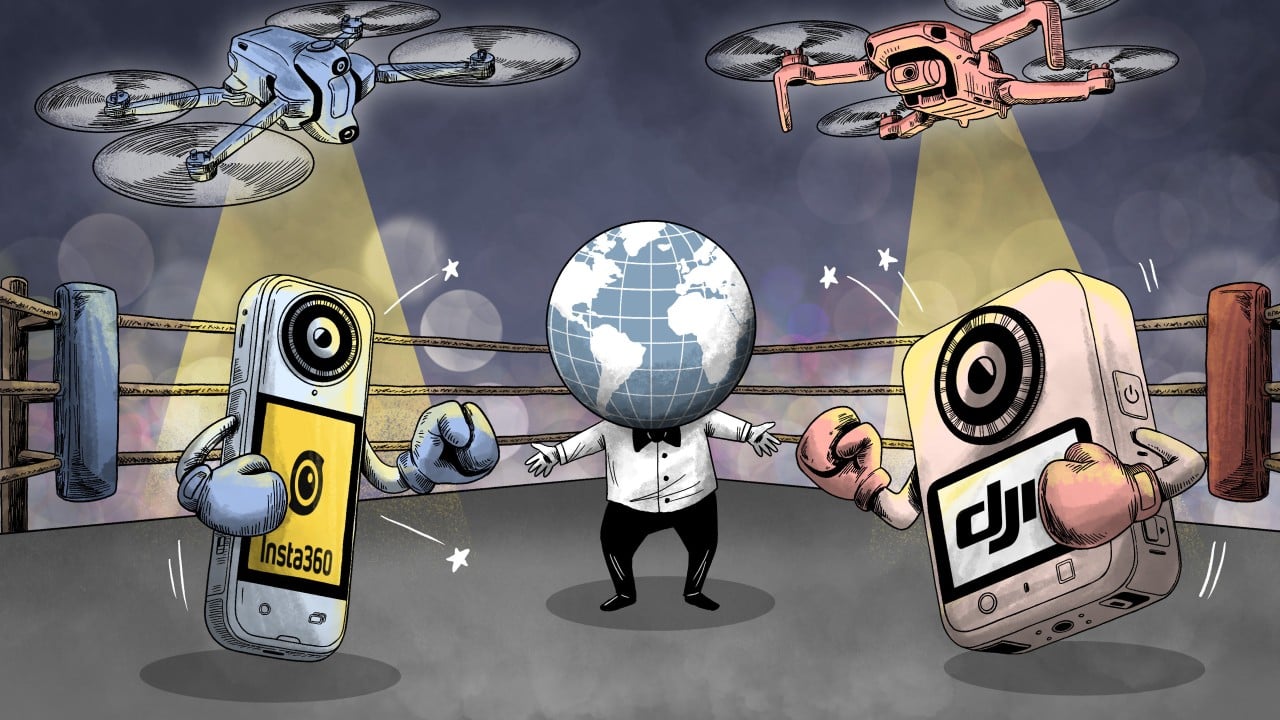
This isn't just a story about drones or action cameras. It is a story about how China stopped being the world's factory and started being its laboratory. It is a story of two companies, DJI and Insta360, that have managed to do something Western firms find terrifying: they became indispensable.
The Invisible Fortress of Patents and Plastic
For decades, the narrative in Washington was simple. China copies; America creates. It was a comfortable, if arrogant, worldview. But while we were looking the other way, the script flipped.
Consider the sheer dominance of DJI. They don't just lead the market; they define its boundaries. When the U.S. government began placing DJI on "entity lists" and citing national security concerns, the expected reaction was a pivot to American alternatives. But there was a problem. There were no alternatives. At least, not any that Elias could afford or that worked half as well.
The hardware edge isn't just about cheap labor anymore. It is about an ecosystem of parts. In Shenzhen, if an engineer needs a specific screw or a new lens coating, they don't wait weeks for a shipment from overseas. They walk across the street. This proximity allows for a frantic pace of iteration.
DJI didn't win by being the cheapest. They won by being the best. They out-engineered the competition until the competition simply ceased to exist in the consumer space. GoPros, once the undisputed kings of the "cool," now find themselves looking over their shoulder at Insta360, a company that turned the very concept of a camera inside out.
The 360-Degree Pivot
Insta360 represents the second wave of this hardware surge. If DJI is the stoic, professional giant, Insta360 is the chaotic, creative disruptor. They realized early on that people don't just want to record video; they want to capture reality and decide what to look at later.
Think about a mountain biker barreling down a narrow trail. In the old days, you’d strap a camera to your helmet and hope for the best. If you missed the bear in the bushes or the sunset to your left, it was gone forever. With a 360-degree lens, the camera sees everything. The magic happens in the software, where AI—that ubiquitous, invisible hand—stitches the images together and stabilizes the frame so it looks like a Hollywood crane shot.
This is the "Hardware-Plus" model. The physical device is just the ticket to the show. The real value is the proprietary math happening inside the processor. By the time a competitor tries to replicate the hardware, the Chinese firms have already updated the software twenty times, adding features the users didn't even know they wanted.
When Security Becomes a Shield
The tension isn't just about market share. It’s about data. It’s about who owns the map of the world.
From a Washington office, a DJI drone isn't just a toy. It’s a flying sensor suite. It has GPS, high-resolution optics, and a direct link to a smartphone. The fear is that these millions of glass eyes are feeding a massive, centralized database in Beijing. Is it true? The companies deny it, citing local data storage and independent audits.
But the truth often matters less than the perception. The scrutiny has forced these companies to become more than just tech firms; they’ve had to become diplomats. They are navigating a minefield where a single policy change in D.C. could evaporate billions in valuation overnight.
Yet, the irony is thick. Even as lawmakers rail against these brands, the very agencies they oversee are often caught using them. Why? Because when a search-and-rescue team needs to find a lost hiker in a blizzard, they don't care about the manufacturer's headquarters. They care about the thermal sensor that works. They care about the flight time. They care about the fact that the drone stays in the air when others fall out of it.
The Human Cost of the Friction
Back on that ridge, Elias isn't thinking about the "Global Hardware Edge." He’s worried about a firmware update. He’s worried that one day, he’ll turn on his controller and see a "Geofence" error because his drone has been remotely bricked by a trade war he has no part in.
There is a human cost to this decoupling. Innovation thrives on the free exchange of ideas and parts. When we build walls around hardware, we don't just shut out the competition; we shut in our own limitations.
The battle between DJI and Insta360 isn't a race to the bottom. It’s a race to the future. They are competing to see who can make the most invisible technology—the kind that gets out of the way and lets a creator like Elias tell his story.
China’s sharpening edge isn't just about steel and silicon. It’s about a relentless, almost desperate drive to prove they can lead. They aren't just making the world's cameras anymore; they are directing the movie.
The Ghost in the Machine
We often talk about "China" as a monolith, a singular entity with a single mind. But inside these companies are thousands of individuals. There are young designers who grew up on Western movies and now spend fourteen hours a day trying to beat Western brands at their own game.
They are motivated by pride as much as profit. They remember a time when "Made in China" was a punchline. Now, it is a warning.
The stakes are invisible but absolute. If the U.S. successfully bans these devices, it won't magically create an American drone industry overnight. It will leave a vacuum. It will leave people like Elias standing on a ridge with a dead piece of plastic in their hands, looking at a world they can no longer reach.
The real duel isn't between DJI and Insta360. It’s between the desire for global connectivity and the instinct for national preservation. We want the best tools, but we are terrified of where they come from. We want the view from the top, but we’re afraid of who else might be looking through the lens.
Elias finally launches. The drone climbs, its red and green lights blinking against the blue hour. It becomes a speck, then a nothingness, yet the image on his screen is crisp, vibrant, and utterly breathtaking. For a moment, the borders don't exist. The trade wars are silent. There is only the light, the land, and the machine that bridge the gap between them.
The motors hum. The world watches. And somewhere, a server calculates the next move in a game that has no end.