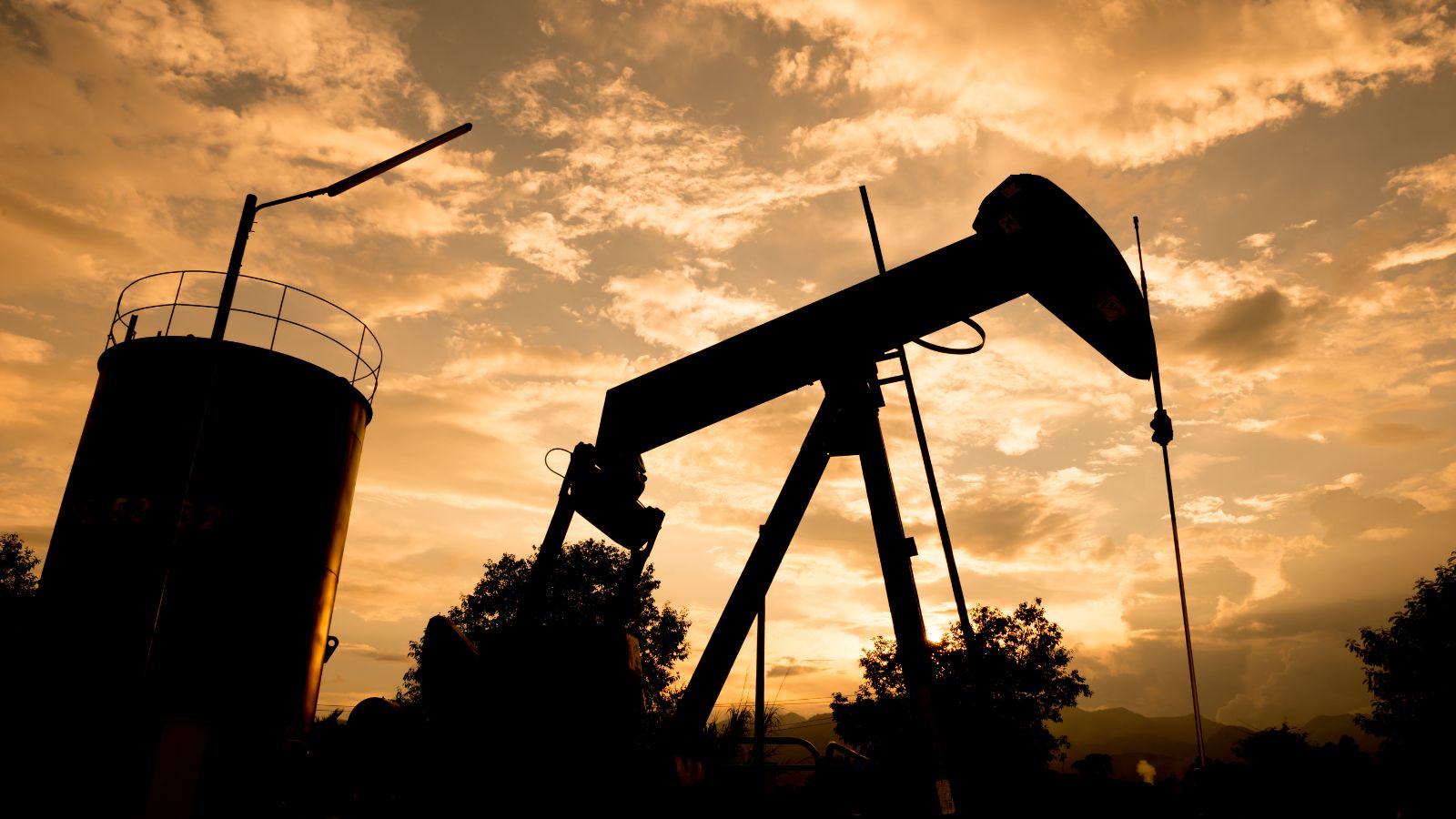
The air in Maracaibo always tasted faintly of sulfur and money.
If you stood by the water decades ago, watching the forest of nodding donkey pumps dip their iron heads into the earth, you felt you were watching the heartbeat of an empire. That oil did not merely power cars or heat homes. It built cathedrals of concrete in Caracas, funded golden scholarships, and promised an entire generation that their nation had won the planetary lottery. The ground beneath their feet was soaked in heavy, tarry black gold—the largest proven reserves on Earth. More than Saudi Arabia. More than Iran. An ocean of fuel sleeping in the dark. Don't miss our previous post on this related article.
Today, that ocean has a new warden. And the map of global energy has fractured in ways most people refuse to see.
When the United States shifts its gravity and effectively pulls nearly one-fifth of those legendary reserves into its operational orbit, the headlines talk of sanctions, licenses, and corporate maneuvers. They talk about Chevron waivers and geopolitical chess. But statistics do not smell like rotting infrastructure. They do not capture the sound of a compressor dying in the humid Venezuelan night, or the quiet desperation of a geologists union whose pensions dissolved into hyperinflation years ago. To read more about the history of this, The Motley Fool offers an excellent summary.
Let us be entirely transparent about the mechanics here. When we say the United States has gained control of a massive share of these reserves, we are not talking about territorial conquest or boots on the sand. We are talking about the ultimate leverage of infrastructure, capital, and legal supremacy. Through specific Treasury licenses, complex debt-for-oil swaps, and the dominance of Houston-based engineering expertise that alone knows how to crack the Orinoco Belt's stubborn extra-heavy crude, control has migrated. Ownership remains nominally local. Power has moved north.
Consider what happens when a giant wakes up with rusted joints.
The Orinoco Oil Belt is not like Texas sweet crude. It is thick. It behaves more like warm asphalt than motor oil. You cannot simply stick a straw in the ground and watch it gush. It demands diluents, massive upgrading facilities, constant steam injection, and billions of dollars in continuous maintenance. For years, that machinery starved. It was neglected, nationalized, looted, and starved again. By the time Washington began recalibrating its sanctions architecture to let American majors back onto the chessboard, Venezuela's production capacity had plummeted from nearly three million barrels a day down to a hollowed-out trickle.
Enter the pragmatists.
To understand why this shift matters, you have to look at a refinery on the US Gulf Coast. These massive, sprawling labyrorts of steel and fire in Texas and Louisiana were custom-built decades ago to digest heavy, sour crude. When Venezuelan supply was choked off by maximum-pressure sanctions, those refineries suffered. They had to scramble for heavier grades from Canada or Colombia, adjusting their chemical diets at great expense.
So, when political winds shifted and the necessity for global barrel stability outweighed ideological purity, the door cracked open. The US did not just return to Venezuela; it inserted itself back into the circulatory system of the country's economy. By controlling the refining destination, the financial transactions, and the operational technology required to extract the heavy sludge, American interests effectively anchored twenty percent of global reserves to US-managed logistics.
It is a quiet annexation by contract.
Walk with me through a hypothetical afternoon at a field office outside of Maturín. A veteran engineer, let us call him Mateo, stares at a gauge that has not functioned properly since 2018. He wears a faded hard hat bearing the logo of a company that technically no longer operates here, yet his hands are the only ones that know how to keep this particular separator from blowing its valves. Mateo does not care about Washington press releases. He does not care about the geopolitical duel between the White House and Miraflores Palace. He cares about whether the generator will hold out until shift change so the pumps do not freeze up with hardened bitumen.
Mateo represents the human cost of this grand remapping. His expertise is the bridge over which foreign capital must walk. Yet, for all his labor, his salary buys fewer groceries each week. The oil belongs to the state, the technology belongs to the West, and the profit vanishes into the administrative ether.
This is the central paradox of the new energy geography.
When a superpower absorbs the logistical control of a fallen petro-state's wealth, it secures its own industrial belly. It hedges against Middle Eastern volatility. It guarantees that Gulf Coast refineries keep humming for decades. But it also locks Venezuela into a peculiar form of economic dependency from which there is no obvious exit ramp. The reserves are there, staggering in their abundance, but they are effectively held hostage by the very technological and financial apparatus required to rescue them from the earth.
We are watching the death of old-school resource nationalism. The era where a government could simply nationalize an industry, hand out the proceeds, and tell the world to keep its distance is over. The physics of heavy oil demand advanced chemistry, massive capital expenditure, and international market integration. If you do not have the pipes that lead to the right refineries, your oil is just dirty mud sitting in a dark vault.
The map has been redrawn, not with marching armies, but with supply agreements and engineering manifests.
Look closely at the next shipment of heavy crude docking in Port Arthur. Smell the sulfur in the breeze off the Houston ship channel. Beneath the dry language of market reports and export quotas lies a profound truth. The destiny of millions of barrels—and the lives of the Mateos standing in the humid Venezuelan heat—remains tied to an invisible leash, held tightly by a northern neighbor that simply refused to let the black ocean sleep forever.


