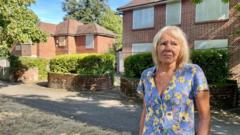
The key still turns in the deadbolt. That is the most absurd part of it.
I can stand on the porch of the house I spent seven years painting, scrubbing, and loving, slide the brass key into the front door, and hear the familiar, heavy click of the latch. The lock works. The door opens. But there is nothing waiting on the other side that resembles a life.
For months, the living room smelled faintly of dust and packed cardboard. Now, it smells like absolute nothingness. The floorboards bear clean, rectangular scars where bookshelves used to stand, protected from the sun while the rest of the oak faded to a warm amber. I know every creak in that hallway. I know which step groans when you rush down to check on a boiling pot of tea. Yet, I am a stranger here. A squatter in my own memories.
Bureaucracy does not arrive with a dramatic flourish. It does not kick down your door or storm the castle. It wears a grey suit, carries a clipboard, and speaks in a quiet, apologetic monotone that drains the blood from your face before you even realize you are bleeding.
They called it the corridor improvement project. On paper, it was a neat, rational line drawn across a map by someone sitting fifty miles away in a climate-controlled office. A bold red stroke cutting through residential postcodes, promising smoother commutes and economic vitality for the region. To the planners, my house was a pixel. A coordinate. A tiny, disposable square of friction standing between a dual carriageway and a slightly faster morning rush hour.
They came with their compulsory purchase orders. They talked about statutory valuations, market rates, and public utility. They used words like inevitable and necessary as if they were forces of nature, like rain or gravity, rather than choices made by human beings with pens.
My neighbors and I tried to fight it at first. We formed committees in cramped kitchens, drinking lukewarm instant coffee while pouring over county blueprints that looked like complex star charts. We gathered signatures. We hired a sympathetic local surveyor who shook his head at the official valuation and muttered about undervalued square footage. But fighting a road scheme is like trying to stop an oncoming freight train with a rolled-up newspaper. You shout until your throat is raw, and the train simply keeps rolling, its engine humming a low, indifferent bass note that vibrates right through your floorboards.
Then came the turning point. Or rather, the breaking point.
The council sent out the final notices. The valuation checks were processed. Friends started sending condolences as if someone had died, which, in a strange way, someone had. The house died. The neighborhood died. The little community where children drew chalk hopscotch squares on the pavement and neighbors swapped garden clippings over the fence was systematically dismantled, brick by hollow brick.
I packed my life into brown cardboard boxes labeled with black marker. Kitchen. Books. Winter clothes. Memories.
I moved thirty miles away into a cramped rental flat with a view of a brick wall and the constant hum of a distant motorway. It is functional. It has running water and a stove that works. But it is not home. It is a waiting room. A holding pen for a life that was forcibly paused.
And then, the silence broke. Not with a cheer, but with a whisper.
I was scrolling through the local digital news late one Tuesday evening, nursing a cup of chamomile tea, when a headline caught my eye. Funding reallocated. Priorities shifted. Economic headwinds. The road scheme—the very monster that had chewed up my street, evicted my neighbors, and turned our lives upside down—was officially shelved.
Canceled. Scrapped. Put on indefinite hold due to budget constraints and shifting transport strategies.
I dropped my mug. It didn't shatter—it just rolled across the linoleum, spilling a dark puddle of tea that slowly spread like a stain.
Cancelled.
Just like that.
The dual carriageway that was supposed to save ten minutes off a commuter's drive was no longer happening. The pencil stroke on the map was being erased. But my house? My house was already empty. The garden where I planted heritage tomatoes was already being overgrown with wild thistles and knee-high grass. Other houses on the block had already been boarded up with sheets of plywood, their windows staring out like blind eyes at a street that no longer had a pulse.
You see, the government operates on a terrifying asymmetry of time. When the state wants your land, they move with the relentless speed of an avalanche. You have weeks, sometimes days, to uproot decades of existence. You must surrender your keys, clear out your cupboards, and hand over the keys to a corporation or local authority that treats your sanctuary as mere collateral damage.
But when the state makes a mistake? When the project turns out to be financially unviable, environmentally disastrous, or simply politically inconvenient? The timeline stretches out into infinity. There is no avalanche then. There is only a glacial, bureaucratic crawl.
Nobody calls you up to say they are sorry. There is no delegation of officials knocking on my temporary apartment door to hand back my front door key with a sheepish grin and an apology. There is no mechanism for un-doing a compulsory purchase once the ink is dry and the administrative gears have ground forward.
The road isn't coming. But I am still gone.
This is the hidden devastation of modern infrastructure planning. It treats human lives as disposable variables in a spreadsheet equation. Planners model traffic flow, carbon output, and cost-benefit ratios down to the decimal point, yet they have no column for heartbreak. They have no metric to measure the psychic cost of forced displacement, the grief of losing a neighborhood, or the bitter irony of being uprooted for a ghost.
Consider what happens next to those empty properties. They sit in administrative limbo. Vandals break the windows. Squatters move in. The local council debates what to do with parcels of cleared land that are suddenly worth a fraction of what they paid to acquire them. The taxpayer funds the payouts, funds the legal battles, funds the eventual mothballing of the project, and finally, funds the cleanup of the mess they created in the first place.
And the people? We are left in the margins.
I drove past my old street yesterday. I shouldn't have. It was a masochistic impulse, the kind that makes you touch a healing scab just to see if it still hurts.
The street sign was still there, crooked on its post. But the houses looked hollow. Number fourteen had graffiti splashed across its front brickwork. Number eighteen had a missing roof tile that let the grey sky peer directly into the attic. My old house—number twenty-two—stood quietly between them, its white picket fence sagging like a broken jaw.
The air smelled of wild garlic and damp earth. A stray cat darted out from beneath the porch where my bicycle used to live.
I parked the car a block away and walked down the pavement. My footsteps echoed in the afternoon stillness. No children playing. No distant sound of a radio playing through an open kitchen window. Just the wind rustling through overgrown privet hedges that used to be neatly trimmed every Saturday morning.
I walked up the concrete path. I stopped at the front door.
The brass numbers 22 still gleamed faintly in the failing light, polished by years of my own hands before I stopped caring about how the exterior looked to passersby. I reached into my coat pocket. My fingers brushed against the cold metal teeth of the key.
I didn't take it out. I knew better. Even if the door unlocked, the room inside wouldn't recognize me. The road scheme is dead, but the wreckage remains, waiting for someone to decide what to do with the ashes of a community that was sacrificed for a journey nobody is ever going to take.