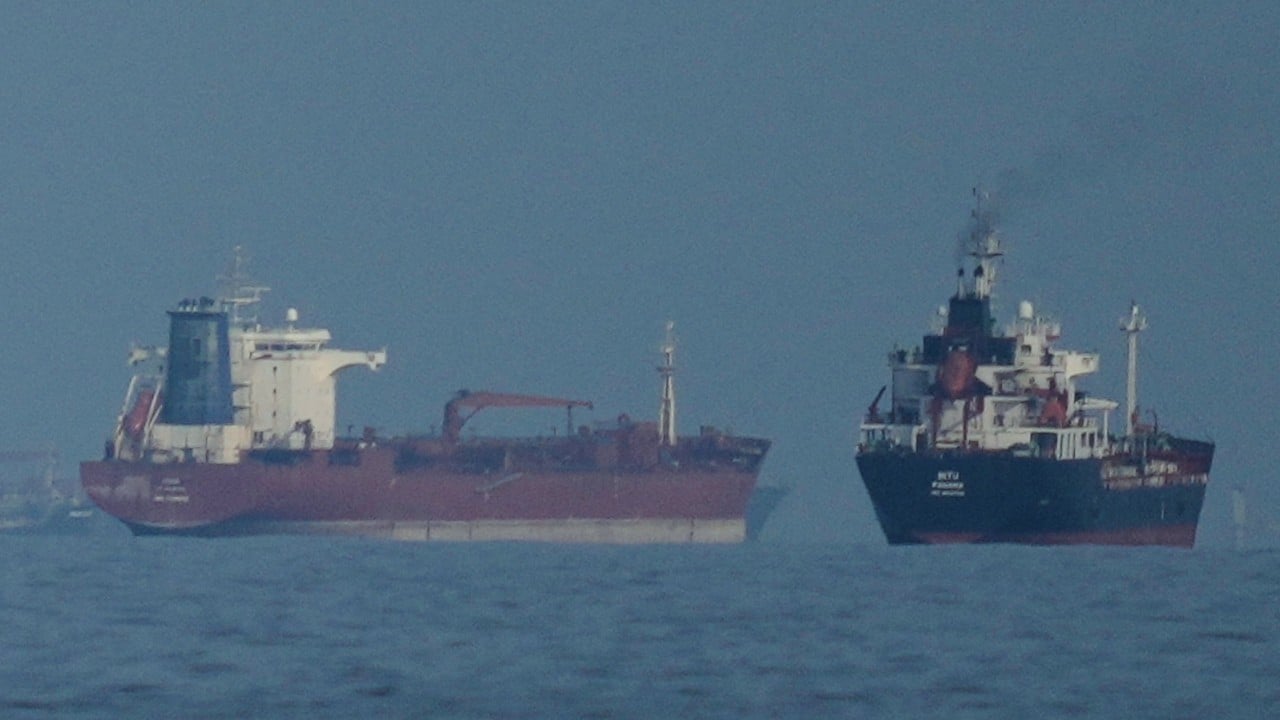
A rust-streaked tanker sits low in the water, its transponder silenced. To the satellites drifting overhead, the ship doesn't exist. It is a phantom in a vast, blue expanse. Deep within its hull, millions of gallons of "black gold" pulse like a dark heartbeat, bound for a refinery half a world away. This isn't just oil. It is the lifeblood of a shadow economy, a high-stakes game of hide-and-seek where the players move billions of dollars with the stroke of a pen and the turning of a valve.
When the U.S. Treasury Department recently announced sanctions against a China-based operator and a network of associated firms, the headlines read like a dry ledger. They spoke of the "Shadow Banking Sector" and "Iranian Oil Trade." But look closer. Between those lines lies a story of invisible borders, clandestine meetings in humid port cities, and a financial tug-of-war that dictates the stability of nations.
The Mechanics of a Ghost Ship
Consider a man we will call Elias. He doesn't exist in the official reports, but he is the personification of this trade. Elias manages a small office in a nondescript building in Hong Kong or perhaps the UAE. He isn't interested in the oil itself. He is interested in the paperwork.
His job is to make the illegal look mundane.
When Iranian crude needs to reach a buyer, it cannot simply be loaded onto a ship and sent on its way. That would trigger a cascade of digital alarms. Instead, Elias orchestrates a "ship-to-ship transfer." Two vessels meet in the middle of the night. Hoses are connected. Thousands of tons of crude are pumped from one belly to another.
By the time the oil reaches its final destination, its origin has been scrubbed clean. It has been blended, re-branded, and passed through three shell companies that were only incorporated weeks ago. To a customs official in a busy port, it looks like a routine shipment from a legitimate source.
The recent sanctions targeted exactly this kind of deception. Specifically, the U.S. moved against a network linked to the Iranian military—the Islamic Revolutionary Guard Corps-Quds Force (IRGC-QF). These aren't just businessmen. They are the financial architects of a geopolitical strategy designed to bypass global restrictions.
Why the World Should Care About a Few Tankers
It is easy to dismiss this as a problem for bureaucrats and diplomats. After all, what does a tanker in the South China Sea have to do with the price of bread in London or the safety of a street in New York?
Everything.
Oil is the ultimate currency of power. When a sanctioned nation can sell its resources through a "shadow fleet," it bypasses the economic pressure meant to bring it to the negotiating table. This revenue doesn't go into public schools or infrastructure. It flows into the development of drone technology, the funding of regional militias, and the enrichment of a small circle of elites who operate outside the law.
The U.S. Treasury’s Office of Foreign Assets Control (OFAC) identified several entities, including a China-based company that allegedly managed a vessel involved in these transfers. This isn't just about one ship. It’s about the infrastructure of evasion.
Think of it like a massive, global game of Whac-A-Mole. Every time a company is sanctioned, a new one sprouts up with a different name and a fresh set of directors. The stakes are staggering. We are talking about hundreds of millions of dollars in a single transaction. This is the "hidden cost" of global security. When the rules of international trade are ignored, the world becomes a more unpredictable place.
The Human Face of the Shadow Trade
Behind every shell company is a person. Behind every tanker is a crew.
Imagine the sailors on these ghost ships. Often, they are men from developing nations, working for low wages and living in constant fear. They know their ship’s transponder is off. They know they are operating in a legal gray zone. If something goes wrong—if there is a spill or a mechanical failure—there is no official record of their presence. They are as invisible as the cargo they carry.
This human element is often lost in the talk of "macroeconomics" and "sanctions regimes." These are not just lines on a graph. These are real risks taken by real people to keep a forbidden industry alive. The brokers like "Elias" might make a fortune, but the men on the water face the harsh reality of a trade that technically doesn't exist.
The China Connection
The inclusion of China-based entities in these sanctions adds a layer of complexity that feels like a Cold War thriller. China is the world's largest importer of oil. Its hunger for energy is insatiable. For a Chinese refinery, "discounted" Iranian crude—even if it comes through shadowy channels—is an attractive proposition.
This creates a delicate diplomatic dance. On one hand, the U.S. wants to choke off the funding for the IRGC-QF. On the other hand, the global economy is deeply intertwined with Chinese manufacturing and trade.
The sanctions are a message. They are a signal that the "blind eye" once turned toward these transactions is being replaced by a focused, digital gaze. The U.S. is using its most powerful non-military weapon: the dollar. By cutting these companies off from the U.S. financial system, they are effectively being banished from the world of legitimate business. No U.S. bank will touch them. No major insurance company will cover their ships. They are forced deeper into the shadows.
The Invisible War
We often think of war as something involving tanks and trenches. But the most significant battles of the 21st century are being fought in bank ledgers and satellite imagery.
Every time a sanction is leveled, a digital wall is built. The goal is to make the cost of doing business so high that it becomes unsustainable. But as long as there is a demand for oil and a willingness to break the rules, the shadow fleet will continue to sail.
It is a world of aliases and "front" companies. A company might be registered in the Marshall Islands, owned by a holding firm in Turkey, and managed by an office in Shanghai. This complexity is intentional. It is designed to exhaust the investigators and hide the trail of money.
The recent U.S. action targeted a specific network, but it also highlighted the sheer scale of the problem. It isn't just about one "China-based operator." It is about a global network of enablers who facilitate the trade of millions of barrels of oil every month.
The Moral Weight of the Trade
Is it possible to be a "neutral" player in this game? Many of the firms involved claim they are simply providing services—management, logistics, shipping. They argue that they aren't responsible for the political implications of their cargo.
But in a world as connected as ours, there is no such thing as a neutral transaction. Every barrel of oil sold through these channels fuels a specific outcome. It sustains a specific regime. It funds a specific military objective.
The sanctions are an attempt to force a moral choice upon the middlemen. They are being told: "You can do business with the world, or you can do business with the shadows. You cannot do both."
The Future of the Phantoms
The shadow fleet is not going away. If anything, it is becoming more sophisticated. As surveillance technology improves, so do the methods of evasion. We are seeing the rise of "dark ship" technology—advanced ways to spoof GPS signals and hide a vessel’s true location.
Yet, the recent U.S. move shows that the "invisible" is becoming increasingly visible. Data analytics, satellite tracking, and intelligence gathering are closing the net. The ghost ships are being haunted by the very technology that was supposed to make them untraceable.
The story of these sanctions is a reminder that in the modern world, there are no secrets—only delays in discovery. The oil may flow in the dark, and the money may move through a dozen different hands, but eventually, the light finds a way in.
As the sun sets over a quiet port, another tanker prepares to leave. Its lights are dimmed. Its crew is silent. It carries a cargo that officially doesn't exist, bound for a buyer who won't admit to the purchase. It is a tiny piece of a billion-dollar puzzle, a ghost in the machine of global trade, waiting for the moment the world decides to look its way.