Twenty-eight days.
In the time it takes for a human moon to wax and wane, for a habit to take root in the mind, or for a cargo ship to cross the Atlantic, not a single drop of Iranian crude has officially touched the global market. The math is simple, but the silence is deafening. Imagine a giant whose heart beats for one purpose—to pump oil through the veins of the world—suddenly holding its breath. For nearly a month, the pressure has been building.
The Kharg Island terminal, usually a hive of industrial motion, sits like a rusted stage waiting for a performance that has been canceled indefinitely. To understand why this matters, you have to look past the spreadsheets of maritime intelligence firms and look instead at the horizon.
The Weight of a Stalled Engine
Economic sanctions are often described as "surgical," a word that implies precision and cleanliness. The reality is more like a slow-motion stranglehold. When a country like Iran, which sits on the third-largest proven oil reserves on the planet, stops exporting, it isn't just a line item on a budget. It is a fundamental shift in the tectonic plates of geopolitical power.
Consider a hypothetical crane operator at the Bandar Abbas port. Let’s call him Reza. For twenty years, Reza’s life has been measured in the rhythmic swing of heavy machinery and the smell of salt and sulfur. When the tankers stop coming, Reza’s world doesn't just get quiet; it gets fragile. The paycheck that buys bread, the medicine for his mother’s heart condition, the very air of stability—all of it is tied to the movement of those black-hulled giants. When the ships vanish, the local economy doesn't just slow down. It wilts.
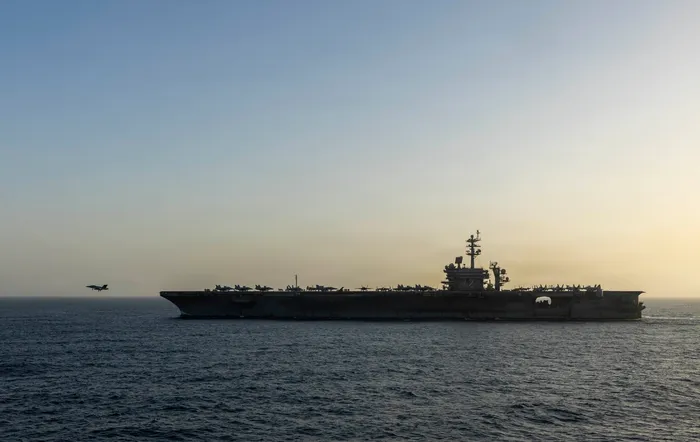
This isn't about a lack of product. The oil is there, pooling in massive underground reservoirs and filling every available storage tank on land until the steel groans. The problem is the invisible wall built by the U.S. blockade. It is a digital and physical perimeter that tells the rest of the world: "Touch this, and you lose everything else."
The Alchemy of the Shadow Market
Money, like water, always finds a way to flow. When the front door is barred and bolted, the trade moves to the basement.
For the last twenty-eight days, the official trackers have seen nothing. But the ocean is vast. To bypass the blockade, a phenomenon known as the "Ghost Fleet" has emerged. These are aging vessels, often stripped of their names and flying flags of convenience from nations that barely exist on a map. They move with their transponders turned off, becoming electronic ghosts in a sea of data.
Think of it as a high-stakes game of hide-and-seek played with billion-dollar stakes. A tanker might pull alongside another vessel in the middle of the night, deep in the Gulf of Oman. Under the cover of darkness, hoses are connected. The oil is transferred—ship-to-ship—while the crews work in a frantic, whispered rush. By morning, the Iranian oil has been blended with crude from another source, rebranded with new paperwork, and "laundered" into the global supply.
But even this alchemy has limits. The twenty-eight-day drought suggests that the "dark" methods are failing or that the risk has finally outweighed the reward. Insurance companies won't touch these ships. Captains face blacklisting. The cost of being caught is no longer just a fine; it is professional and financial death.
The Ripple in the Glass
You might feel a thousand miles removed from a stalled tanker in the Strait of Hormuz. You aren't.
Global oil prices are a delicate ecosystem. When one of the world’s primary taps is twisted shut, the pressure doesn't stay localized. It travels. It travels to the plastic manufacturer in Ohio, the trucking fleet in Germany, and the commuter at a gas station in Seoul. We live in a world built on cheap energy, and when that energy becomes a geopolitical weapon, everyone pays a "conflict tax" at the pump.
The silence of the last month is a warning. It tells us that the standoff has reached a tipping point. Diplomacy has been replaced by a test of endurance. On one side, a superpower is using the global financial system as a garrote. On the other, a nation is betting that it can survive on the fumes of its own resilience until the world’s thirst for oil forces a compromise.
The Invisible Toll
We often talk about "the markets" as if they are sentient beings, but markets are just the collective pulse of human anxiety and need. The true cost of this blockade isn't measured in barrels; it is measured in the erosion of trust.
When a major producer is sliced out of the global economy, it creates a vacuum. Other nations—Russia, Saudi Arabia, the United States—scramble to fill the void. They ramp up production, eyeing the market share like wolves at a fence. But this artificial shift creates a brittle system. If another crisis hits—a hurricane in the Gulf of Mexico or a pipeline failure in Central Asia—there is no longer a safety net. The "spare capacity" is gone.
The world is currently flying a plane with one engine feathered. We are staying aloft, but there is no room for error.
The Final Watch
Night falls over the Persian Gulf. The water is a dark, oily slick reflecting the stars. Somewhere out there, a captain is staring at a radar screen, watching the icons of other ships move safely toward their destinations while his own vessel remains anchored, a silent prison of unexported wealth.
He knows that every hour he sits idle, his country’s leverage diminishes. He knows that the world is learning to live without him. And that is the most terrifying prospect of all for a petro-state: the realization that the world can move on.
The twenty-eight days aren't just a statistic. They are a countdown. The question isn't when the oil will flow again, but what will be left of the people who depend on it when the taps finally open.
The horizon remains empty. The ghosts are still waiting.