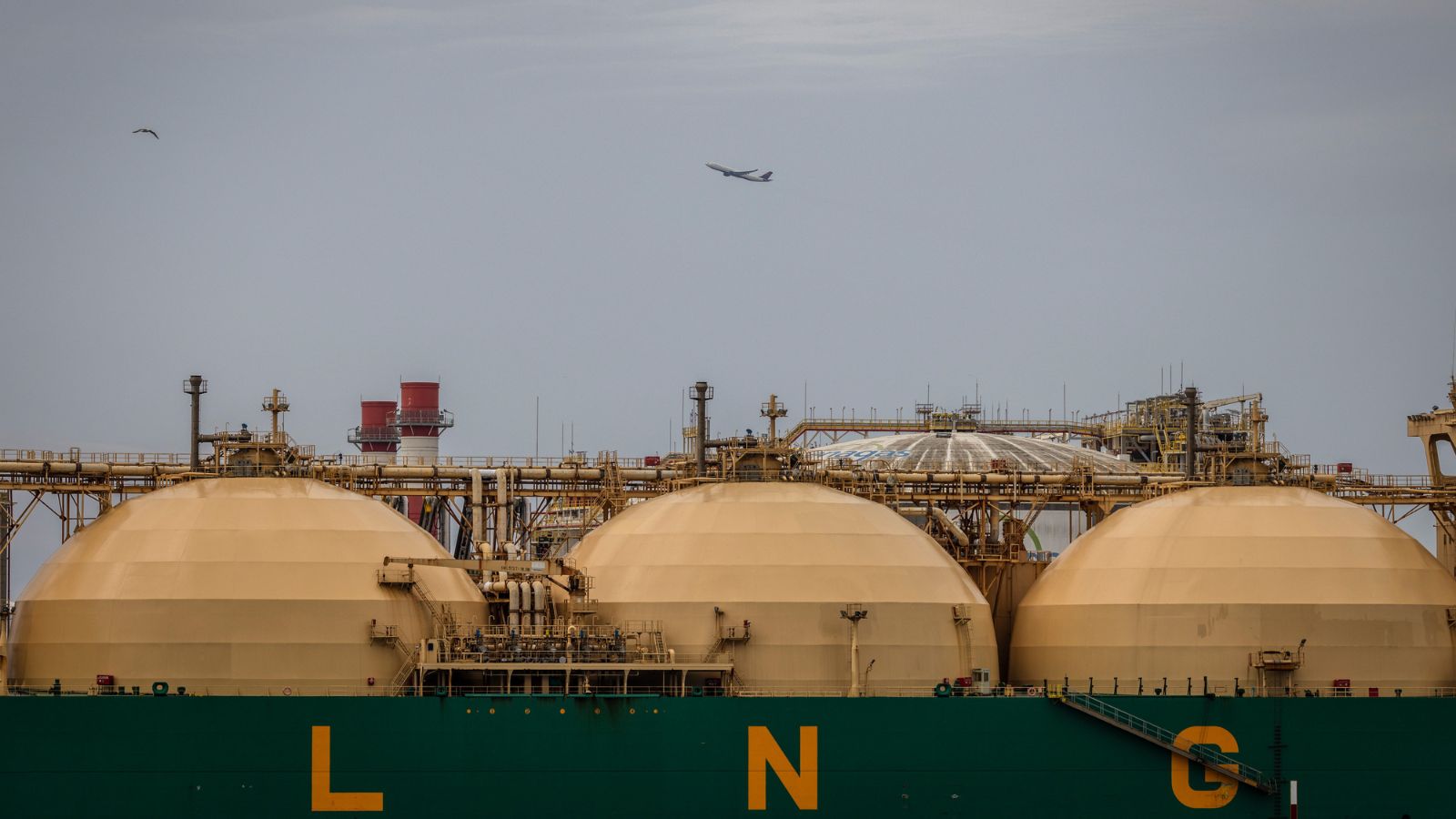
Dawn breaks over the Gulf of Oman, casting a copper glare across a quiet expanse of water where few commercial captains dare to linger. Out here, ships are ghosts of a mechanized age, floating in holding patterns dictated by distant artillery and quiet diplomatic panic. Among them, a particular silhouette stands out against the horizon. It is a massive liquefied natural gas carrier, stretching nearly a thousand feet from bow to stern, and it is entirely empty.
Multiply that steel leviathan by six.
According to vessel-tracking data compiled from maritime intelligence networks like Kpler and Bloomberg, these empty hulls are turning their bows back toward the Persian Gulf. For months, the lifeblood of global energy markets sat choked behind the narrow throat of the Strait of Hormuz. Ever since regional conflict and a late-July tanker attack brought Qatar’s towering Ras Laffan export facility to a near-total standstill, roughly a fifth of the world’s liquefied natural gas supply vanished from regular international commerce. Fifteen fully laden carriers remained trapped or idle behind the chokepoint, their cargo bays freezing cold yet unable to reach the shivering utility plants of Europe or the booming manufacturing hubs of Asia.
Now, the direction of travel has reversed.
Consider what happens on the ground—or rather, on the water—when a nation that powers a significant fraction of the industrialized world decides to test the waters. QatarEnergy is quietly repositioning its fleet. One empty carrier has already slipped past the disputed currents of Hormuz, making its steady way toward the Qatari coast. Six more are massing near the Gulf of Oman, burning low-cost fuel just outside the danger zone, poised to dart inward the moment clearance is signaled.
To understand why this maritime ballet matters, you have to look past the macroeconomics and think about a simple home thermostat in late November. When Qatari gas stopped flowing freely, power grids from Seoul to Rotterdam scrambled. Spot prices spiked. Price-sensitive buyers in South Asia faced fuel shortages so severe they threatened local electrical grids. Energy security is an abstract phrase until the lights flicker. Then, it becomes intensely personal.
Behind the locked gates of Ras Laffan, engineers have spent weeks maintaining equipment, running select production trains at minimal capacities just to keep the vital machinery from seizing in the desert heat. They have kept a trickle of fuel moving to immediate neighbors like Kuwait, a strategic maneuver designed to preserve operational readiness. But trickle-feeding a domestic partner is a far cry from feeding the world.
The return of these empty ships signals a calculated gamble. It is an operational bet that the worst of the shipping paralysis might be managed, or that the sheer economic gravity of winter demand is forcing a hand. Even with regional tensions flaring and Tehran declaring restricted maritime zones just beyond the main shipping lanes, the invisible pull of empty cargo tanks drawing near home ports speaks volumes. Two other empty tankers reportedly attempted the passage recently, only to turn back in hesitation before the eastern entrance. The margin for error is razor-thin.
Metaphorically speaking, these vessels are the canaries in the global coal mine. They are steel lungs waiting to be filled. If they successfully dock, plug into the cryogenic loading arms at Ras Laffan, and glide back out through the strait, it will mark the slow, fragile resuscitation of international gas flows. If they are forced to turn away again, the global supply cushion vanishes entirely, leaving winter heating bills exposed to the mercy of geopolitical crosswinds.
For now, the ghost fleet creeps closer to the shore. The cargo tanks are empty, the valves are open, and millions of people thousands of miles away are waiting to see if the warmth will find its way back home.