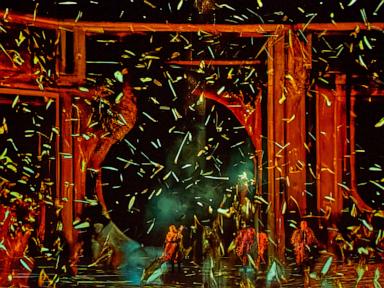
Ink smells like iron when you stay up late enough. I remember sitting at a heavy oak desk, the yellow circle of a reading lamp carving a small island out of the dark, watching the dust motes drift across a translation of the Odyssey. Outside, the world was quiet. Inside that room, men were drowning, gods were shouting from the salt spray, and a king with too many scars was trying to remember the way home.
Then, the news broke.
Another adaptation. Another studio executive looking at three thousand years of epic poetry and deciding it needed a tune-up. Emily Wilson, whose translation shook the literary world by daring to strip away the Victorian dust and give us the stark, brutal humanity of Homer's Greeks, spoke up. Changes had been made. Major ones. Character arcs flattened, mythic logic streamlined for a demographic that demands its heroes pre-packaged and digestible.
The internet did what the internet always does. It shrugged. It told us to deal with it.
Deal with it. Three words that kill curiosity. Three words that tell you to sit down, shut up, and swallow whatever synthetic product is spoon-fed to your screen. But when you have spent nights listening to the hexameters roll like heavy surf, you do not just shrug. You feel a cold knot form in your chest. Because changing Odysseus is not like tweaking a cape on a superhero. It is altering the blueprint of how we tell stories about endurance.
Consider what happens next: a room full of people in Los Angeles who have likely never rowed a boat through a midnight gale decide that Ithaca is too complicated for modern audiences.
Let us be honest about what an adaptation actually is. It is an act of translation across mediums, yes, but it is also an act of translation across values. When a studio takes a text like the Odyssey and runs it through the Hollywood meat grinder, they are not just changing plot points. They are rewriting our collective mirror.
I remember talking to an old classics professor who had spent forty years trying to make undergraduates care about bronze-age spear-throwers. He told me something that stuck. "The danger of changing a myth," he said, stirring a cup of tea that had gone cold hours ago, "is that you usually replace something difficult and true with something easy and fake."
The original Odysseus is not a Marvel protagonist. He is deeply, uncomfortably human. He lies, he cries, he boasts, and he makes catastrophic mistakes that get his men killed. He lingers with a nymph on a sun-drenched island for seven years while his home rots from the inside out. He is broken. When he finally washes up on the shores of Phaeacia, naked, crusted in salt, and weeping with exhaustion, he does not look like a conqueror. He looks like a shipwreck survivor who has lost everything except his stubborn, terrified refusal to die.
Now watch what the modern screen does to him.
The rough edges get sanded down. The moral ambiguity is scrubbed clean to ensure the character remains likable, marketable, and primed for a sequel. The gods are reduced to CGI light shows, stripped of their terrifying, capricious divinity. We are given a sanitized hero for an era that fears complexity.
We are told this is necessary. We are told that ancient texts are inaccessible, that modern viewers lack the attention span for a king who sits on a beach and cries for the horizon. This is a lie. It is a lie told by people who confuse simplicity with clarity.
Think about the actual stakes of the story. The Odyssey is not really about monsters with one eye or sirens singing from the rocks. Those are just the window dressing of trauma. At its core, the epic is about PTSD. It is about a veteran of a ten-year war trying to figure out how to cross the threshold of his own front door. It is about the horrifying realization that the home you left behind has changed, and so have you, and the two of you might no longer fit together.
When a movie adaptation erases that internal war in favor of bigger explosions and faster pacing, it commits a quiet theft. It steals the emotional resonance and replaces it with empty calorie spectacle.
I felt this acutely a few years ago when I watched another ancient epic get the Hollywood treatment. In the theater, the sound design shook the floorboards. The visual effects were staggering, millions of dollars of silicon rendering every blade of grass and drop of sweat. Yet, as the credits rolled, the theater was dead silent. Not the silence of awe. The silence of a room full of people who had just consumed a meal made entirely of cardboard. It looked like food. It filled no one.
Why does this matter? Because stories are the scaffolding of our empathy. If we constantly train ourselves to accept flattened versions of our oldest myths, we eventually accept flattened versions of each other. We stop looking for the complicated truth in our neighbors and start demanding the clean, predictable arcs of a cinematic universe.
Emily Wilson understood this when she labored over her translation. She chose to keep the roughness. She refused to dress Homer up in polite, archaic English that makes the violence sound quaint. She let the blood look like blood and the grief look like grief. That is why her work resonated so deeply. She trusted readers to handle the weight of the past without padding the corners.
Yet Hollywood looks at that same material and sees raw inventory.
The defenders of the adaptation will tell you that cinema has different rules. They will argue that visual storytelling requires compression, that streamlining a sprawling epic is simply the cost of doing business in a visual medium. There is truth in that, up to a point. No one expects a two-hour film to contain every line of a twenty-four-book epic.
But there is a vast gulf between compression and gutting.
When you remove the weary cunning of Odysseus and replace it with generic action-hero bravado, you lose the very mechanism that makes his survival meaningful. He does not survive because he is the strongest man on the beach. He survives because he is the most desperate, the most adaptable, and the most haunted. He wins through trickery, through hiding under sheep, through biting his tongue while suitors mock him in his own hall.
Take that away, and you no longer have Odysseus. You have just another guy in a costume swinging a sword.
The tragedy is entirely preventable. We have seen filmmakers approach ancient material with reverence and imagination, finding ways to make the archaic feel urgent without turning it into pop-corn fodder. But those projects require patience. They require a willingness to let silence linger on screen. They require a belief that audiences are hungry for something deeper than a dopamine hit.
Instead, we get the corporate shrug. We get told to deal with it.
We accept the alterations because we are tired of fighting the machine. Every time a beloved book or myth is run through the adaptation mill, a small part of us gives up caring. We lower our expectations. We tell ourselves it is just entertainment, as if entertainment were not the primary way we learn how to feel about the world.
Do not accept the trade-off.
The next time you see a headline announcing that a classic story has been reinvented for modern audiences, look closer. Ask what was sacrificed to make the narrative slide down easier. Ask whose anxieties were smoothed over so no one in the test screening would feel uncomfortable.
The wind still howls across the wine-dark sea. The salt still stings the eyes of men who have been away from home too long. The ghosts in the underworld still reach out their thin, bloodless hands, desperate for a taste of warmth, begging to be remembered for who they actually were, not who we wish they had been.
The king of Ithaca is waiting on the shore. He is wet, he is tired, and he is holding a bow that no one else can string. We owe it to him, and to ourselves, to demand that he arrives with all his scars intact.