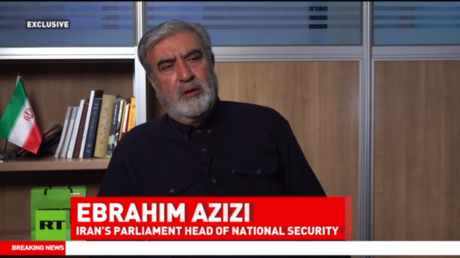
The proposal by Iranian security officials to levy "tolls" on vessels from hostile nations transiting the Strait of Hormuz represents a shift from kinetic disruption to economic weaponization. This strategy seeks to formalize the Iranian Navy’s presence by converting geographic dominance into a recurring revenue stream and a diplomatic lever. By analyzing this move through the lens of international maritime law and sovereign risk, it becomes clear that the primary objective is not merely capital accumulation, but the establishment of a "pay-to-play" precedent that challenges the 1982 United Nations Convention on the Law of the Sea (UNCLOS).
The Mechanics of Chokepoint Extraction
The Strait of Hormuz is the world’s most sensitive oil transit point, facilitating the passage of approximately 21 million barrels per day. The Iranian proposal targets "hostile" nations—a term defined by Tehran’s internal security apparatus rather than international treaty—to create a tiered access system. This system functions on three distinct structural layers: Also making news in this space: The Sound of a Shared Horizon Across the Sea.
- Legal Contestation of Transit Passage: Under UNCLOS, the Strait of Hormuz is subject to the regime of "transit passage," which allows vessels the right of unimpeded navigation for the purpose of continuous and expeditious transit. Iran, having signed but not ratified UNCLOS, argues that the "innocent passage" regime applies instead. Innocent passage allows a coastal state to suspend transit if it deems the vessel's presence prejudicial to its peace or security.
- The "Hostility" Variable: By categorizing specific flags of convenience or national fleets as hostile, Iran creates a discretionary fee structure. This moves the cost of shipping from a fixed operational expense to a variable geopolitical tax.
- Security Rent-Seeking: The Iranian security establishment justifies the toll as a "security fee" to cover the costs of patrolling and maintaining safety in the waterway. In economic terms, this is an attempt to internalize the positive externalities provided by the Iranian Revolutionary Guard Corps Navy (IRGCN) while penalizing the very nations that necessitate their presence according to their own defensive doctrine.
The Cost Function of Transit Disruption
For global shipping firms, the implementation of a toll system introduces a "Hormuz Risk Premium" that exceeds the actual cost of the fee. The economic impact is calculated through a compounded risk model:
- Insurance Escalation: War risk insurance premiums currently fluctuate based on kinetic activity. A formalized toll system would likely trigger a permanent re-classification of the Strait, increasing the baseline cost for any hull entering the Persian Gulf.
- Operational Latency: The enforcement of a toll requires inspection or verification stops. Even a 12-hour delay for a VLCC (Very Large Crude Carrier) can cost a charterer upwards of $50,000 in demurrage and fuel burn, independent of the toll itself.
- Supply Chain Elasticity: Since approximately 20% of the world’s liquefied natural gas (LNG) and oil passes through this 21-mile-wide neck, even a 1% "hostility tax" could result in a global price increase of $0.50 to $1.00 per barrel, as markets price in the potential for escalating demands.
The Three Pillars of Iranian Strategy
The decision to float the toll proposal is a calculated move within a broader asymmetric warfare framework. It rests on three pillars designed to stress-test Western naval dominance. More details regarding the matter are detailed by BBC News.
1. Sovereignty Signaling
Tehran uses the toll as a tool to assert that the Persian Gulf is an "Iranian Lake." By forcing a foreign vessel to pay a fee, the ship’s master implicitly recognizes Iranian jurisdiction over the waterway. This creates a "de facto" legal reality that erodes the "de jure" status of international waters over time.
2. Sanctions Reciprocity
The toll is framed as a response to the frozen assets and oil seizures conducted by the United States and its allies. It establishes a mechanism for direct financial reclamation. If Iranian assets are seized in Mediterranean or Atlantic ports, the toll in Hormuz acts as a localized counter-seizure mechanism that is easier to enforce than a high-seas boarding.
3. Coalition Splitting
By specifically targeting "hostile" nations, Iran creates an incentive for smaller or neutral nations to distance themselves from U.S.-led maritime security coalitions, such as Operation Prosperity Guardian or the International Maritime Security Construct (IMSC). If a nation can avoid the toll by remaining neutral or distancing itself from "hostile" rhetoric, the economic pressure may outweigh the diplomatic benefits of the alliance.
Limitations of the Toll Mechanism
Despite the strategic appeal, the implementation of a Hormuz toll faces significant operational and legal bottlenecks.
The first limitation is the physical enforcement capability. While the IRGCN possesses hundreds of fast attack craft and shore-based anti-ship cruise missile (ASCM) batteries, the act of stopping every "hostile" vessel requires a level of bureaucratic and naval coordination that risks direct military escalation. A ship that refuses to pay must be boarded or fired upon. A boarding is an act of seizure; firing is an act of war. Both outcomes are more escalatory than the "administrative fee" framing suggests.
The second limitation is the Omani Factor. The Strait of Hormuz is not entirely Iranian. The deep-water shipping lanes used by VLCCs actually fall within Omani territorial waters. For Iran to collect a toll from ships in the main shipping lanes, it would have to force those ships out of Omani waters and into the Iranian side, or claim jurisdiction over the entire strait—a move that would alienate Muscat and potentially the entire Gulf Cooperation Council (GCC).
Implications for Global Energy Markets
If the toll is enforced, the energy market will shift from a "just-in-time" delivery model to a "security-buffered" model. This change involves:
- Diversification of Exit Points: Renewed interest in the East-West Pipeline (Saudi Arabia) and the Habshan-Fujairah Pipeline (UAE). However, these pipelines currently lack the capacity to handle more than 40% of the total volume transiting Hormuz.
- Freight Rerouting: Unlike the Red Sea/Suez Canal, there is no alternative route for ships already inside the Persian Gulf. They are effectively trapped behind the toll gate. This creates a binary risk: pay the toll or remain stuck at port.
The third-order effect involves the "normalization of the abnormal." Much like the "gray zone" tactics used in the South China Sea, the threat of a toll creates a new baseline of instability. Even if the toll is never collected, the mere announcement increases the cost of credit and insurance for any project localized in the Persian Gulf.
Strategic Forecast
The Iranian leadership is likely using the toll proposal as a "negotiation floor" rather than a final policy. By threatening a formalized economic barrier, they create a new chip to be traded in future sanctions relief discussions.
For the international community, the response must move beyond standard freedom of navigation operations (FONOPs). A purely military response addresses the symptoms but not the underlying economic logic of the toll. To neutralize this strategy, energy importers must accelerate the redundancy of the Hormuz chokepoint through expanded pipeline infrastructure and increased strategic reserves in the Indo-Pacific.
The ultimate failure or success of the Hormuz toll will be determined by the reaction of the insurance markets. If Lloyd’s of London and other major underwriters refuse to recognize the toll as a legitimate port-style fee and instead categorize it as "extortion" or "piracy," the legal and financial friction will make the system untenable for the shipping lines Iran hopes to tax.
The strategic play is now one of endurance: Tehran is betting that the global economy's sensitivity to oil prices will force a quiet acceptance of the toll, while the West is betting that the logistical absurdity of the plan will cause it to collapse under its own weight. Control of the Strait is no longer about who has the biggest guns, but who can most effectively manipulate the cost of global trade.