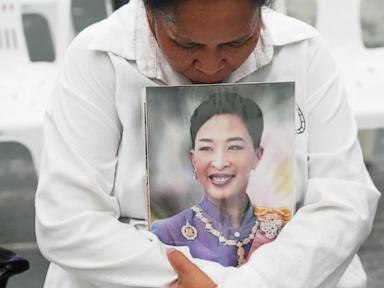
The unexpected death of Princess Bajrakitiyabha Mahidol at age 44 disrupts the carefully engineered stabilization architecture of the Thai monarchy. While conventional media outlets treat the event as a isolated tragedy or a human interest piece, a rigorous strategic analysis reveals it as a systemic shock. The loss of the presumptive heir-apparent alters the risk profile of the Chakri dynasty across three distinct vectors: institutional continuity, constitutional legitimacy, and economic stability.
Understanding the strategic fallout requires a structural breakdown of how the Thai monarchy functions not just as a cultural symbol, but as an active political stabilizer within Southeast Asia. When a core node in a centralized governance network fails, the entire network experiences immediate load-bearing stress.
The Succession Architecture and the Primacy Node
To quantify the impact of Princess Bajrakitiyabha’s death, one must first map the structural framework of the 1924 Palace Law of Succession alongside the fluctuating realities of modern Thai governance. The succession mechanism operates on a multi-variable optimization problem: matching strict bloodline hierarchy with institutional competence and military acceptability.
Princess Bajrakitiyabha occupied a unique position at the intersection of these variables. As the eldest daughter of King Maha Vajiralongkorn, her positioning satisfied several critical institutional requirements:
- Legal and Bureaucratic Credibility: Armed with a doctorate in law from Cornell University and extensive tenure within the Thai judicial system—including serving as a provincial prosecutor and the Thai Ambassador to Austria—she possessed the technocratic credentials required to manage the monarchy's vast institutional apparatus.
- Diplomatic and International Capital: Her work with the United Nations Office on Drugs and Crime (UNODC) on the "Bangkok Rules" for women prisoners established international legitimacy, a critical asset for a regime frequently scrutinized by Western democracies.
- Military Alignment: Her appointment as a general in the Royal Security Command cemented her standing with the Royal Thai Armed Forces, the ultimate enforcer of the domestic political status quo.
The remaining pool of potential heirs lacks this specific combination of variables. Prince Dipangkorn Rasmijoti, the King’s youngest son, remains legally and practically unproven. The King’s other sons from a previous marriage remain estranged and stripped of formal royal titles. By removing the primary stabilizing node, the system reverts to an unhedged configuration, significantly increasing the probability of a succession crisis.
The Institutional Void and Public Diplomacy Disruption
The Thai monarchy sustains its authority through a dual-engine model: formal legal power and informal moral authority, traditionally referred to as Barami. While formal power is codified, moral authority must be continuously generated through public works, intellectual leadership, and visible statecraft.
Princess Bajrakitiyabha was the primary engine for generating this informal authority within the contemporary royal family. Her portfolio focused heavily on judicial reform, humanitarian assistance, and disaster relief through the Princess Pa Foundation. This was not merely philanthropic; it was a highly targeted strategic operation designed to mitigate anti-monarchical sentiment among younger, urban demographics.
The sudden termination of these initiatives creates an immediate institutional void. The mechanism of this disruption follows a clear causal chain:
- Programmatic Suspension: Royal projects lose their driving advocate, leading to bureaucratic inertia within the non-profit and governmental sectors that relied on her patronage.
- Loss of Modernizing Element: The princess served as the modern, accessible face of an otherwise opaque institution. Her absence leaves the monarchy heavily reliant on older, more conservative elements that struggle to communicate effectively with a digital-native populace.
- Increased Exposure to Criticism: Without a highly respected, legally accomplished figure at the vanguard of the family, the institution’s vulnerabilities become more pronounced, accelerating the domestic debate regarding the scope of royal prerogatives and the enforcement of Article 112 (the Lèse-Majesté law).
Economic Transmission Channels of Royal Instability
Political risk in Thailand translates directly into macroeconomic volatility. The monarchy plays a structural role in anchoring investor sentiment, acting as a guarantor of last resort against total systemic collapse during Thailand's frequent cycles of coups and constitutional rewrites.
The removal of the expected succession path introduces an unpriced risk premium into the Thai economy. Foreign institutional investors require predictability above all else; the ambiguity surrounding the next generation of leadership threatens this predictability across three primary transmission channels.
Capital Flight and Sovereign Risk Ratings
The long-term yield on Thai government bonds and the stability of the Thai Baht are intrinsically tied to the perception of domestic stability. A prolonged period of uncertainty regarding the crown's future increases the country's sovereign risk profile. This risks a capital outflow as international asset managers reallocate capital to more predictable ASEAN jurisdictions, such as Singapore or Vietnam.
Tourism Infrastructure and Sentiment Shock
The tourism sector constitutes approximately 12 percent of Thailand's Gross Domestic Product. Royal transitions or periods of intense national mourning historically involve the curtailment of entertainment activities, adjustments to international marketing campaigns, and potential civil unrest. The prolonged hospitalization and subsequent realization of the princess's passing impose a dampening effect on consumer sentiment during a critical post-pandemic recovery window.
Corporate Governance and Crown Assets
The Crown Property Bureau (CPB) holds billions of dollars in equity across core industrial sectors, including Siam Commercial Bank and Siam Cement Group. Princess Bajrakitiyabha's death complicates the long-term oversight of these massive economic engines. When the line of succession is unclear, the future governance, investment strategy, and political alignment of these corporate titans become volatile variables.
Structural Fault Lines in the Royal-Military Alliance
The governance of Thailand relies on a symbiotic alliance between the monarchy and the Royal Thai Armed Forces. The military derives its ultimate legitimacy from the King, while the monarchy relies on the military to enforce domestic order and protect its status. This alliance is not static; it requires constant renegotiation and alignment of elite factions.
Princess Bajrakitiyabha’s military integration—holding the rank of General and serving as Chief of Staff of the King's Guard Command—was a deliberate move to ensure the military would seamlessly back her future role. Her sudden death fractures this alignment plan.
The resulting power vacuum alters the calculus for military factionalism. Different factions within the armed forces (such as the Eastern Tigers or the King's Guard) historically align with different nodes within the royal family to secure promotion pipelines and economic influence. Without a clear, universally accepted heir to rally behind, the risk of intra-military factionalism increases exponentially. If the military splits along factional lines during a future transition period, the state's capacity to suppress civil unrest or manage political transitions diminishes sharply.
The Constitutional Bottleneck
Thailand's constitutional history is marked by cyclical instability, having experienced 20 constitutions since the end of absolute monarchy in 1932. The current 2017 Constitution contains specific provisions regarding succession, but these provisions are untested under the current geopolitical conditions.
The legal bottleneck occurs because the 1924 Palace Law of Succession explicitly favors male heirs, yet the 1997, 2007, and 2017 Constitutions allow for the ascension of a princess if the reigning monarch has not formally designated an heir apparent. King Maha Vajiralongkorn had not officially named an heir before Princess Bajrakitiyabha's medical emergency.
This creates a severe constitutional vulnerability. The process of confirming the next heir now requires navigating a complex matrix involving the Privy Council, the National Assembly, and the reigning monarch. If this process occurs under conditions of political stress—such as during a general election or amid widespread street protests—the legal ambiguity could be weaponized by competing political factions, leading to a paralysis of the legislative branch.
Strategic Imperatives for Institutional Survival
To mitigate the systemic risks triggered by the loss of Princess Bajrakitiyabha, the Thai ruling elite must execute a series of precise strategic counter-moves. Passive mourning must be replaced by active risk management to prevent institutional drift.
First, the Privy Council must accelerate the formalization of the succession pathway. The current state of ambiguity operates as a tax on economic growth and a catalyst for political speculation. A clear, definitive declaration regarding the status of the remaining eligible heirs—regardless of the internal compromises required—is mandatory to restore market confidence and stabilize the royal-military alliance.
Second, the technocratic functions previously managed by the princess must be institutionalized rather than abandoned. Her legal reform portfolios and international diplomatic initiatives must be transferred to capable state agencies or alternative royal representatives who possess the required intellectual capital. The monarchy cannot afford to lose its footprint in these legitimacy-generating sectors.
Finally, the state must prepare for an intensification of the information war. The loss of a highly popular royal figure inevitably emboldens anti-monarchical movements operating both domestically and abroad. Managing this shift requires a pivot away from purely punitive legal measures, which often trigger negative international blowback, toward a more sophisticated, proactive communication strategy that addresses the anxieties of the contemporary Thai electorate.