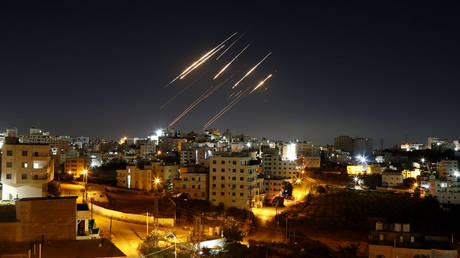
The structural equilibrium of the Middle East dissolved over a twelve-month period, shifting from a framework of managed proxy friction to an open, multi-theater escalatory cycle. Superficial analyses attribute this instability to isolated intelligence failures or sudden diplomatic breakdowns. A rigorous strategic assessment reveals that the current instability is the direct result of a breakdown in long-standing deterrence equations, the systemic failure of economic normalization as a security guarantor, and the emergence of non-state actors operating with state-level kinetic capabilities.
Understanding the trajectory of this region requires moving past chronological narratives. Instead, analysts must evaluate the three structural pillars currently dictating regional dynamics: the friction points of the proxy network model, the breakdown of regional missile defense and attribution calculus, and the economic choke points governing global trade vulnerabilities. Also making waves in this space: The Architecture of the US Iran De-escalation Memorandum: Mechanics, Bottlenecks, and Strategic Asymmetries.
The Tri-Border Friction Model
Regional instability operates through a highly coordinated, asymmetric network design. The traditional assumption that non-state actors operate independently understates the structural integration of these groups. The operational model functions via three distinct vectors, each designed to apply leverage at different geographic and political pressure points.
                  [ Central Command / Logistics ]
                               |
        +----------------------+----------------------+
        |                      |                      |
[ Northern Vector ]    [ Southern Vector ]    [ Internal Vector ]
  (Levant/Border)        (Maritime/Choke)      (Asymmetric/Urban)
The Northern Vector: Kinetic Containment
The northern theater functions as a high-density conventional deterrent. The presence of heavily armed non-state actors along the Levant borders forces state militaries to commit significant standing forces, defensive systems, and surveillance assets to a static perimeter. This ties down strategic capacity that would otherwise be deployed elsewhere. The primary mechanism here is escalation management: utilizing low-cost, short-range rocket and artillery fire to impose continuous economic and military attrition without crossing the threshold into total conventional warfare. More insights on this are covered by Associated Press.
The Southern Vector: Maritime Choke-Point Exploitation
The southern theater shifts the conflict from localized land borders to global maritime trade routes. By targeting narrow transit corridors like the Bab al-Mandab Strait, regional actors exploit a global economic vulnerability. The cost asymmetry is stark. A low-cost loitering munition or anti-ship cruise missile forces global shipping conglomerates to reroute vessels around the Cape of Good Hope. This introduces massive inefficiencies into the global supply chain:
- Transit Time Expansion: Adding 10 to 14 days to standard maritime voyages between Asia and Europe.
- Tonnage Compression: Reducing the effective throughput of global shipping capacity due to longer turnaround times.
- Premium Inflation: Escalating war-risk insurance premiums for vessels traversing remaining active routes.
The Internal Vector: Asymmetric Urban Friction
The third vector operates within disputed or highly dense urban territories. This component of the architecture is designed to maximize the political and reputational costs of conventional military intervention. By embedding command structures within dense civilian infrastructure, non-state actors create a operational paradox for conventional militaries: execute high-casualty urban campaigns that erode international diplomatic capital, or accept a permanent, hostile insurgent presence on their borders.
The Attrition Function in Modern Air Defense
The deployment of massive missile and drone salvos across the region has exposed a critical vulnerability in modern Western-style integrated air and missile defense (IAMD) frameworks: the economic and inventory cost curve.
Air defense logic traditionally prioritized intercept probability over cost. In a protracted, multi-front conflict, this calculation is unsustainable. The systemic imbalance can be expressed through a simple cost-capacity function. If a competitor deploys a swarm of loitering munitions manufactured for approximately $20,000 per unit, and the defending state relies on interceptors costing between $1 million and $3.5 million per launch, the defense is running an unsustainable economic deficit.
+--------------------------+------------------------+------------------------+
| System Component         | Estimated Unit Cost    | Production Velocity    |
+--------------------------+------------------------+------------------------+
| Attack Drone (Loitering) | $20,000 - $50,000      | High / Scalable        |
| Ballistic Missile (Low)  | $100,000 - $300,000    | Moderate               |
| Standard Interceptor     | $1,000,000 - $2,000,000| Low / Highly Complex   |
| Advanced Exo-Atmospheric | $3,500,000+            | Restricted             |
+--------------------------+------------------------+------------------------+
This economic imbalance creates a structural bottleneck. Even when intercept rates approach 95% or higher, the inventory depletion rate presents a strategic limit. Industrial manufacturing bases cannot replenish complex, multi-stage interceptor missiles at the speed they are expended during multi-theater saturation attacks. Consequently, an adversary does not need to breach an air defense shield to achieve a strategic objective; they merely need to exhaust the inventory of interceptors, rendering the target vulnerable to subsequent, less sophisticated strike packages.
Furthermore, this dynamic shifts the offense-defense balance by forcing defending states to rely on regional coalitions. When a single state's defensive capacity is stretched, it must rely on external partners for radar tracking, mid-course interception, and forward-deployed naval assets. This converts local defensive actions into complex international diplomatic maneuvers, limiting the defending state's unilateral freedom of action.
The Collapse of Economic Interdependence Theories
For nearly a decade, regional policy proceeded under the assumption that economic integration would naturally suppress kinetic conflict. The hypothesis was straightforward: by building cross-border energy infrastructure, supply chain links, and bilateral trade agreements, the financial cost of conflict would become prohibitively high for all participants.
The events of the past year have disproven this neo-liberal security thesis. Economic interdependence fails as a conflict prevention mechanism when non-state actors or ideologically driven regimes value strategic positioning or religious-political alignment over gross domestic product (GDP) growth.
This breakdown manifests across two primary economic vectors.
The Red Sea Transit Deterioration
The vulnerability of the Suez Canal corridor has fundamentally altered maritime economics. The Suez Canal historically handles roughly 12% of global trade and up to 30% of global container traffic. The systematic targeting of commercial vessels in the southern Red Sea forced a massive realignment of global shipping lanes.
The macroeconomic consequence is not merely a localized loss of transit fees for regional economies. It acts as a structural inflationary driver for global consumer markets. The prolonged transit around Africa increases fuel consumption per voyage, drives up labor costs, and disrupts just-in-time manufacturing schedules in Europe and North America.
The Realignment of Foreign Direct Investment Risk
The regional business environment has undergone a harsh re-pricing of political and security risk. Capital allocation models that previously viewed the Gulf Cooperation Council (GCC) states as insulated economic safe havens must now account for regional spillover effects.
While core financial hubs remain physically secure, the threat of regional escalation increases capital flight risks, raises the cost of sovereign debt issuance, and complicates long-term infrastructure projects that require multi-decade stability to realize returns. Investors are forcing a risk premium onto assets across the entire geography, acknowledging that localized conflicts can rapidly scale into broader market disruptions.
Escalation Dominance and the Deterrence Deficit
The fundamental driver of the current instability is the erosion of credible deterrence. Deterrence requires three aligned elements: capability, intent, and clear communication. If any component is perceived as weak or variable, the framework collapses, leading to miscalculation.
[ Credible Deterrence ] = [ Kinetic Capability ] x [ Demonstrable Intent ] x [ Clear Communication ]
The primary strategic challenge is the asymmetric nature of escalation thresholds between state and non-state actors. A state actor operates within a framework of international law, geographic vulnerabilities, and public accountability. A non-state proxy operates with none of these constraints. This creates a structural deficit in traditional deterrence models.
- The Proportionality Trap: When a state responds to an asymmetric attack with proportional force, it reinforces the adversary’s belief that the costs of aggression are capped and manageable.
- The Disproportionality Cost: If the state responds with disproportional force to re-establish deterrence, it risks triggering a broader regional war, drawing international condemnation, and destabilizing its own diplomatic alliances.
This structural dynamic creates an escalatory ladder where the non-state actor holds the initiative. They can choose when to escalate, where to apply pressure, and when to pause, knowing the state actor is bound by systemic constraints. This imbalance has led to the current state of perpetual friction, where a permanent end to hostilities is structurally impossible without a fundamental shift in the underlying balance of power or a direct, high-risk intervention against the proxy network's central sponsor.
Strategic Resource Reallocation Calculus
Operating within this high-friction environment requires corporate entities and state planning agencies to abandon static risk mitigation strategies in favor of dynamic, resilient operating frameworks. The following matrix outlines the necessary operational reallocations required to manage this persistent regional instability.
Supply Chain Decentralization
Organizations must transition from "just-in-time" supply chains to "just-in-case" inventory models. This requires duplicating critical component sourcing away from single-point-of-failure choke points. Firms must secure secondary shipping lanes and increase localized buffer inventories, accepting higher carrying costs as a necessary insurance premium against maritime transit disruptions.
Kinetic Risk Repricing
Financial institutions and asset managers must recalibrate valuation models for regional infrastructure projects. Risk assessments must integrate high-frequency operational data, accounting for potential drone impacts, cyber warfare disruptions, and insurance volatility. Project financing must include flexible debt service covenants that adjust automatically during periods of verified regional kinetic escalation.
Sovereign Security Realignment
State actors must pivot away from a reliance on single-source security guarantees toward flexible, multi-lateral defense arrangements. This involves expanding local production of low-cost counter-drone systems, investing heavily in short-range localized air defenses, and developing independent intelligence, surveillance, and reconnaissance (ISR) capabilities to verify attribution without relying on foreign intelligence sharing.
The region has moved past the era of predictable, contained proxy conflicts. The emergence of highly integrated non-state networks capable of disrupting global trade and challenging state-level air defense systems represents a permanent transformation of the geopolitical landscape. Security frameworks that rely on economic incentives or legacy deterrence models will continue to fail. Survival and operational continuity now depend on recognizing this structural shift and building systems designed to withstand permanent, multi-theater friction.