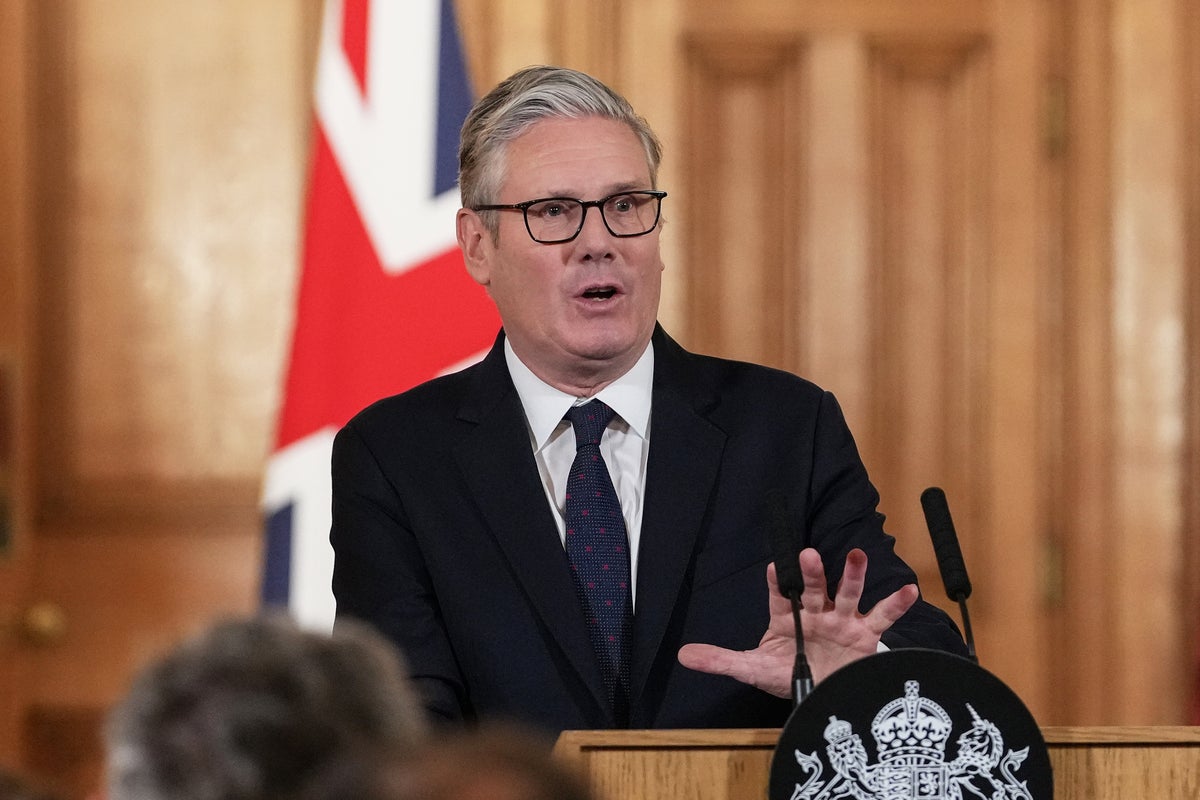
The sudden announcement of a peace accord between Washington and Tehran has sent shockwaves through global capitals, catching career diplomats and intelligence agencies completely off guard. While Downing Street was quick to champion the development, with Prime Minister Keir Starmer hailing it as a hugely significant breakthrough for global security, a closer look at the actual mechanisms of the agreement reveals a far more volatile reality. The deal, brokered under the unique transactional style of the Trump administration, purports to permanently halt decades of hostility and neutralize the threat of a widening Middle Eastern war. However, beneath the triumphalist rhetoric lies a fragile framework built on short-term political expedience rather than structural changes in regional power dynamics.
To understand why this agreement is already facing intense skepticism from defense establishment veterans, one must look past the signatures. The treaty secures immediate concessions, namely a temporary freeze on Iran’s uranium enrichment past civilian thresholds in exchange for targeted sanctions relief. But it conspicuously avoids the core friction points that have fueled the conflict for forty years. By focusing entirely on a transactional nuclear pause, the deal leaves Iran’s sprawling network of regional proxies intact and ignores the security anxieties of key alliance partners in the region. What is being celebrated as a historic diplomatic triumph is, in substance, a high-stakes gamble that misinterprets containment for true stability.
The Flawed Architecture of Transactional Diplomacy
Traditional diplomacy relies on months of grueling, lower-level bureaucratic alignment before a single head of state ever shakes a hand. This accord bypassed that entirely. It was negotiated through back-channel communications and direct, top-down directives, a method that favors immediate optics over institutional durability.
The primary vulnerability of this approach is its lack of structural institutional support. When a peace treaty is hammered out entirely at the executive level, it fails to secure the buy-in of the military and intelligence apparatuses tasked with enforcing it. In Tehran, the Islamic Revolutionary Guard Corps retains independent economic and paramilitary levers that operate outside the direct control of civilian negotiators. In Washington, a treaty that lacks bipartisan congressional ratification remains vulnerable to being dismantled by the next administration, creating an inherent expiration date that all parties are acutely aware of.
Consider a hypothetical scenario where an international corporate merger is signed by two CEOs without consulting their respective compliance, legal, or regional operational teams. The announcement might spike stock prices for forty-eight hours, but the actual integration is almost guaranteed to fracture at the first sign of operational friction. That is precisely the structural weakness embedded in this geopolitical accord.
Why Downing Street Rushed to Validate the Accord
The British government's rapid, unreserved praise for the announcement says more about London’s current vulnerabilities than it does about the actual viability of the deal. Starmer's alignment with the White House on this issue is a calculated effort to secure early diplomatic capital.
The United Kingdom is facing severe domestic economic pressures and a deeply overstretched defense budget. A genuine de-escalation in the Middle East would theoretically stabilize global energy markets, lowering inflation risks that threaten domestic fiscal policy. Furthermore, London is desperate to preserve the special relationship during an era of unpredictable American foreign policy. By acting as the primary international validator of the deal, the British administration hopes to position itself as an indispensable bridge between Washington and European capitals, many of which remain deeply skeptical of the treaty's long-term viability.
This diplomatic subservience carries significant long-term risks. If the accord collapses due to verification failures or proxy violence, London will find itself holding the bag for an American foreign policy venture it had no hand in actually designing.
The Omission of the Proxy Network Problem
You cannot build a lasting peace in the Middle East by ignoring the asymmetric forces that define its conflicts. The text of the accord focuses narrowly on formal state-to-state engagements and conventional military postures.
Iran's true geopolitical leverage does not reside in its conventional army or its formal diplomatic corps. It is sustained through its regional axis, a sophisticated, decentralized network of armed groups stretching across Lebanon, Iraq, Syria, and Yemen. Because these groups operate with varying degrees of autonomy, a formal peace treaty signed in a distant capital does not automatically translate to a cessation of hostilities on the ground. History shows that when formal diplomatic constraints are placed on Tehran's conventional behavior, its strategic response is almost always to increase funding and logistical support to these non-state actors.
The agreement fails to provide a verification mechanism to monitor the covert funding lines that feed these regional flashpoints. Without clear, enforceable penalties for proxy aggression, the treaty merely shifts the conflict from a potential conventional war to an intensified shadow campaign.
The Verification Trap
Any disarmament or de-escalation agreement is only as good as the intrusive inspection regime that backs it up. The current framework relies heavily on self-reporting and delayed access schedules that have failed in every previous iteration of Western-Iranian diplomacy.
Modern intelligence operations know that tracking advanced centrifuge components or covert logistics networks requires unannounced, immediate access to both declared and undeclared facilities. The compromises made to secure this quick diplomatic victory include compromise clauses that grant Tehran windows of several weeks to review inspection requests. This structural concession creates a verification trap. It allows compliance to be staged for international monitors while clandestine development can simply be relocated or paused temporarily, rendering the verification process an exercise in administrative theater.
Regional Partners Realign for the Fallout
The most immediate consequence of this top-down diplomacy is the profound sense of betrayal felt by traditional regional allies. Both Jerusalem and Riyadh were largely excluded from the final stages of the negotiations, a move that has shattered trust in Washington’s security guarantees.
Rather than accepting the terms of an agreement they view as an existential threat, these regional powers are already shifting to independent, unilateral strategy options. We are likely to see an increase in covert sabotage operations, targeted cyber actions, and independent defense procurement strategies designed to counter Iranian influence outside the framework of the American deal. By bypassing regional stakeholders to secure a fast headline, the treaty may inadvertently trigger the exact localized conflicts it was intended to prevent.
The world is not witnessing the start of a stable regional era. It is watching the opening moves of a far more complex, multi-polar standoff where the old rules of superpower containment no longer apply.