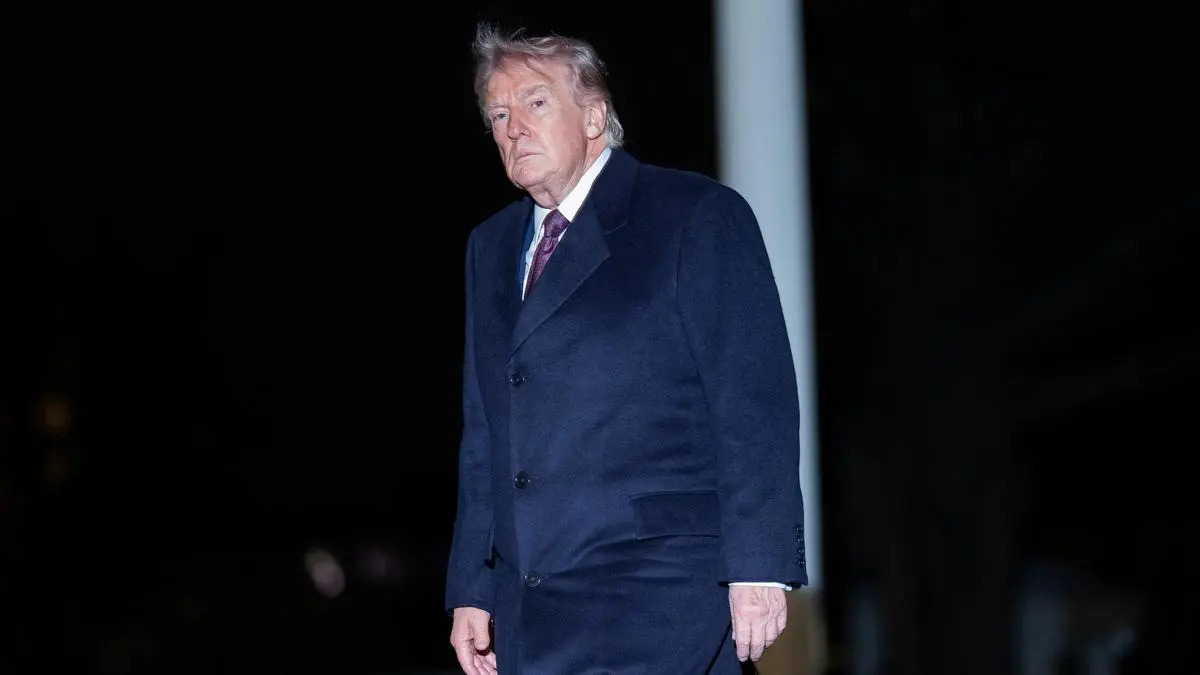
The signals coming out of Mar-a-Lago and the corridors of power in Tehran are currently operating on two entirely different frequencies. Donald Trump has publicly floated the idea that Iran is desperate for a deal, suggesting a swift resolution to decades of hostility is within reach. Tehran, meanwhile, maintains a stony silence or issues sharp denials, insisting that no negotiations are on the table. This disconnect is not just a misunderstanding. It is a fundamental clash between American transactional diplomacy and the Iranian regime's survival strategy.
While the rhetoric suggests a potential breakthrough, the ground reality points toward a more complex and dangerous stalemate. Trump’s belief in the "Art of the Deal" assumes that every player has a price and that economic pressure eventually forces a surrender. But for the Iranian leadership, the price of a deal that strips away their missile program or regional influence isn't just a policy shift; it is a threat to their very existence. They remember 2018. They remember the unilateral exit from the JCPOA. Trust, in this theater, is a dead currency. Don't miss our earlier article on this related article.
The Friction Between Transactionalism and Ideology
Washington views the world through the lens of leverage. The logic is simple: if you squeeze an economy hard enough, the leadership will eventually trade its ambitions for relief. This is the bedrock of the "maximum pressure" campaign. It assumes that the Iranian people’s suffering will translate into a mandate for the regime to capitulate.
However, the Islamic Republic does not operate on a quarterly earnings cycle. It operates on a revolutionary timeline. For the Supreme Leader and the Islamic Revolutionary Guard Corps (IRGC), the "war" isn't just about sanctions or nuclear centrifuges. It is about a permanent stance of resistance against what they term global arrogance. When Trump suggests they are ready to talk, he is interpreting their economic pain as a white flag. Tehran sees that same pain as a necessary sacrifice in a long-term struggle for regional hegemony. If you want more about the history of this, Al Jazeera provides an excellent summary.
There is also the matter of internal Iranian politics. The reformist factions, which might have once championed a deal, have been largely sidelined or absorbed. The hardliners now control the levers of power. To these men, a deal with Trump is not an opportunity—it is a trap. They believe that any concession will be met with further demands until the regime itself is dismantled. This isn't paranoia; it's their reading of American foreign policy over the last thirty years.
The Nuclear Clock and the Price of Delay
While the talk of "ending the war" dominates the headlines, the technical reality of Iran’s nuclear program creates a far more urgent timeline. Iran is closer to weapons-grade uranium than at any point in history. This isn't a hypothetical threat. It is a measurable progression of centrifuge counts and enrichment levels.
Every day that passes without a framework for containment, the "breakout time"—the window required to produce enough material for a bomb—shrinks. This creates a paradox for the U.S. administration. The longer they wait for the "perfect" deal that addresses missiles and proxies, the more the nuclear threat matures.
The Missile Gap
The original Iran deal was criticized for focusing almost exclusively on the nuclear aspect. Trump has made it clear that any new agreement must include Iran’s ballistic missile program. This is a non-starter for Tehran. Without a conventional air force that can compete with regional rivals, Iran views its missile inventory as its primary deterrent. Asking them to give up missiles is like asking a boxer to fight with his hands tied behind his back.
The Regional Proxy Network
Then there is the "Axis of Resistance." From Hezbollah in Lebanon to the Houthis in Yemen, Iran has spent decades and billions of dollars building a web of influence. These aren't just allies; they are forward-deployed assets designed to keep any conflict far from Iranian borders. For the U.S., these groups are terrorists that must be defunded. For Iran, they are the vital organs of their national security strategy.
The Shadow of the IRGC
Any discussion of a deal must account for the IRGC. They are not just a military branch; they are a massive economic conglomerate. They control construction companies, telecommunications, and oil smuggling routes. Sanctions, curiously, have often strengthened their grip on the black market. When legitimate trade dies, the smugglers become the kings of the economy.
The IRGC has a vested interest in the status quo of "neither war nor peace." A full-scale war would destroy their infrastructure, but a total peace would destroy their justification for holding so much power. They benefit from a state of permanent tension. This is the "hidden hand" that often sabotages diplomatic overtures. If the diplomats in Tehran ever get too close to a handshake, the IRGC has a dozen ways to spark a provocation that shuts the door.
Economic Resilience vs. Economic Collapse
Is Iran actually ready to end the war because of the economy? The numbers are grim. Inflation is rampant, the rial is in freefall, and the middle class is evaporating. But the regime has proven remarkably adept at "resistance economics." They have pivoted toward China and Russia, creating a sanctioned-states club that bypasses the Western financial system.
China’s appetite for Iranian oil, even at a discount, provides a vital lifeline. This "Ghost Fleet" of tankers moves millions of barrels under the radar, ensuring that the regime has enough hard currency to pay its security forces and keep the lights on in the capital. As long as Beijing is willing to play the role of the ultimate middleman, the "maximum pressure" strategy will have a leak that prevents total collapse.
The Miscalculation of Personal Diplomacy
There is a recurring theme in the current administration’s approach: the belief that personal rapport can overcome systemic enmity. We saw this with North Korea. The summitry was spectacular, but the results were negligible. Pyongyang kept its nukes, and the status quo remained.
Iran is a much more complex beast than North Korea. It is not a monolithic autocracy where one man’s whim changes the course of the nation. It is a system of competing power centers—the Supreme Leader, the Presidency, the Parliament, and the IRGC. A "deal" with one does not guarantee the compliance of the others. Trump’s confidence that he can sit down and "fix it" ignores the institutional inertia of the Iranian state.
Furthermore, the Iranian side remembers the "Red Line" failures and the shifting goalposts of previous U.S. administrations. They view American policy as inherently unstable, subject to the whims of the four-year election cycle. Why sign a treaty with a president when his successor might tear it up on day one? Without a treaty ratified by the Senate—an impossibility in the current political climate—any deal is just a temporary ceasefire.
The Looming Specter of Miscalculation
The danger of the current rhetoric is that it creates a false sense of security while the underlying tensions escalate. If the U.S. believes Iran is ready to fold, it may increase pressure to a point that triggers a violent response. Conversely, if Iran believes the U.S. is bluffing or distracted by other global conflicts, it may push its nuclear enrichment to 90%, crossing a threshold that makes military intervention almost inevitable.
We are currently in a period of strategic posturing. Trump uses the media to project a world where he is in control of the chaos. Iran uses its silence to project a world where it cannot be intimidated. Between these two facades, the risk of a kinetic conflict in the Persian Gulf remains at its highest point in years.
The Role of Regional Actors
Israel and Saudi Arabia are not silent observers in this drama. For Israel, an Iranian nuclear weapon is an existential threat that no amount of diplomatic "ending the war" talk will satisfy. They have shown a consistent willingness to take direct action—assassinations, cyber warfare, and sabotage—inside Iranian territory. These actions often run counter to the diplomatic goals of Washington, adding another layer of unpredictability to the situation.
The Saudis, once the loudest voices for confrontation, have recently moved toward a more cautious hedging strategy. They have resumed some level of diplomatic contact with Tehran, realizing that a regional war would be fought largely on their soil and target their oil infrastructure. This shift complicates the American "Arab NATO" concept, as the regional players are no longer a unified front against Iran.
A Conflict Without an Exit Ramp
To suggest that Iran is "ready to end the war" is a simplification that borders on fantasy. They are ready for the sanctions to end, certainly. They are ready for the threat of invasion to vanish. But they are not ready to abandon the pillars of their ideology that keep the current leadership in power.
The most likely outcome isn't a grand bargain or a devastating war. It is a continuation of the "gray zone" conflict—a series of shadow moves, cyber attacks, and proxy skirmishes that never quite boil over into total confrontation but never allow for a true peace. It is a exhausting, expensive, and dangerous stalemate that serves the interests of hardliners on both sides.
Instead of waiting for a signed document and a handshake on a lawn, the focus should be on realistic de-escalation. This involves small, verifiable steps that address specific grievances without demanding a total surrender of national identity. But in an era of "big win" politics, such incrementalism is often discarded in favor of the bold, yet empty, promise of a total victory.
The war isn't ending. It is just changing its shape. The rhetoric of a quick deal is a distraction from the much harder work of managing a permanent rivalry that has no easy solution. If Washington continues to misread Tehran's "resistance" as "desperation," the resulting miscalculation could be the most expensive mistake of the decade.
Look at the history of the last forty years. Every time a leader has predicted the imminent collapse or surrender of the Iranian regime, they have been proven wrong. The system in Tehran is built for pressure. It thrives on it. It uses the external enemy to justify internal repression. Breaking that cycle requires more than just a firm handshake or a threatening tweet. It requires a fundamental shift in how the West understands the motivations of its most enduring adversary.
The next time a headline suggests a breakthrough is imminent, ask yourself what has actually changed on the ground. Are the centrifuges stopping? Is the money flowing into the IRGC’s coffers drying up? Are the regional militias standing down? Unless the answer to those questions is a definitive yes, the "deal" is nothing more than a ghost, a political talking point designed for domestic consumption rather than international reality.
The path forward is not found in the search for a perfect agreement that solves every problem at once. That is a mirage. The path forward is the grueling, unglamorous work of containment, deterrence, and the constant management of a crisis that may never truly end. Accept that some conflicts aren't meant to be "solved" in a single term, but merely survived.
The Iranian leadership knows this. It remains to be seen if Washington does.
End the search for the grand bargain and start preparing for the long, cold peace that is the only realistic alternative to a hot, catastrophic war.