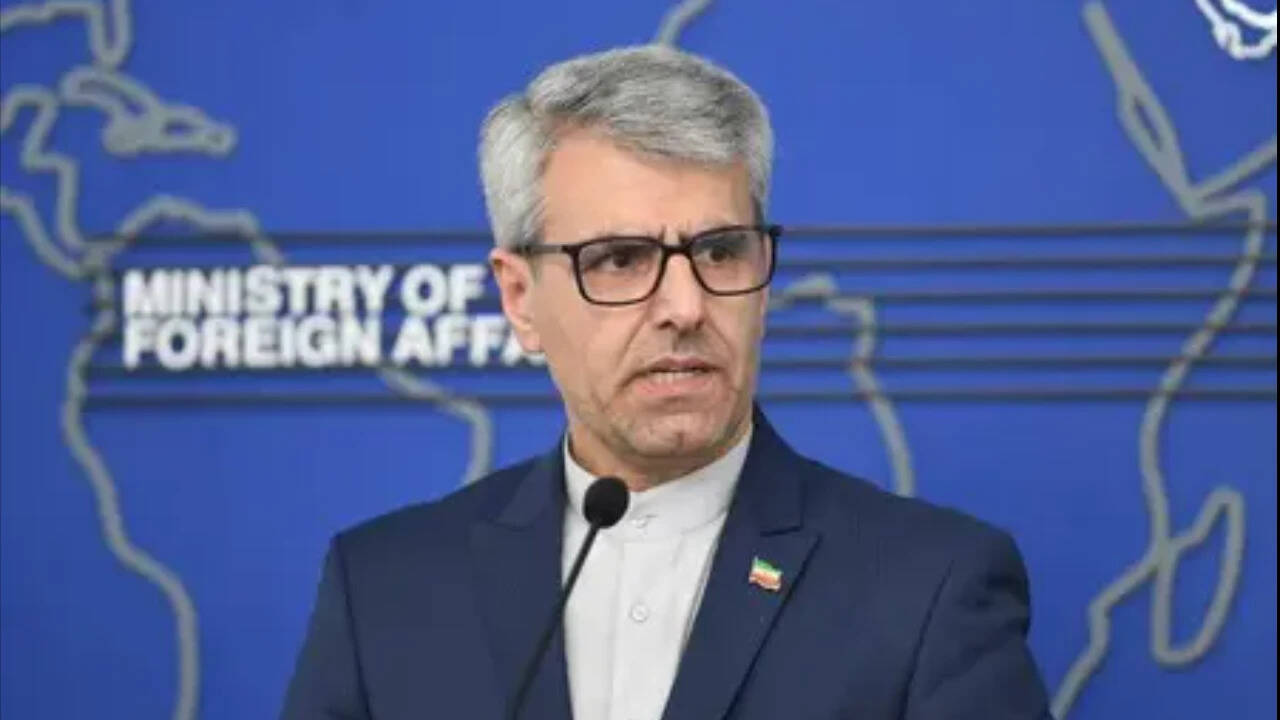
The structural equilibrium of maritime commerce requires absolute predictability. When a chokepoint responsible for approximately 20 percent of global petroleum liquids transit becomes a theater of military enforcement, the economic consequences scale exponentially rather than linearly. Following the June 2026 bilateral Memorandum of Understanding (MoU) between Tehran and Washington, the operational landscape shifted from an active kinetic blockade to a highly contested regulatory regime. The rejection by the Iranian Foreign Ministry of French and Omani offers for joint mine-clearance operations demonstrates a deliberate strategic calculus: treating tactical demining not as a technical utility, but as a sovereign tool for long-term rent-seeking and regional dominance.
To evaluate this transition, this analysis deconstructs the mechanisms of chokepoint control, the economic math of maritime risk, and the friction between international maritime frameworks and unilateral security claims.
The Three Pillars of Tactical Chokepoint Leverage
Monopolistic control over a maritime bottleneck relies on three distinct operational variables. Iran's recent diplomatic maneuver to exclude third-party European or regional navies from mine clearance is designed to maximize leverage across each category.
- Asymmetric Denial Capabilities: The combination of satellite spoofing, GNSS jamming, fast-boat swarms, and unmapped sea mines creates a high-friction environment for commercial vessels. By insisting on a 30-day window for unilateral mine clearance, Tehran retains the precise technical data regarding where safe transit corridors exist, effectively turning navigation safety into a proprietary asset.
- Regulatory Rent Extraction: Under the current iteration of the bilateral framework, Iran has attempted to position itself as the sole authority managing transit permissions. Establishing a framework where merchant ships must coordinate exclusively with Iranian authorities establishes a precedent for administrative fees, mandatory pilotage, or security tolls.
- Bilateral Deterrence Insulation: Excluding multilateral coalitions—such as French or broader European naval assets—prevents the internationalization of the waterway's security architecture. A internationalized demining effort would dilute Tehran's bargaining position in broader diplomatic negotiations regarding frozen state assets and sanctions relief.
The Cost Function of Maritime Risk Premiums
The closure of the Strait of Hormuz in early 2026 triggered the sharpest monthly spike in crude oil prices since the 1970s energy crisis. The economic mechanism driving this volatility is the systemic inflation of war-risk insurance premiums. Under standard maritime insurance underwriting, premiums are directly proportional to the perceived probability of hull seizure or kinetic damage.
When the Islamic Revolutionary Guard Corps (IRGC) Navy conducted live-fire operations against commercial container ships earlier this year, underwriters reacted by adjusting the baseline risk calculation. The formula governing total voyage cost during a chokepoint crisis can be expressed through a series of interlocking variables:
$$\text{Total Voyage Cost} = C_b + C_f + P_w(V_r)$$
Where $C_b$ represents baseline operational costs, $C_f$ represents fuel and route deviation costs, and $P_w$ represents the war-risk premium applied to the total valuation of the vessel and cargo ($V_r$).
The second limitation introduced by unilateral mine clearance is chronological uncertainty. While the June 2026 MoU establishes a temporary 60-day window for the free passage of merchant shipping, the 30-day lead time requested by Tehran for technical clearance prolongs the operational bottleneck. For commercial shipowners, a 30-day delay under a state of unverified mine risk functions identically to a formal blockade. It prevents the normalization of commercial shipping schedules and forces logistics firms to maintain costly alternative routing around the Cape of Good Hope.
Sovereign Friction and International Maritime Law
The core tension in the Strait of Hormuz revolves around differing interpretations of the United Nations Convention on the Law of the Sea (UNCLOS). While international law guarantees the right of transit passage for all vessels through straits used for international navigation, domestic Iranian legal updates have consistently sought to redefine these waters as restrictive internal or territorial zones requiring prior state authorization.
This creates a structural bottleneck for regional states, particularly members of the Gulf Cooperation Council (GCC). Nations such as Saudi Arabia, Kuwait, and the United Arab Emirates depend on unhindered access through the strait to export hydrocarbons and import industrial goods. The recent joint statements by the GCC and the United States explicitly rejecting Iranian attempts to collect tolls or mandate unilateral oversight highlight the unsustainability of the current compromise.
The bilateral approach favored by Tehran seeks to bypass multilateral conventions entirely. By establishing a direct, political-level line of communication with Washington via diplomatic channels rather than military-to-military networks, Iran isolates regional actors from the decision-making loop. This strategy successfully transforms an international freedom-of-navigation issue into a transactional, bilateral security negotiation.
Strategic Outlook and Fleet Deployment Mechanics
Commercial maritime operators cannot base transit decisions on political communiqués; they require verified hydrographic safety data. The insistence by Western allies on deploying assets like specialized minesweepers underlines a fundamental distrust in unilateral state declarations of safety.
The strategic trajectory over the next 60 days will be dictated by two competing operational models:
- The Unilateral Iranian Corridor: Commercial vessels transit strictly within lanes cleared and monitored by Iranian assets, accepting the regulatory oversight and potential inspection risks imposed by Tehran in exchange for expedited route access.
- The Multilateral Route Expansion: International naval coalitions continue to map and enforce wider transit routes near Omani waters, using advanced underwater unmanned vehicles (UUVs) to independent confirm demining. This model challenges the sovereign monopoly claimed by Tehran but increases the risk of localized kinetic friction.
The optimal operational play for global shipping conglomerates involves a diversified routing strategy. Until independent maritime information centers verify the total eradication of indiscriminate sea mines and the permanent cessation of fast-boat boarding actions, high-value assets must remain routed through alternative logistical hubs. Relying on a temporary, politically fragile 60-day window introduces unacceptable capital risk into corporate supply chains.


