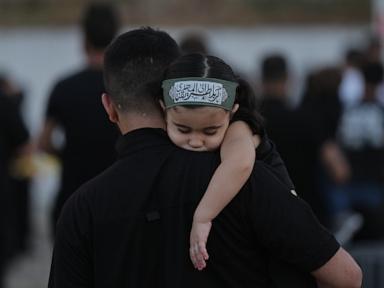
Every year during the Islamic month of Muharram, millions of Shiite Muslims around the world take to the streets in a massive, coordinated display of collective grief. Western media outlets routinely cover these events with a predictable formula. They show striking, high-contrast photographs of men in black, blood-stained foreheads from self-flagellation, and massive crowds chanting in unison in cities like Karbala, Baghdad, and Beirut. The accompanying text usually frames Ashoura—the tenth day of Muharram—as a purely religious, historical commemoration of a seventh-century battle.
This framing misses the point entirely.
To view Ashoura simply as an annual ritual of historical mourning is to misunderstand one of the most potent, politically adaptive forces in the modern Middle East. The public rituals of Muharram are not merely about looking backward at the martyrdom of Hussein ibn Ali, the grandson of the Prophet Muhammad, at the Battle of Karbala in 680 CE. They are a highly sophisticated, deeply embedded mechanism for contemporary political mobilization, social welfare organization, and geopolitical resistance. In the hands of modern political actors, the historical grief of Ashoura is routinely converted into hard political currency.
The Karbala Paradigm as a Blueprint for Modern Rebellion
To understand the explosive nature of this ritual, one must look at the specific narrative being kept alive. Hussein’s refusal to pledge allegiance to the Umayyad Caliph Yazid, whom he viewed as a corrupt tyrant, is not treated by Shiites as an isolated historical event. It is treated as an active, living template for fighting injustice in the present day.
This psychological framework transforms every contemporary conflict into a reenactment of Karbala. During the 1979 Iranian Revolution, Ayatollah Ruhollah Khomeini brilliantly weaponized this narrative. He explicitly cast the US-backed Shah as the modern Yazid and the Iranian protestors as the spiritual heirs of Hussein. The street protests were deliberately timed to coincide with Muharram, using the traditional mourning processions as a ready-made, unstoppable infrastructure for mass revolution. Imperial security forces found themselves completely paralyzed by a population that viewed death in the streets not as a defeat, but as the ultimate victory of martyrdom.
The legacy of that tactical shift remains fully operational today across the region.
The Local Infrastructure of Global Power
Beyond the grand geopolitical narratives, the actual execution of Muharram relies on a hyper-local, decentralized network of community centers known as hussainiand, ma'tams, or imambargahs. These institutions function quietly throughout the year, but during Muharram, they become the logistical nerve centers of the Shiite world.
They manage massive supply chains entirely through volunteer labor and donations.
- Logistics and Supply Chains: Millions of meals are prepared and distributed for free to pilgrims and local residents, funded by the khums (a traditional 20% religious tax on surplus wealth) and voluntary contributions.
- Social Safety Nets: These centers track which families in the neighborhood are struggling, using the communal gathering of Muharram to quietly distribute financial aid, medical assistance, and food security without the bureaucracy of formal state channels.
- Civil Administration: In failing or weak states, these religious networks effectively replace the government, providing security, crowd control, and sanitation services that municipal authorities are completely incapable of delivering.
This hyper-local mobilization creates a profound sense of institutional trust. When a political or military movement operates out of these same community spaces, that trust is seamlessly transferred to the political leadership.
The Fractured Reality of Flagellation
No aspect of Ashoura draws more external attention—or internal debate—than the practice of tatbir, the ritual cutting of the scalp with swords or chains to spill blood in mourning. Western cameras flock to these spectacles because they offer shocking, visceral imagery. Yet inside the Shiite world, this practice is the subject of a fierce, institutional theological civil war.
The practice is increasingly banned or discouraged by the highest authorities of the faith.
Grand Ayatollah Ali Khamenei of Iran and many leading jurists in Najaf, Iraq, have issued fatwas declaring tatbir forbidden (haram). Their objections are intensely practical. They argue that the practice causes self-harm, brings disrepute to Islam in the global media, and reduces a profound theological stance against tyranny into a bizarre spectacle. In its place, progressive religious leaders have successfully redirected this emotional energy into massive, highly organized national blood drives. On the day of Ashoura, mobile donation trucks sit outside shrines, rebranding the act of shedding blood for Hussein as a literal gift of life for modern hospital patients.
Yet, the practice persists in pockets of Iraq, Lebanon, and South Asia. For the disenfranchised young men who participate, the physical pain is a radical equalizer, a way to physically manifest their alienation and loyalty in a world that has locked them out of economic and social mobility.
The Geopolitical Exploitation of Grief
The collective emotional state induced by ten days of intense communal mourning creates an unparalleled window for political messaging. Throughout the Middle East, state and non-state actors alike utilize the pulpit of the maddah—the ritual eulogizers who lead the chants—to inject specific geopolitical agendas directly into the minds of the audience.
In Lebanon, Hezbollah has perfected this art form. The organization’s public Ashoura processions in the southern suburbs of Beirut are masterclasses in military precision and political theater. The historical chants mourning Hussein are interspersed with modern political slogans targeting Israel, the United States, or domestic rivals. The message is hammered home with absolute clarity: supporting the resistance movement today is the exact modern equivalent of standing with Hussein at Karbala. To remain neutral or silent is to side with Yazid.
This creates an incredibly rigid social reality. It makes dissent within the community exceptionally dangerous, as any critique of the political leadership is easily reframed by authorities as a betrayal of the faith itself.
A Double Edged Sword for Regional Stability
The sheer power of this collective mobilization explains why authoritarian regimes throughout history have viewed Muharram with absolute terror. From the Ottoman Empire to Saddam Hussein’s Ba'athist regime in Iraq, rulers have repeatedly attempted to ban or severely restrict public Ashoura processions. They understood perfectly well that a crowd that has spent ten days whipping itself into a fervor over historical tyranny can turn its rage toward the palace gates in an instant.
When Saddam Hussein fell in 2003, the sudden, massive resurgence of the walking pilgrimage to Karbala was the definitive announcement of the new, Shiite-dominated political reality of Iraq. Millions of people walked for days across the desert, reclaiming the public square after decades of violent suppression.
Today, that same energy is a central pillar of the ongoing regional rivalry between Iran and Saudi Arabia. For Tehran, exporting the revolutionary interpretation of the Karbala narrative helps solidify its influence across the "Shiite Crescent," stretching through Iraq, Syria, and Lebanon into Yemen. For Riyadh and other Sunni-led capitals, this trans-national mobilization is viewed as a direct, existential threat to state sovereignty, a subterranean network that can bypass national borders and mobilize populations at a moment's notice.
The challenge for the future of the region is that this narrative is fundamentally binary. The Karbala story does not allow for compromise, nuance, or diplomatic gray areas. It is an uncompromising story of absolute good versus absolute evil, of total sacrifice against impossible odds. When this psychological framework is applied to complex, multi-ethnic modern political disputes, it makes long-term political compromise almost impossible to achieve, ensuring that the grievances of the past continue to dictate the blood-letting of the present.