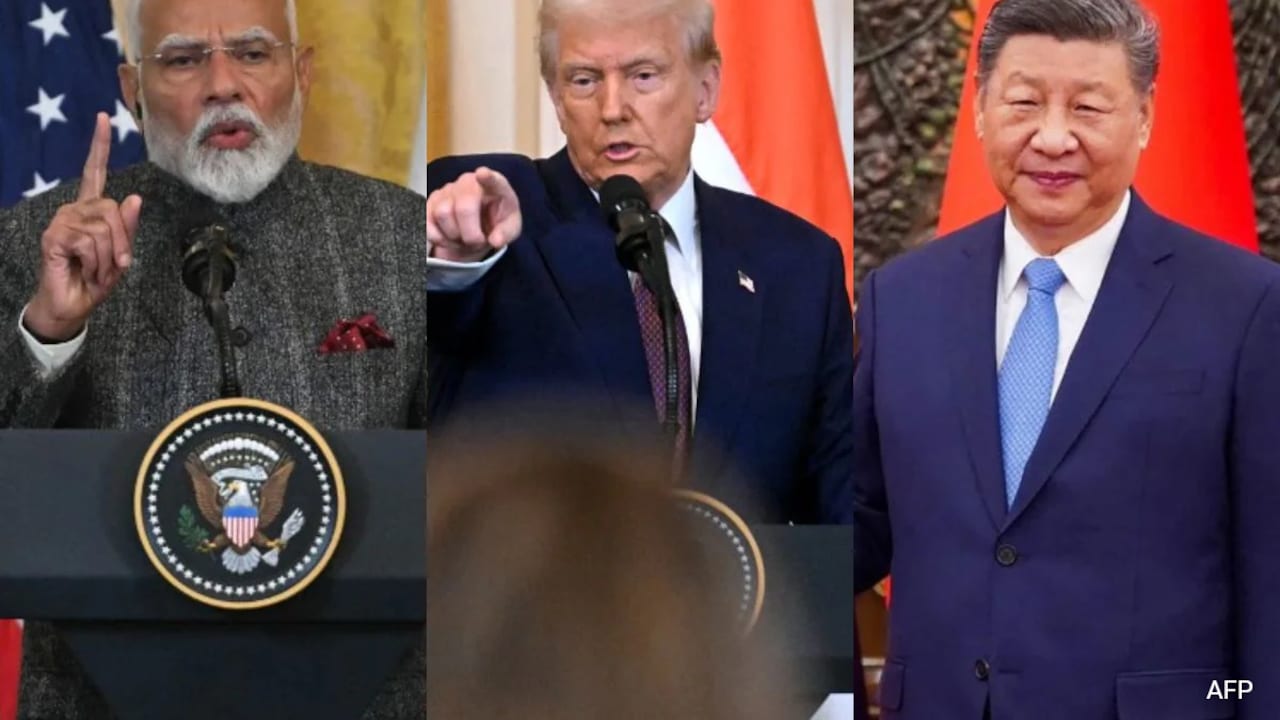
The United States recently backed down from its threat to impose a staggering 500% tariff on Russian oil, a move designed to squeeze Moscow but one that ultimately risked triggering a global economic meltdown. By quietly shelving this extreme measure, Washington handed a massive sigh of relief to India and China, the two largest buyers of discounted Russian crude. However, this was not a sudden act of diplomatic mercy. It was a cold, calculated retreat forced by the harsh realities of global energy supply chains and the limits of Western financial hegemony.
When the threat of a 500% tariff was first floated, it was framed as the ultimate tool to choke off the revenues funding the Kremlin's war machine. The logic seemed simple on paper. By making Russian oil prohibitively expensive to transport or trade through Western-linked services, the U.S. hoped to force buyers to abandon Moscow. In other news, we also covered: The Invisible Strings of the Bhagwanpuria Network.
But the global oil market does not bend easily to unilateral decrees.
Instead of isolating Russia, the threat exposed a critical vulnerability in the Western strategy. If the U.S. had actually enforced a punitive tariff of that magnitude, it would have effectively removed millions of barrels of oil from the daily global supply. This would have triggered a catastrophic price spike, hurting Western consumers at the pump and driving inflation to politically ruinous levels. The Washington Post has provided coverage on this fascinating subject in great detail.
By backing away from the cliff, the U.S. chose to prioritize global economic stability over a symbolic blow to Moscow.
The Illusion of the Price Cap and the Rise of the Shadow Fleet
To understand why the 500% tariff threat collapsed, one must look at the mechanics of the G7 price cap. Introduced at $60 per barrel, the price cap was designed to keep Russian oil flowing to prevent global shortages, while simultaneously restricting the profit Russia could make on each barrel.
It was a delicate balancing act that relied on Western control over maritime insurance, financing, and shipping services.
Russia, however, found an elegant, if costly, workaround. It assembled a massive "shadow fleet" of aging, uninsured tankers operating outside Western jurisdictions.
- The Ship-to-Ship Shell Game: Russian crude is routinely transferred between tankers in international waters, obscuring its origin before it reaches its final destination.
- Alternative Insurance: Domestic Russian insurers and state-backed entities in purchasing countries stepped in to replace Western maritime insurance.
- Non-Dollar Pricing: Transactions are increasingly settled in local currencies, such as the Chinese yuan, Indian rupee, and UAE dirham, bypassing the U.S. financial system entirely.
As the shadow fleet grew, the leverage of Western sanctions diminished. A 500% tariff would only apply to transactions touching Western financial or logistics networks. Since a vast portion of Russian oil now flows completely outside these networks, the tariff would have acted as a tax on a rapidly shrinking pool of compliant trade, while doing little to stop the off-grid flows.
India and China as the New Global Refiners
The primary beneficiaries of this policy retreat are New Delhi and Beijing. Both nations have spent the last few years absorbing discounted Russian Urals crude, turning geopolitical friction into a massive economic windfall.
For India, the calculus is entirely pragmatic.
As a developing economy importing over 80% of its oil, cheap energy is a matter of national survival. Indian refiners did not just consume this oil domestically; they refined it and exported the finished products—such as diesel and jet fuel—directly back to Europe. This created a bizarre geopolitical paradox.
Europe banned direct imports of Russian crude, yet it remains heavily reliant on Indian diesel refined from that very same Russian oil.
If the U.S. had gone through with the 500% tariff, it would have disrupted this vital refining pipeline. European nations, already struggling with high energy costs, would have faced severe diesel shortages. Washington realized that punishing India meant punishing its own European allies.
China's approach is more structural. Beijing integrated Russian oil into its long-term strategic reserves and its independent refining sector, known as "teapots." By purchasing oil in yuan, China advanced its goal of internationalizing its currency while securing a stable, land-based energy supply line via the ESPO pipeline, entirely immune to U.S. naval blockades or maritime sanctions.
Why Washington Had to Blink
The threat of a 500% tariff was a classic exercise in escalatory dominance that ignored the basic laws of supply and demand.
Had the tariff been implemented, global oil prices could have easily soared past $120 a barrel. In an election-heavy global environment, no Western leader could afford the domestic political fallout of skyrocketing gasoline prices.
Furthermore, the U.S. Federal Reserve and other major central banks were already struggling to bring inflation down to target levels. A sudden, massive energy shock would have triggered a global recession.
[U.S. Tariff Threat] ---> [Reduction in Global Oil Supply] ---> [Skyrocketing Crude Prices] ---> [Severe Domestic Inflation & Western Recession]
The retreat proves that when the interests of punishing Russia clash with the stability of the Western financial system, domestic economic survival will always win. The United States cannot enforce a total blockade on the world’s second-largest oil exporter without inflicting self-harm.
The Long-Term Failure of Financial Weaponization
This episode marks a significant milestone in the gradual decline of unilateral economic sanctions as an effective tool of superpower diplomacy.
For decades, the dominance of the U.S. dollar allowed Washington to dictate terms to global markets. If a country displeased the U.S., it was cut off from the SWIFT banking system and global insurance networks.
But sanctions are a depreciating asset.
The more they are used, the more they incentivize the rest of the world to build parallel, sanction-resistant financial architectures. By pushing the threat to an absurd 500%, the U.S. accelerated the very fragmentation it feared. It forced India, China, and the Gulf states to cooperate on alternative payment mechanisms, trade routes, and maritime logistics that operate entirely outside the reach of the U.S. Treasury.
The retreat from the 500% tariff is not a pause in the economic war; it is an admission of its limits. Washington has run out of easy options. It cannot stop the flow of Russian oil without breaking the global economy, and it cannot force India and China to comply with sanctions that run counter to their national interests.
The shadow fleet will continue to sail, the barrels will continue to be laundered through third-party refiners, and the global energy market will continue its steady, irreversible shift away from Western oversight.