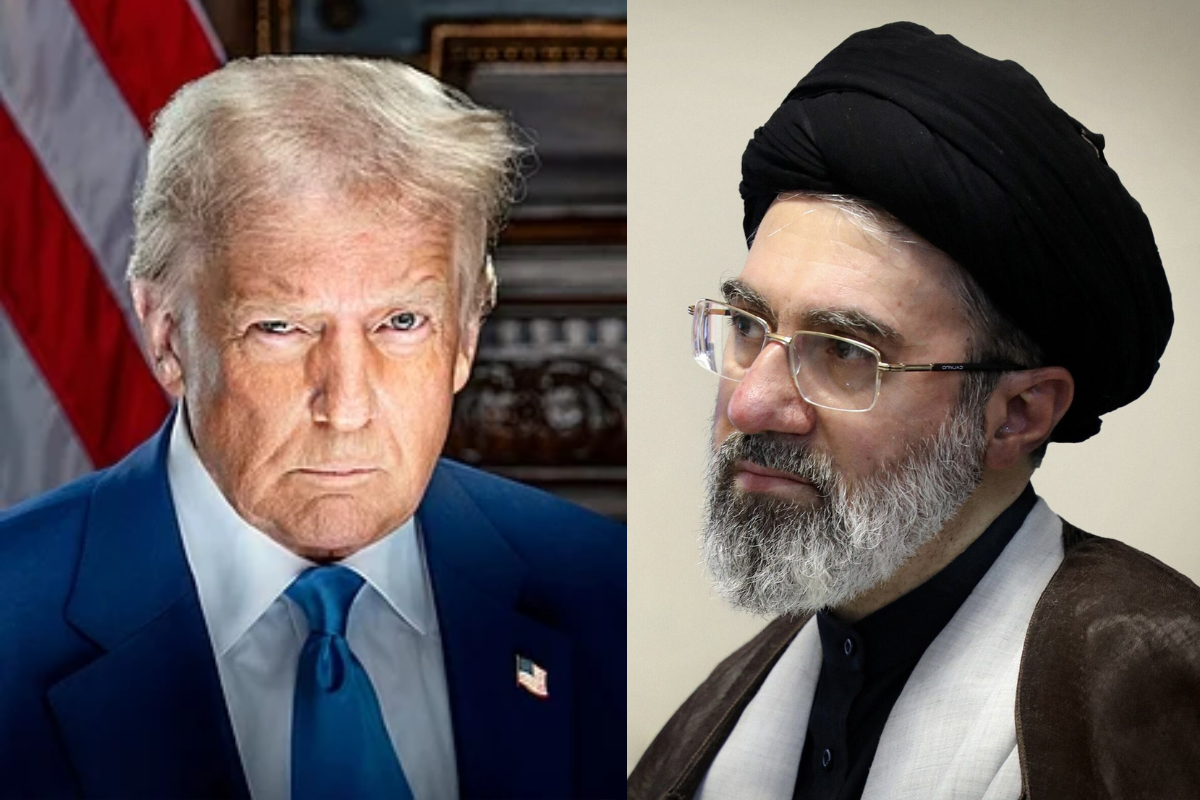
The escalation of rhetorical hostility between Tehran and the Trump administration represents a calculated application of "Grey Zone" warfare, where the primary objective is not immediate kinetic engagement but the manipulation of political risk premiums. Iran’s categorization of the U.S. leadership as "child killers"—specifically referencing the 2020 assassination of Qasem Soleimani and ongoing Middle Eastern sanctions—serves as a domestic consolidation tool and a signal to regional proxies. To understand the gravity of these threats, one must move past the sensationalism of "heavy destruction" and analyze the specific structural levers Iran intends to pull.
The Triad of Iranian Leverage
Tehran’s strategy to deliver a "crushing blow" rests on three distinct operational pillars. Each pillar operates on a different timeline and carries a specific cost-to-risk ratio for the Iranian state.
- Proximate Asymmetric Escalation: This involves the activation of the "Axis of Resistance." By outsourcing the initial kinetic response to non-state actors in Iraq, Syria, Lebanon, and Yemen, Iran maintains plausible deniability while forcing the U.S. to expend high-cost defensive resources (such as SM-3 interceptors) against low-cost offensive drones and rockets.
- Maritime Chokepoint Pressure: The Strait of Hormuz remains the most significant economic valve in the world. Iran’s ability to disrupt 20% of the global petroleum liquid consumption does not require a full blockade. Minor, persistent interference increases insurance premiums for tankers, creates inflationary pressure in Western energy markets, and targets the specific economic vulnerabilities of a consumer-driven U.S. economy.
- Cyber-Kinetic Convergence: Modern Iranian doctrine emphasizes "soft war." This includes targeting critical infrastructure—water treatment plants, electrical grids, and financial clearinghouses—within the U.S. homeland. Unlike a missile strike, a cyber-offensive offers a spectrum of intensity that can be dialed up to cause social friction without necessarily triggering a full-scale Article 5-style military response.
Mapping the Cost Function of Retaliation
Any Iranian "slap" is governed by a strict cost function. The leadership in Tehran is aware that a direct, catastrophic strike on U.S. soil would lead to regime extinction. Therefore, the "threat" is the product, and the "action" is the byproduct. The efficacy of their deterrence is measured by the degree to which it induces paralysis in U.S. foreign policy.
The variables in this equation include:
- Threshold of Pain: The maximum amount of economic or military damage Iran can inflict before triggering a conventional U.S. invasion.
- Domestic Resilience: The ability of the Iranian government to withstand renewed "Maximum Pressure" sanctions while maintaining internal security.
- Regional Alignment: The willingness of neighboring Gulf states to deny U.S. forces the use of their airbases for retaliatory strikes.
The phrase "child killer" is not merely an insult; it is a legalistic framing intended to justify future actions under the guise of "reciprocal justice" to the Global South and domestic audiences. By moralizing the conflict, Iran attempts to erode the international legitimacy of U.S. sanctions, portraying them as a violation of human rights rather than a tool of statecraft.
Structural Bottlenecks in U.S. Defense
The U.S. faces a fundamental mismatch in this engagement. Conventional military superiority is designed for state-on-state conflict, yet Iran operates in the seams of international law. The U.S. defense apparatus suffers from three specific bottlenecks when responding to Iranian threats:
- The Interceptor Deficit: The cost of a single Iranian-made Shahed drone is estimated at $20,000 to $50,000. The cost of a Patriot interceptor or a Sea Sparrow missile exceeds $2 million. A sustained swarm campaign creates an unsustainable economic burn rate for the U.S. Navy and Air Force.
- Political Polarization: Iranian intelligence services have observed that the U.S. domestic political environment is highly sensitive to "forever wars." Any escalation that results in American casualties or a spike in gasoline prices during an election cycle acts as a force multiplier for Iranian interests.
- Intelligence Latency: Identifying the precise origin of a proxy attack takes time. During this latency period, Iran can execute secondary and tertiary maneuvers, shifting the "theatre of operations" before the U.S. can form a coherent response.
The Mechanics of the "Crushing Blow"
When Tehran speaks of a "heavy slap," they are referencing a high-visibility, symbolic strike. Historical precedent, such as the 2020 ballistic missile attack on the Al-Asad Airbase, suggests that Iran favors targets that demonstrate technical capability without crossing the threshold into a total war scenario.
A "masterclass" strike by Iranian standards would likely involve:
- Simultaneous Multi-Domain Interference: A cyberattack on a major U.S. port occurring at the same time as a drone swarm against a regional base. This overwhelms command-and-control (C2) systems.
- Targeting Personnel over Infrastructure: Iran has signaled that the "price" for Soleimani is the removal of U.S. forces from the Middle East. They prioritize strikes that make the presence of U.S. troops politically and physically "unaffordable."
- The Goldilocks Kinetic Strike: An attack that is large enough to satisfy the domestic demand for revenge but precise enough to avoid significant civilian casualties, which would forfeit the moral high ground Tehran seeks to claim with its "child killer" rhetoric.
Tactical Forecasting and Strategic Necessity
The current trajectory indicates a transition from rhetoric to high-frequency, low-intensity friction. The Iranian leadership is betting that the U.S. will eventually choose retrenchment over the risk of a regional conflagration that could destabilize global markets for a decade.
The strategic play for the U.S. is not to respond to the rhetoric, but to harden the "seams" of the Grey Zone. This requires a shift from expensive kinetic defense to localized, low-cost electronic warfare and a robust, offensive cyber-deterrence posture that targets the financial assets of the Islamic Revolutionary Guard Corps (IRGC) rather than Iranian civilian infrastructure.
Security analysts must monitor the movement of short-range ballistic missiles (SRBMs) within Iranian borders and the communication patterns between the IRGC-QF and the Kata'ib Hezbollah in Iraq. These are the leading indicators of an imminent transition from verbal threats to operational execution. The "slap" is not a single event but a cumulative pressure campaign designed to force a strategic withdrawal. The success of this campaign depends entirely on whether the U.S. treats it as a series of isolated incidents or recognizes it as a unified, long-term siege of its regional influence.