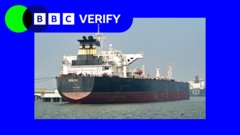
Geopolitical volatility in the Middle East—specifically a kinetic conflict involving Iran—directly threatens the viability of India’s natural gas-led energy transition. This disruption does not merely raise prices; it breaks the physical and economic logic of the "Gas-Based Economy" roadmap. When the Liquefied Natural Gas (LNG) supply chain is compromised by maritime insecurity in the Strait of Hormuz, India faces an immediate, non-negotiable choice: industrial stagnation or a systematic regression to high-emission feedstock.
The Strait of Hormuz Bottleneck
The fundamental vulnerability of India’s energy security lies in the geographic concentration of its gas imports. Approximately 70% of India’s LNG imports transit the Strait of Hormuz or originate from Persian Gulf nations like Qatar, the UAE, and Oman.
In a conflict scenario, the risk is categorized by three escalating vectors:
- The Insurance Premium Spike: Even before a physical blockage, "war risk" premiums for LNG carriers inflate the landed cost of gas (the "Regasified LNG" or RLNG price). This makes gas uncompetitive against domestic coal and imported furnace oil.
- Physical Interdiction: A blockade or naval skirmish physically halts the flow of vessels. Unlike crude oil, which can be stored in Strategic Petroleum Reserves (SPRs) for months, India’s storage capacity for LNG is limited to terminal tanks, providing only a few days of buffer.
- The Force Majeure Trigger: Long-term contracts, which India relies on for price stability, often contain clauses allowing suppliers to suspend deliveries during regional wars. This forces Indian buyers into the "Spot Market," where prices can spike by 300% to 500% within a 48-hour window.
The Substitution Hierarchy: The Industrial Descent
When gas supply narrows, the economy follows a predictable "Substitution Hierarchy." This is a survival mechanism where cost-effectiveness and availability override environmental mandates.
The Power Sector: The Return of the Peaking Plant
India utilizes gas-based power plants primarily for "peaking" power—addressing the sharp rise in demand during evening hours when solar generation drops to zero. If gas becomes unavailable, the grid operator must rely on "Deep Storage" coal reserves or ramp up older, inefficient sub-critical coal units. This increases the Carbon Intensity per Kilowatt Hour ($CI_{kWh}$) of the national grid.
The Fertilizer Crisis
The production of Urea requires Natural Gas as a feedstock for hydrogen (via Steam Methane Reforming).
$$CH_4 + 2H_2O \rightarrow CO_2 + 4H_2$$
When gas prices exceed a certain threshold (typically $15-$18 per MMBtu), the government's subsidy burden for fertilizer becomes unsustainable. To prevent a collapse in food security, the state may be forced to prioritize gas for fertilizers while cutting it from the transport (CNG) and industrial sectors, or pivot back to Naphtha-based production—a significantly "dirtier" and more expensive process.
MSMEs and the Furnace Oil Pivot
Small and Medium Enterprises (MSMEs) in glass, ceramics, and metal forging converted to gas to meet city air quality standards. A gas shortage forces these players back to:
- Furnace Oil (FO): High in sulfur and heavy metals.
- Petcoke: A byproduct of oil refining that is essentially solid carbon, offering high heat but extreme pollution.
The Three Pillars of Energy Vulnerability
To quantify why a war in Iran is uniquely damaging to India, we must analyze the structural dependencies that the current "Gas-Based Economy" strategy has created.
1. The Infrastructure Lock-in
India has invested billions in a 33,000 km "National Gas Grid." This infrastructure is a "sunk cost" that requires high throughput to be economically viable. A shortage reduces the "Utilization Factor" of these pipelines. When a pipeline operates at 20% capacity instead of 80%, the transmission tariff per unit of gas rises, creating a secondary inflationary pressure on the end consumer.
2. The Balance of Payments (BoP) Stress
India is a price-taker in the global LNG market. A conflict-driven price spike forces the Reserve Bank of India to deplete foreign exchange reserves to maintain essential imports. Unlike coal, which India possesses in vast quantities (despite quality issues), gas is a permanent drain on the capital account.
3. The Decarbonization Lag
The "Intermediate Fuel" theory suggests that gas acts as a bridge between coal and renewables. A war-induced shortage destroys the credibility of this bridge. If industrial captains cannot guarantee gas supply at a predictable price, they will refuse to decommission coal-fired boilers. This creates a "trust deficit" in green policy that can set back decarbonization targets by a decade.
The Cost Function of Energy Regression
The economic impact of reverting to "dirty" fuels is not just environmental. It is a measurable degradation of industrial efficiency.
- Thermal Efficiency Loss: Switching from a gas-fired turbine to a coal-fired steam turbine involves a drop in efficiency. Modern CCGT (Combined Cycle Gas Turbine) plants reach 60% efficiency, whereas the average Indian coal plant operates near 32-35%.
- Logistical Friction: Moving gas requires a pipe. Moving coal requires the Indian Railways. A sudden shift back to coal places an immense "Logistical Load" on a rail network already struggling with congestion, leading to "Supply Chain Bullwhips" where coal reaches plants too late, causing localized blackouts.
Strategic Divergence: Known Facts vs. Educated Hypotheses
It is a known fact that India’s domestic gas production (largely from the KG-D6 basin) is insufficient to meet even 50% of current demand. It is also a known fact that the spot price of LNG is highly correlated with Brent Crude during periods of geopolitical instability.
However, the educated hypothesis is the "Duration of Regression." If a conflict in Iran lasts less than 30 days, the impact is a temporary price shock. If it exceeds 90 days, we will see a permanent "Capital Re-allocation." Factories that spent capital to install gas burners will write those assets off and reinstall coal or oil-based systems to ensure business continuity. This is "Hysteresis" in energy economics—where the state of a system depends on its history, and the damage of a short-term shock becomes permanent.
The Strategic Play: Hardening the Energy Architecture
To mitigate the fallout of an Iran-centered conflict, the Indian energy strategy must move beyond simple diversification of suppliers.
The immediate tactical move is the National Gas Storage Initiative. India currently lacks a strategic reserve for gas equivalent to its oil reserves. Developing salt caverns or depleted oil fields for gas storage would provide a 30-to-60-day "volatility buffer," allowing the economy to bypass the initial price spike of a conflict.
Simultaneously, the industrial sector must adopt Dual-Fuel Flexibility. Policies should incentivize plants that can switch between gas and electricity (Large-scale Heat Pumps) or gas and hydrogen, rather than gas and coal. This ensures that when the "Gas Bridge" fails due to war, the pivot is toward the future (electrification) rather than the past (coal).
The final strategic pillar is the Coal-to-Gas (CTG) acceleration. If India cannot import gas securely, it must synthesize it from its own coal. While carbon-intensive, coal gasification with Carbon Capture and Storage (CCS) provides a "Sovereign Feedstock" that is immune to the geopolitics of the Strait of Hormuz.