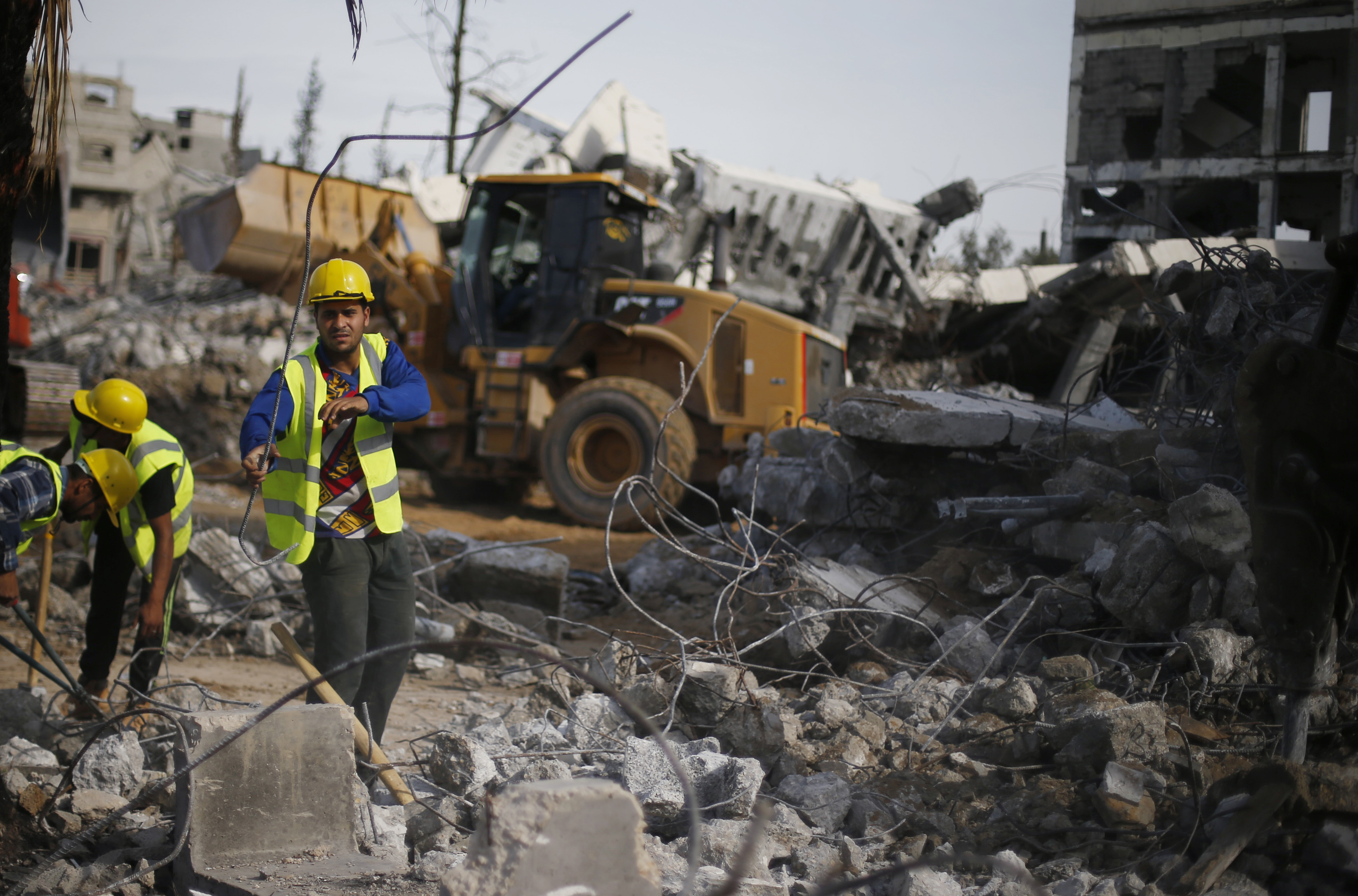
Jared Kushner has delivered a hardline ultimatum that effectively freezes the future of Gaza in a state of suspended animation. By conditioning any physical rebuilding on the total disarmament of Hamas, the U.S. envoy has transformed the desperate humanitarian necessity of housing and infrastructure into a high-stakes bargaining chip. For the residents currently navigating the ruins of a three-year conflict, this announcement confirms a grim reality: international capital will not flow until a specific security threshold is met, effectively holding the basic human right to shelter hostage to the progress of military negotiations.
The logic underpinning this stance is rooted in a familiar transactional framework. Washington and its partners argue that the international community cannot be expected to fund projects that risk immediate destruction, nor should they stabilize a territory that remains under the operational influence of armed factions. It is a cynical calculation of risk management that prioritizes investor security over the immediate survival of the displaced population. While the policy claims to seek a sustainable peace, it creates a structural bottleneck where reconstruction cannot even begin until the political and security landscape shifts entirely. Meanwhile, you can read related events here: China Liquidating United States Treasuries The Mechanics of Reserve Diversification Under Geopolitical Friction.
This rigid sequencing stands in stark contrast to the original roadmaps discussed at the onset of the ceasefire. Early diplomatic efforts prioritized synchronization, where phased disarmament would be met with corresponding steps toward recovery and withdrawal. That nuanced, albeit difficult, approach has been scrapped for a linear ultimatum. Under the current dictate, the removal of tunnels and the surrender of weapons are not merely goals of a peace process; they are absolute precursors to the first shovel hitting the ground.
Critics within the humanitarian sector observe that this approach ignores the reality of the ground-level vacuum. When aid is tied to the total dissolution of Hamas’s military infrastructure, the absence of progress in those talks paralyzes every other sector of life. Public health, power grid restoration, and the clearing of hazardous rubble are currently relegated to secondary status, waiting for a green light from military working groups that operate behind closed doors. This delay serves to erode whatever public trust remains, as the disconnect between architectural blueprints for a "New Gaza" and the sight of families in tent camps becomes increasingly jarring. To explore the full picture, check out the recent analysis by The Guardian.
The proposed vision for the territory involves modern industrial complexes, high-density residential developments, and designated tourism zones along the coast. These concepts suggest a future modeled on rapid urban development, a stark departure from the current environment of total decay. Yet, these projections face skepticism from regional analysts who question the feasibility of such plans under continued military occupation. If these neighborhoods are constructed, they must function within a zone where Israel maintains a mandate to intervene against any perceived imminent threat. This creates a functional contradiction: how can investors be encouraged to commit billions to a territory that remains a declared zone of military operation?
The answer, it seems, lies in the deployment of an American-backed administrative apparatus. By proposing that an international or regional board supervises the disarmament process, the current strategy attempts to bypass the inherent distrust between the local parties. The risk here is that such an entity becomes a target of legitimacy, effectively acting as an occupying force by proxy if it fails to deliver the promised stability. If the disarmament timeline of 60 to 90 days fails to produce the expected results, the alternative, as outlined by the current diplomatic mission, is an Israeli operation to finalize the security mandate.
The shift toward a "win-win" narrative, as championed by the U.S. envoy, relies on the assumption that Hamas will prioritize the economic future of Gaza over its own military viability. History in the region suggests that organizations operating in this vein rarely view these choices through a purely economic lens. By framing disarmament as the only path to survival for the territory, the policy may be inadvertently cementing a status quo that ensures the continued degradation of Gaza’s civilian life. The ultimatum does not simply pressure the militants; it applies a crushing weight to the entire population, forcing them to wait for a political resolution that has proven elusive for decades.
Security requirements often become the graveyard of infrastructure projects. When a reconstruction program demands perfect safety in an area characterized by deep-seated conflict, it guarantees that little to nothing will be achieved in the short term. The focus on high-rise residential towers and data centers reflects a desire to export a specific type of regional prosperity, yet it lacks a mechanism for handling the immediate trauma and displacement of the residents. Without a clear path to bridge the gap between today’s military stalemate and tomorrow’s potential investment, these plans remain little more than rhetoric intended to project resolve to external observers.
The focus now turns to the coming months. If the current working groups can successfully facilitate a transition of weapons control and governance, the landscape could theoretically shift. If the deadlocked negotiations continue to stall, the international community faces the prospect of long-term stagnation. For the people who must endure the next ninety days without the basic infrastructure of a functional society, the diplomatic theater serves as little comfort. The reconstruction of Gaza is being held in a ledger, waiting for a political balance that may never arrive. Every day of delay solidifies the decay, turning what could have been a recovery effort into a permanent test of endurance.