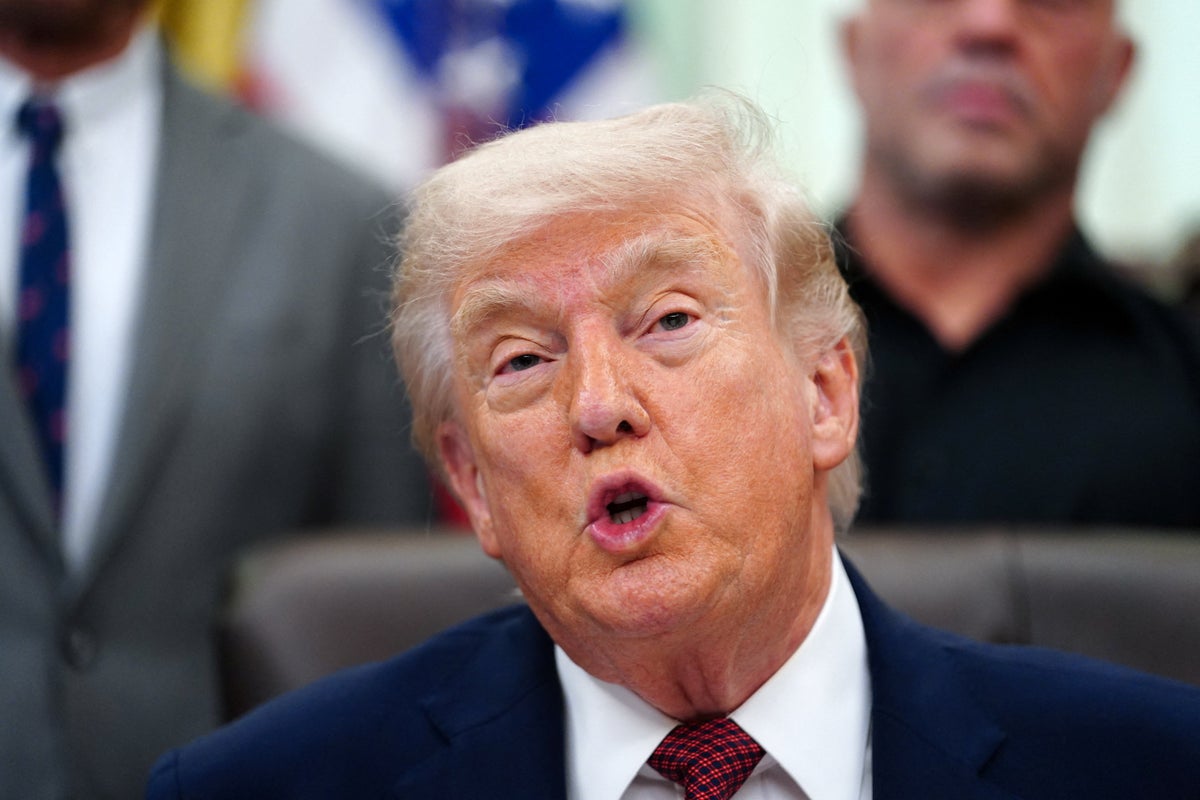
The headlines are obsessed with the drama of a President publicly rebuking his own Energy Secretary. It makes for great cable news theater. Trump says gas will be under $3.00. The Secretary says it won't. The media frames this as a "betrayal" or a "crack in the administration."
They are all asking the wrong question.
The debate isn't about political loyalty or who has the better "plan." The debate is whether anyone in Washington understands the difference between a press release and a drill bit. You can fire every cabinet member you have, but you cannot fire the laws of thermodynamics or the grueling reality of capital expenditure in the Permian Basin.
Believing that a simple executive order or a "tough" stance can force gasoline prices back to 2019 levels ignores the fact that the easy oil is gone. We are no longer in the era of "drill, baby, drill." We are in the era of "pay back the shareholders or go bust."
The Myth Of The Infinite Tap
Mainstream analysis treats the American oil supply like a kitchen faucet. You turn the handle, and the fluid flows. If the price is too high, you just haven't turned the handle far enough.
This is a fundamental misunderstanding of the shale revolution.
In the early 2010s, the industry operated on a "growth at all costs" model. Wall Street pumped billions into exploration and production (E&P) companies that burned through cash like it was kindling. They produced record amounts of oil, yes, but they destroyed billions in shareholder value to do it.
Today’s energy industry is scarred. I have sat in rooms with hedge fund managers who have made it clear: if an oil CEO starts chasing production volume over dividends and debt reduction, they will be liquidated.
The "lazy consensus" says that if the government gets out of the way, prices drop. Reality says that even if the government gives the industry a blank check, the cost of labor, specialized steel for piping, and the sand used in hydraulic fracturing has skyrocketed.
To get gas under $3.00 and keep it there, you don't just need more permits. You need to reverse five years of global inflation and convince a skeptical financial sector to start gambling on "junk" energy bonds again. Good luck.
The Energy Secretary Is Right For The Wrong Reasons
When a cabinet official says prices will stay above $3.00, they are looking at the math. When the President says they won't, he is looking at the optics.
The Secretary knows that the global oil market is a massive, interconnected machine. The U.S. produces more crude than any nation in history, yet we are still tied to the Brent benchmark. Why? Because our refineries on the Gulf Coast were built decades ago to process heavy, sour crude from overseas—not the light, sweet stuff coming out of West Texas.
We export what we produce and import what we need to actually make gasoline.
If you want $2.50 gas, you don't just need more wells. You need to rebuild the entire refining infrastructure of the United States. That takes a decade and hundreds of billions of dollars. No company is going to build a new refinery in a world where every politician is screaming about an EV transition.
The Secretary isn't being "disloyal." He’s being a realist. The President isn't being "wrong." He's being a salesman. But as any trader will tell you, the market eventually prices in the truth.
The Invisible Ceiling Of Service Costs
Let’s talk about the "dirty" side of the business that politicians ignore.
- Labor Shortages: The guys who operate the rigs aren't coming back just because of a tweet. They left during the 2020 crash for more stable jobs in construction or logistics. To get them back, you have to pay a premium.
- Rig Rates: The cost to rent a top-tier drilling rig has nearly doubled in some basins over the last few years.
- Depletion Rates: Shale wells aren't like traditional wells. They produce a lot at first, then drop off a cliff. To maintain the same level of production, you have to drill constantly just to stay in the same place. It's a treadmill.
If you force the price of gas down to $2.80 through sheer political pressure or by draining the Strategic Petroleum Reserve (SPR), you kill the incentive to drill. If you kill the incentive to drill, supply craters six months later. If supply craters, the price spikes to $5.00.
The "contrarian" truth is that moderately high gas prices are the only thing keeping the American energy industry alive. Sub-$3.00 gas is a death sentence for the very independence the administration claims to want.
The SPR Is Not A Magic Wand
Every time a President gets nervous about poll numbers, they look at the Strategic Petroleum Reserve. It is the ultimate "break glass in case of emergency" tool.
But using the SPR to manage daily pump prices is like using your 401(k) to pay for a Starbucks latte. It's a fundamental misuse of a national security asset.
When you dump millions of barrels into the market, you provide a temporary sugar high. You might shave 15 cents off the price for a few weeks. But you also signal to OPEC+ that you are desperate. They react by cutting their own production. They have more "spare capacity" than we do, and they can play the long game far better than a politician facing an election cycle.
The "People Also Ask" crowd wants to know: "When will gas be cheap again?"
The brutal answer? Never. "Cheap" is relative. The $2.00 gas of the mid-2010s was a historical anomaly fueled by a global supply glut and a desperate American industry willing to go bankrupt to gain market share. Those days are gone. The industry has matured. It is now disciplined, cold, and focused on profit margins.
The Geopolitical Reality Nobody Admits
We talk about "energy independence" as if we live on an island. We don't.
If there is a flare-up in the Middle East or a pipeline issue in Eastern Europe, the price at a station in Ohio goes up. It doesn't matter how much we drill in North Dakota. Oil is a fungible global commodity.
To truly decouple American gas prices from global volatility, you would have to nationalize the industry and ban all exports. That is the opposite of the free-market "deregulation" usually touted by the people promising cheap gas.
You cannot have it both ways. You cannot have a free-market energy boom and state-controlled low prices.
The Actionable Reality
If you are a business owner or a consumer waiting for $2.50 gas to "save" your margins, you are making a tactical error.
Stop betting on political promises. Start hedging for a world where $3.50 is the floor.
- Efficiency Over Volume: If your business relies on logistics, optimize your routes now. Don't wait for a "price drop" that isn't coming.
- Energy Diversity: The most "pro-American" thing a company can do is reduce its sensitivity to oil price swings. Whether that’s through electrification or natural gas conversions, do it.
- Ignore The Theater: When you see a President and a Secretary arguing, understand it’s a distraction from the fact that neither of them actually controls the price of a barrel of WTI.
The Secretary is being punished for telling a truth that doesn't fit a campaign slogan. The President is doubling down on a promise that the math doesn't support.
The market doesn't care about your feelings. It doesn't care about your slogans. And it certainly doesn't care about who is "under the bus."
Oil is a game of physics and capital. Currently, both are screaming that the era of cheap, easy energy is dead.
Stop looking at the bus and start looking at the balance sheets.