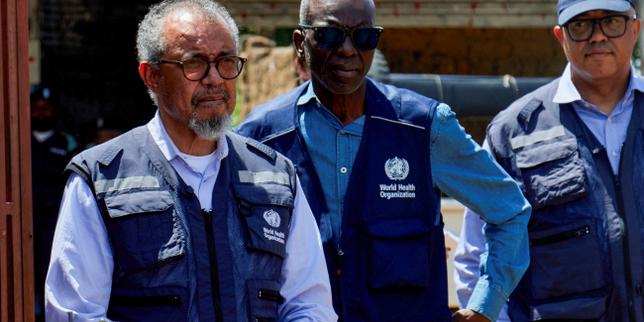
The World Health Organization and the Africa Centres for Disease Control and Prevention just announced a 518 million dollar joint strategic preparedness and response plan to combat the latest Ebola threat. The global health apparatus is clapping. The headlines are predictably laudatory. Everyone loves a massive price tag because it looks like action.
It isn't action. It is an expensive, bureaucratic safety blanket.
Throwing half a billion dollars at centralized international health bodies to "strengthen surveillance" and "coordinate logistics" is the lazy consensus of modern epidemiology. We have seen this movie during the 2014 West Africa disaster, the 2018 Kivu epidemic, and every flare-up since. I have watched international agencies burn through millions on business-class flights, hotel summits, and high-level coordination meetings while frontline community clinics run out of basic personal protective equipment and clean needles.
We are funding the wrong structures, asking the wrong questions, and guaranteed to repeat the same lethal mistakes.
The Half Billion Dollar Mirage
The core flaw of the WHO and Africa CDC plan lies in the assumption that top-down management stops a hemorrhagic virus. Ebola does not spread in abstract regional zones; it spreads in specific, mistrustful villages, overcrowded urban transport hubs, and under-resourced local triage rooms.
When a centralized agency receives hundreds of millions, the capital allocation follows a predictable, broken pattern:
- The Bureaucratic Skim: Up to 30% to 40% of international emergency funds regularly get swallowed by institutional overhead, security contractors, and expatriate salaries.
- The Tech Fetish: Millions are funneled into complex data-modeling software and satellite mapping tools that look spectacular in Geneva PowerPoint presentations but mean absolutely nothing to a community health worker with no cellular reception.
- The Command-and-Control Fallacy: Decisions are routed through layers of regional directors, choking the agility required to isolate a cluster within the critical 48-hour window of initial transmission.
Imagine a scenario where a local nurse detects an unexplained cluster of hemorrhagic fever. Under the current paradigm, that data must flow up to a district surveillance officer, then to a national ministry, then to an international coordinating body, which then approves the deployment of a specialized team. By the time the heavily branded SUVs roll into the village, three generations of viral transmission have already occurred, and the community has gone into hiding out of sheer terror.
Dismantling the PAA Fallacies
Look at the standard questions the public asks during these crises. The premises themselves are warped by decades of institutional public relations.
Does more international funding shorten an Ebola outbreak?
No. Historical data from the standard reference manuals of epidemiological interventions shows no linear correlation between the size of a centralized financial pledge and the speed of containment. The 2014 West Africa outbreak dragged on for two years despite billions in pledges because the initial, hyper-localized response was starved of autonomy and resources. Epidemics end when local transmission chains hit zero, not when a budget line is fully liquidated.
Why can't local health systems manage without the WHO?
They can, but international funding structures actively disincentivize autonomy. By making African health ministries dependent on emergency windfalls, global financial mechanisms prevent the unglamorous, permanent build-out of basic healthcare architecture. We pour hundreds of millions into temporary "Ebola Treatment Units" that get dismantled after the cameras leave, rather than funding permanent, piped water systems and living wages for local doctors in rural clinics year-round.
The Friction Problem: Trust Cannot Be Imported
The biggest line item in these massive plans is usually "Community Engagement." This is public health code for hiring expensive public relations firms to design posters and radio jingles telling skeptical populations to stop traditional burial practices.
It fails because trust is not a logistical commodity you can buy with a 518 million dollar check.
During the 2018–2020 outbreak in the Democratic Republic of Congo, international responders encountered deep, violent resistance. Why? Because to a population that has suffered decades of conflict, neglect, and systemic poverty, the sudden arrival of foreign vehicles, armed escorts, and people in white spacesuits spending millions only because of a virus looks profoundly suspicious.
If you want to stop Ebola, you do not build a new coordination center in Addis Ababa or Geneva. You fund the local pastor, the traditional birth attendant, and the village pharmacist who have lived in the community for thirty years. You give them the tools, the rapid tests, and the direct cash transfers to manage their own quarantine systems.
The True Cost of Counter-Intuitive Strategy
Shifting away from the mega-grant model has real downsides that nobody in the global health industrial complex wants to admit.
If we stop funding the massive, top-down response plans, we lose the ability to scale up massive, multi-country supply chains instantly. Localized funding is messy. It lacks clean auditing trails. It means accepting that some funds will be mismanaged at the municipal level. It requires giving up the illusion of centralized control.
But the alternative is what we have right now: a recurring cycle of panic and neglect, where elite institutions extract capital from donor governments, write a 200-page report, and leave the underlying vulnerabilities completely untouched until the next mutation jumps to a human host.
Stop celebrating the half-billion-dollar price tag. It is a monument to our inability to fix the foundational plumbing of global health. Dismantle the coordination committees. Fire the consultants. Send the capital directly to the clinics on the frontlines of the forest canopy, or step aside and get out of their way.