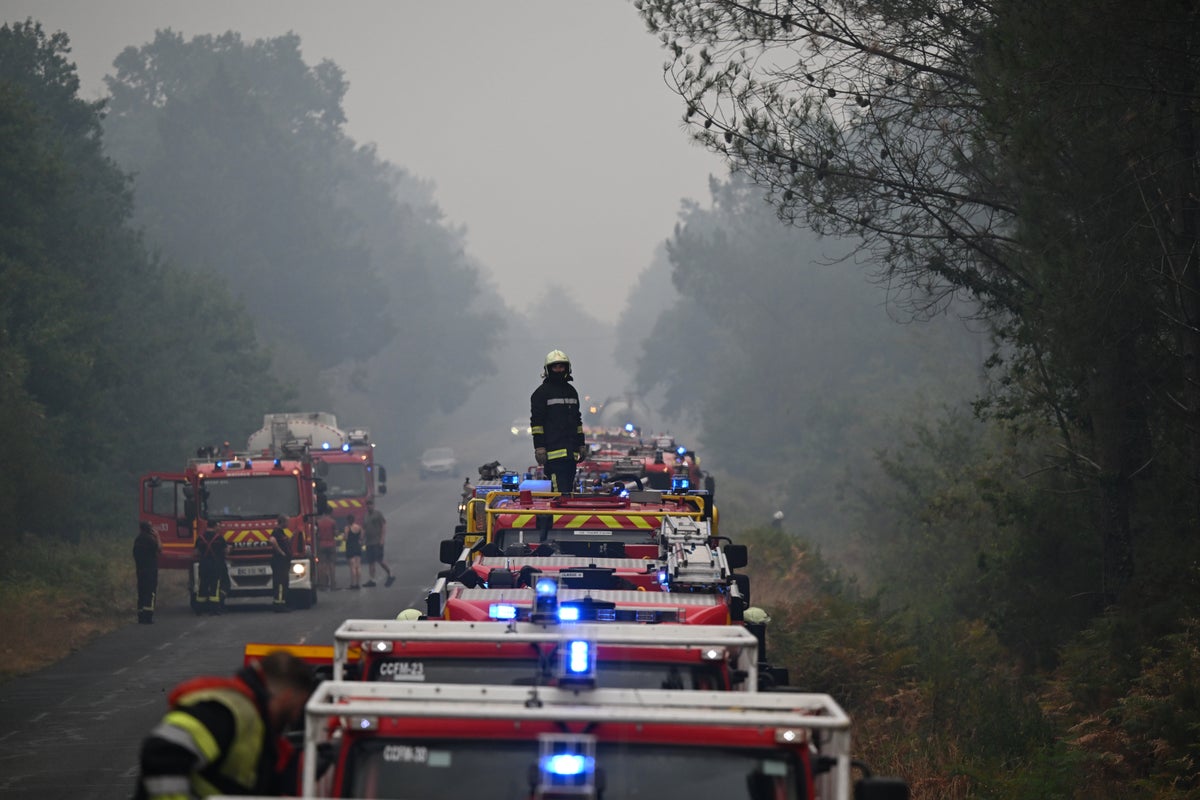
Flames don't care about borders. They don't care about budgets either.
When extreme heatwaves bake southern Europe, local fire crews often find themselves completely outmatched. That's why military transport aircraft are getting called into active duty against raging blazes. France isn't messing around anymore. You're seeing heavy transport aircraft drop thousands of gallons of water in areas traditionally reserved for ground teams and specialized air tankers.
It's loud. It's aggressive. And honestly, it's becoming the new normal.
The Reality Behind the Flames
Summer in southern France used to mean sun-drenched vineyards and relaxed tourism. Now? It means dry brush acting like tinderboxes. Climate shifts are turning ordinary woods into volatile zones.
When these fires spark, they move fast. Standard firefighting equipment struggles to keep up. Local authorities face massive containment walls of smoke and ash. You can't just send a standard truck up a burning hillside.
Military involvement changes the equation.
France has started integrating heavy-lift aircraft into its civil protection strategy. These planes aren't built for firefighting originally. Engineers modify them to carry massive internal bladders. They dump incredible volumes of water in seconds.
Why Traditional Firefighting Falls Short
Most people think a few helicopters can handle any forest fire. They can't.
When a blaze reaches high intensity, it creates its own weather patterns. Wind gusts push sparks miles ahead of the main line. Helicopters get grounded when the smoke gets too thick or the winds get too erratic.
Military planes operate differently. They fly higher, faster, and carry loads that dwarf traditional Canadair water-scoopers.
- Payload capacity: Military transports haul massive amounts of water or retardant in a single pass.
- Speed of deployment: They cover vast distances across regions in minutes.
- All-weather resilience: Advanced navigation gear lets them operate when visibility drops.
You have to look at the numbers. A standard air tanker might carry six tons of water. A modified military transport can drop upwards of twenty tons at once. That difference stops a fire from jumping a highway or a ridge.
The Logistics Problem Nobody Talks About
Flying a military cargo plane loaded with water over a blazing forest sounds simple. It's a logistical nightmare.
Air traffic control gets overwhelmed. Military pilots have to coordinate with local civilian firefighting aircraft sharing the exact same airspace. One miscommunication leads to a disaster.
Maintenance costs skyrocket too. Salt water or chemically treated retardant eats away at aircraft frames. The French military has to balance national defense readiness with domestic disaster response. Every hour a transport plane spends fighting fires is an hour it spends out of rotation for tactical transport duties.
Yet, leaders keep pulling the trigger on these deployments. Why? Because the alternative is losing entire towns to ash.
What This Means for Europe
France isn't an isolated case. Look across the Mediterranean. Greece, Spain, and Italy face the exact same nightmare every single summer.
The European Union has started pooling resources through the rescEU mechanism. Countries share firefighting fleets. But when everyone catches fire at the same time, sharing stops. Nations keep their gear at home.
That forces individual countries to militarize their emergency response.
You're watching the blurring line between national defense and civil protection. Militaries aren't just for foreign conflicts anymore. They protect domestic soil from ecological collapse.
If you live in a high-risk zone, your local emergency prep needs an upgrade. Communities are learning to build defensible space around homes. Firebreaks are getting wider. Governments are investing heavily in early-detection sensor networks powered by artificial intelligence to spot smoke before it turns into a monster.
Don't wait for an evacuation order to figure out your route. Keep emergency bags packed. Pay attention to local alerts.
The skies above Europe tell the story of a changing climate. Military planes dropping water on southern French forests aren't a temporary fix. They're the vanguard of modern survival.


