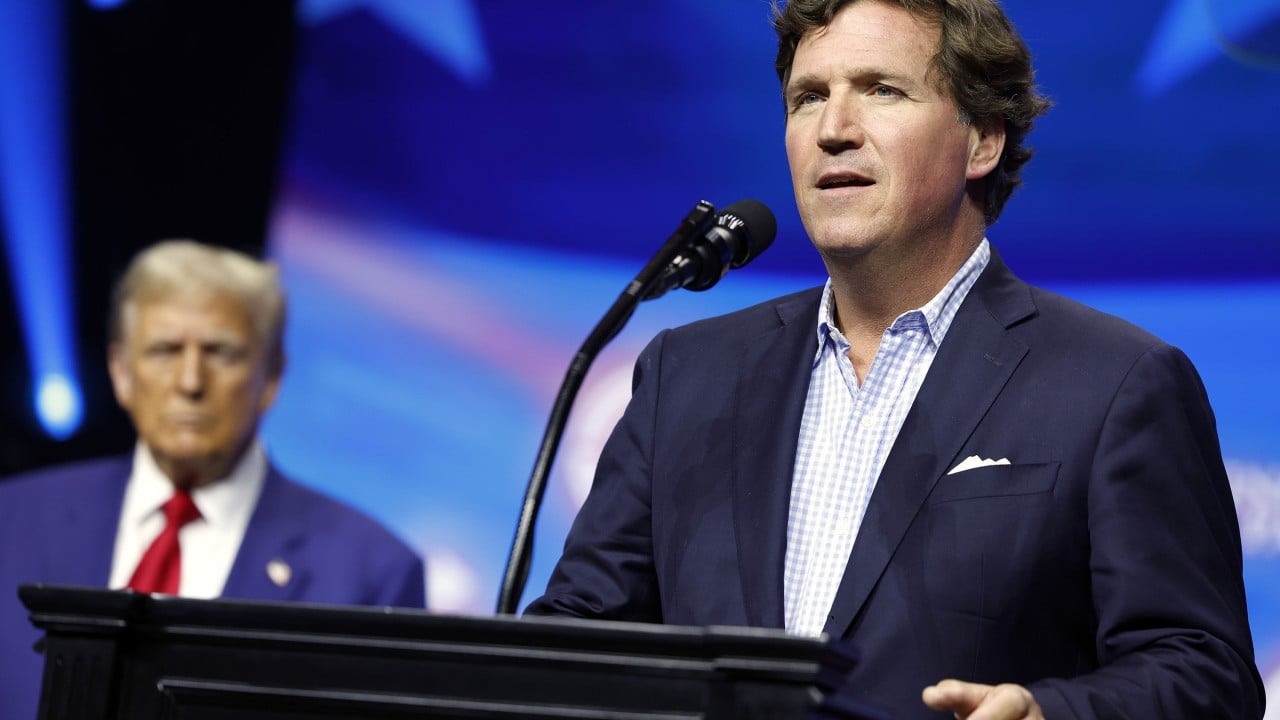
The American conservative movement is splitting along lines that traditional political theory struggles to explain. When Tucker Carlson separated from conventional Republican party orthodoxy, mainstream commentators treated it as a standard media personnel dispute. They missed the broader geopolitical calculation. Beijing did not. State-backed Chinese think tanks immediately began analyzing the schism, recognizing that a fragmented American right directly serves China’s long-term strategic goals. This is not a temporary disagreement over party leadership. It is a fundamental realignment of American conservatism, and foreign adversaries are positioning themselves to exploit the fallout.
The Illusion of a Unified Right
For decades, the Republican party operated under a reliable fusionist model. This coalition bound together corporate free-marketeers, social conservatives, and national defense hawks. That alliance is dead.
The primary driver of this collapse is a profound disagreement over America's role in the global economy and international conflicts. The old guard remains committed to global power projection and free-trade agreements. The populist faction views these exact policies as a betrayal of the American working class.
Chinese state analysts, particularly those at the China Institutes of Contemporary International Relations, look at this internal warfare with immense interest. Their assessment is clear. A conservative movement fighting itself cannot mount a coherent, sustained foreign policy against a rising superpower. While Washington politicians argue over domestic culture wars, Beijing is executing a multi-decade global infrastructure and economic strategy.
The Populist Shift Against Intervention
The most significant rupture appears in foreign policy. The populist wing of the right has increasingly adopted an isolationist stance that alarms traditional hawks.
- Defunding Foreign Aid: Massive resistance to overseas financial and military commitments.
- Skepticism of Alliances: Growing distrust of NATO and traditional European partners.
- Focus on Domestic Borders: The argument that resources spent abroad should be redirected to the southern US border.
This shift directly benefits Beijing's objectives regarding Taiwan and the South China Sea. If the United States retreats into isolationism, the global security architecture that has checked Chinese expansion since World War II dissolves. Chinese academics are not just passive observers of this trend. They publish detailed papers mapping which congressional districts are most susceptible to isolationist rhetoric, tracking how economic distress correlates with a desire to abandon global commitments.
The Strategy of Exploding Contradictions
Beijing's intelligence and academic apparatus operates on dialectical materialism. They look for existing contradictions within capitalist societies and seek ways to widen them. They did not create the rift in the American right. The economic stagnation of the American rust belt and the failures of the post-9/11 wars did that. However, Chinese state media and covert digital operations actively amplify the most divisive voices on both sides of the conservative divide.
Consider the mechanics of modern digital algorithms. A media ecosystem that rewards outrage naturally elevates the most extreme positions. When a prominent conservative figure questions the necessity of opposing authoritarian regimes, Chinese state media outlets quickly translate, repackage, and distribute those clips globally. The goal is to project an image of an America in terminal decline, unable to agree on its own identity, let alone lead the free world.
Institutional Paralysis as a Geopolitical Weapon
The practical consequence of this conservative civil war is the complete paralysis of the American legislative process.
Imagine a hypothetical scenario where a major cyberattack hits critical infrastructure in the Midwest. In a unified political environment, Congress would swiftly pass retaliatory measures and funding packages. In the current fractured environment, the populist wing would likely blame domestic intelligence agencies, while the establishment wing would demand conventional military deployment. The resulting gridlock ensures no effective response occurs.
This paralysis is precisely what foreign adversaries desire. When the United States cannot pass routine budgets or confirm military appointments without months of bitter infighting, its deterrent capability drops to near zero.
The Economic Repercussions of Nationalist Populism
The establishment right built its reputation on free markets, deregulation, and global capital mobility. The new populist right embraces tariffs, industrial policy, and state intervention to protect domestic industries. This economic nationalism creates a massive headache for American multinational corporations, which historically funded the Republican party.
These corporations now find themselves politically homeless. They face pressure from Democrats on social issues and hostility from populist Republicans on trade and globalization. This corporate vulnerability opens doors for Chinese economic leverage. As American companies lose their political protection in Washington, Beijing can offer them market access in exchange for technology transfers or favorable lobbying efforts, further complicating America's ability to present a united front on economic security.
The Long War for Global Influence
The fragmentation of the American right is not an isolated media event. It is a structural shift that changes how the United States interacts with the rest of the world. While American politicians focus on winning the next news cycle or primary challenge, foreign strategists are looking decades ahead.
The immediate task for anyone analyzing American political power is to look past the personalities driving the headlines. The real story is the steady erosion of the foundational consensus that allowed the United States to act as a global superpower. Every internal factional battle, every purged moderate, and every vitriolic debate over foreign aid weakens the Western alliance system. Beijing is watching, taking notes, and waiting for the moment when the American right becomes so consumed by its internal civil war that it forgets there is an entire world outside its borders to defend.