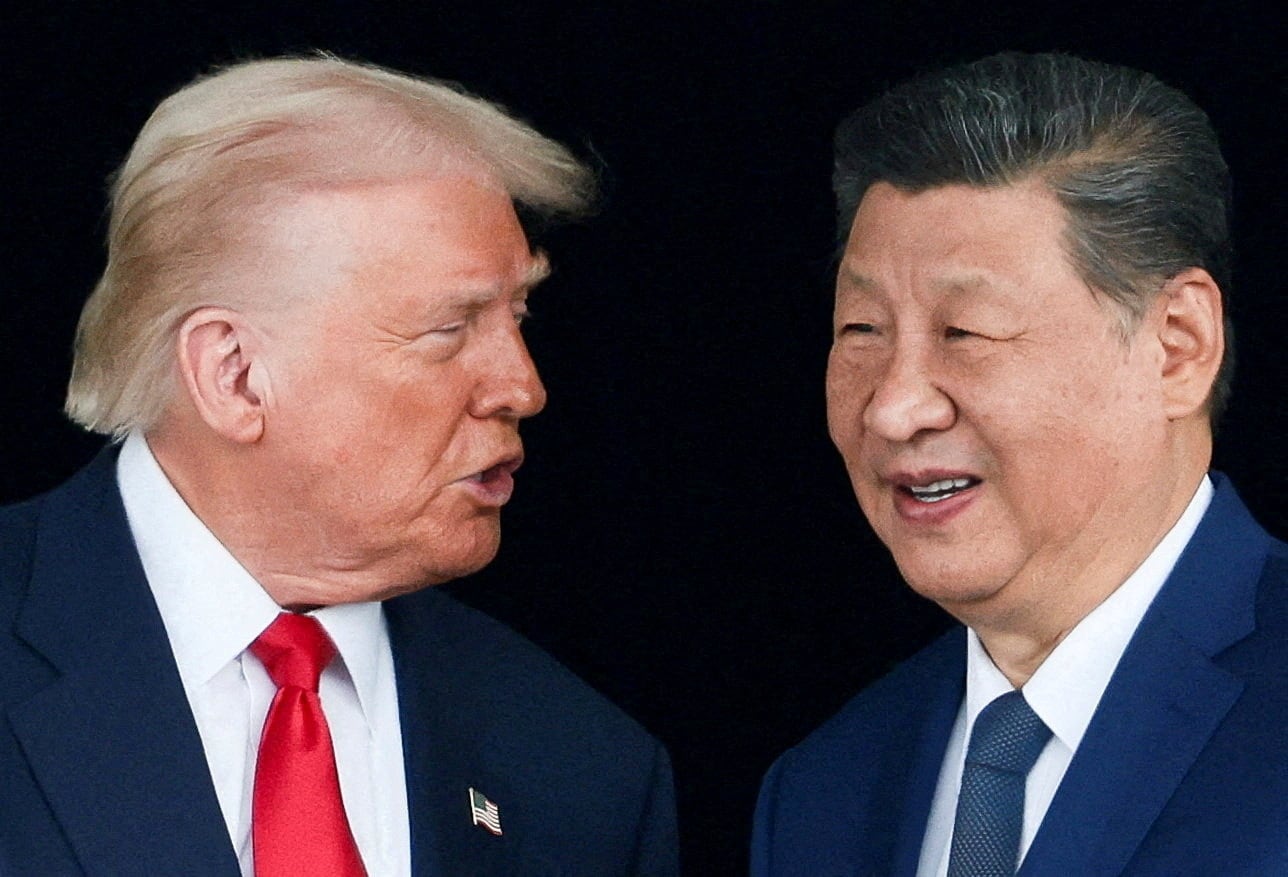
Donald Trump touched down in Beijing on Wednesday for a high-stakes state visit, his first in nearly a decade, seeking to salvage a fractured economic relationship that has defined his political identity. While the official itinerary is draped in the usual pageantry of the Temple of Heaven and the Great Hall of the People, the reality on the ground is a desperate scramble to prevent a total decoupling of the world’s two largest economies. The 2026 landscape is a far cry from the optimistic "quarter-trillion dollar" deals of 2017. Years of trade wars, tech blockades, and a bruising conflict in the Middle East have left both nations physically and economically exhausted.
The Mirage of the Art of the Deal
In 2017, the world watched as Xi Jinping hosted Trump inside the Forbidden City, an honor typically reserved for emperors. It was a masterclass in "honor diplomacy" designed to stroke the ego of a newcomer president. Trump left Beijing boasting of $250 billion in signed deals. Most of those, however, were non-binding memorandums that quietly evaporated as soon as the trade war began in earnest.
This time, the vanity has been replaced by a grim pragmatism. Trump isn't looking for photo ops with golden shovels; he needs tangible concessions to bring back to a restless American electorate. The core of the friction remains unchanged: American firms are fleeing China for Vietnam and India, while Chinese manufacturers are locked out of the U.S. semiconductor and AI markets. This visit isn't about "winning" a trade war anymore. It is about managing a managed decline.
The Silicon Iron Curtain
The primary engine of this visit is the tech sector. Accompanying the President is a heavy-hitting delegation featuring the CEOs of Nvidia and Apple, along with Elon Musk. Their presence signals that the real negotiation isn't happening in the diplomatic suites, but in the supply chain boardrooms.
China’s recent weaponization of rare earth minerals has brought U.S. high-tech manufacturing to its knees. By restricting exports of gallium and germanium, Beijing proved it can choke the production of everything from smartphones to F-35 fighter jets. Trump’s mission is to secure a "Rare Earth Truce"—a guarantee of supply in exchange for a loosening of U.S. export controls on high-end chips. It is a classic hostage swap, with the global economy hanging in the balance.
The Agriculture Factor
While tech dominates the headlines, the political survival of the Trump administration rests on the American farmer. In 2025, China essentially zeroed out its purchases of U.S. soybeans, shifting its business to Brazil and Russia. This decimated the American "Grain Belt." To win in 2026, Trump needs Xi to flip the switch back on.
- Sinopec and Energy: A proposed $40 billion deal for Alaskan LNG is back on the table.
- The Boeing Problem: China’s domestic C919 jet is finally gaining traction, threatening Boeing’s decade-long dominance in the region.
- The Fentanyl Pipeline: Cooperation on precursor chemicals is being used as a bargaining chip for tariff relief.
National Pride vs. Economic Gravity
The mood in Beijing has shifted from curiosity to a hardened nationalism. Since the 2017 visit, Xi has consolidated power to a degree not seen since Mao, while the U.S. has grappled with internal political volatility. Chinese state media is no longer framing this as a meeting of equals, but as a superpower receiving a leader from a declining empire.
There is a profound skepticism among the Chinese public. They have seen this movie before—the grand promises followed by the 2:00 AM tweet that upends months of negotiation. For Xi, the goal is simple: stability. China’s own economy is cooling, with real wage growth in major cities like Beijing dipping below 2%. Both leaders are currently governing from a position of domestic fragility, which makes them simultaneously more dangerous and more likely to strike a deal.
The Geopolitical Shadow
The ghost at the table is the ongoing war in Iran. This conflict has strained U.S. resources and delayed this very visit by months. Beijing has played a coy game, providing a diplomatic lifeline to Tehran while positioning itself as a "neutral" mediator. Trump wants China to lean on Iran to de-escalate; Xi wants the U.S. to stop its "freedom of navigation" drills in the South China Sea.
This is the ultimate trade-off. Is the U.S. willing to cede regional security influence in Asia to secure an economic lifeline? The answer likely lies in the private sessions held away from the cameras.
The traditional "State Visit Plus" format—a term coined by Chinese officials in 2017—is being tested to its breaking point. If Trump returns to Washington with nothing but more non-binding MoUs and vague promises of "mutual respect," the 2026 summit will be remembered as the moment the two nations finally admitted they could no longer coexist in the same economic system. The friction is no longer a bug in the relationship; it is the primary feature. Both men know that the first one to blink loses their domestic mandate, but staying the course leads toward a systemic collapse neither can afford.