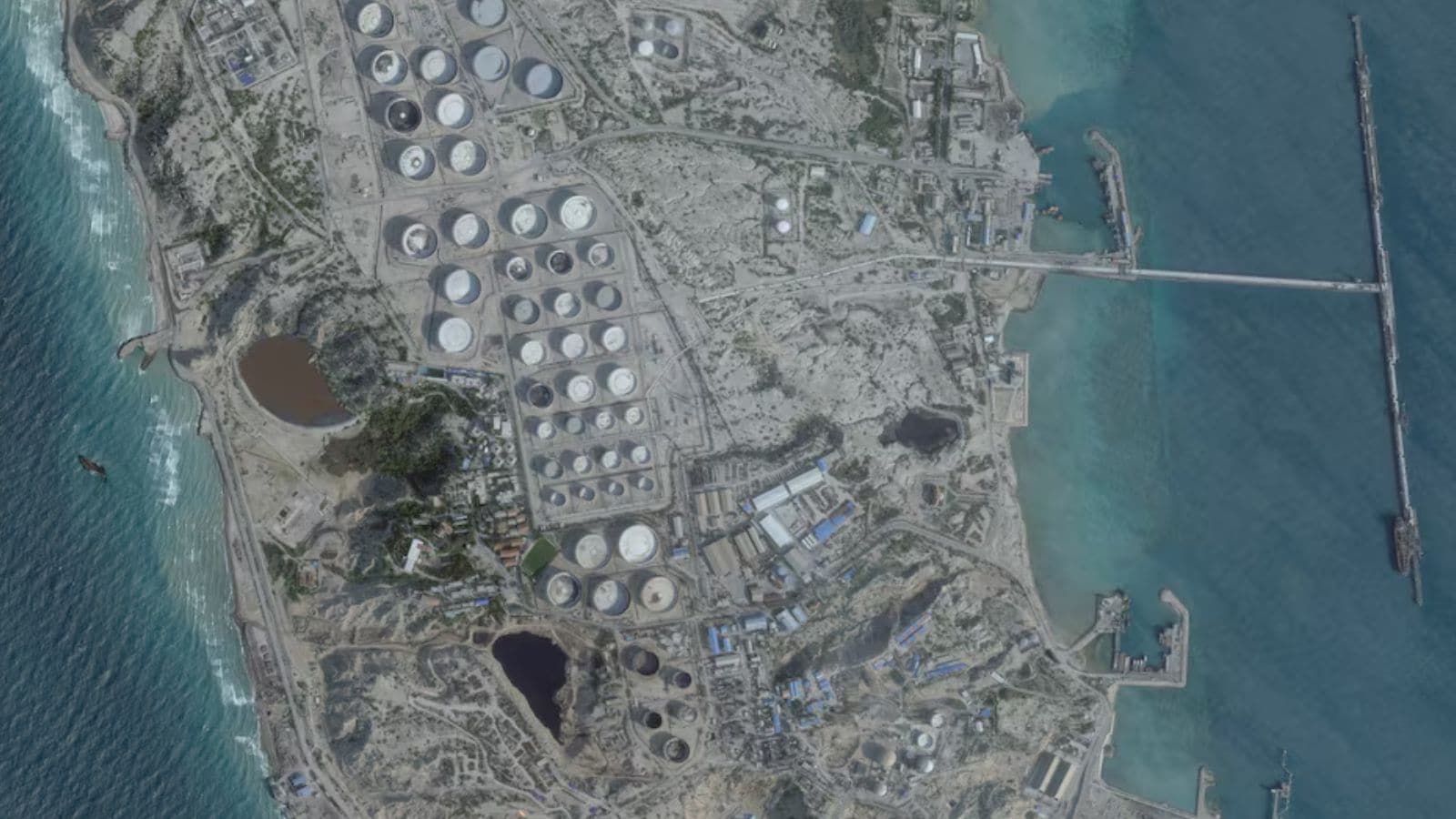
Four missiles tore through the morning sky six nautical miles off the coast of Kharg Island, slamming into a small Iranian oil tanker sitting quietly in the anchorage.
When Iran's semi-official Tasnim news agency broke the report, the immediate reaction across global trading desks was a collective intake of breath. This was not a skirmish in the open ocean or a minor interception of contraband in the Gulf of Oman. This was a direct, kinetic strike by United States forces right on the doorstep of Iran's primary oil export terminal. For a more detailed analysis into similar topics, we recommend: this related article.
Kharg Island is not just a geographic dot on a navigation chart. It is the jugular vein of the Iranian energy economy, handling roughly ninety percent of the country's crude exports. For months following the escalation of hostilities, a tense shadow war had settled over the Persian Gulf. Tehran restricted commercial traffic linked to Western nations through the Strait of Hormuz, while the United States Navy maintained an aggressive naval blockade choking off vessels moving to and from Iranian ports.
Then came the four projectiles. For broader context on this development, detailed reporting can also be found at BBC News.
According to initial reports from local sources on the ground, the targeted tanker sustained significant structural damage, though prompt evacuation protocols meant the crew escaped without casualties. Yet, focusing solely on the absence of human casualties misses the seismic strategic shift unfolding beneath the surface. Kharg Island has transitioned from a protected sanctuary of asymmetric deterrence into an active theater of direct kinetic engagement.
The Anatomy of the Gulf Chokepoint
To understand why a strike six miles off Kharg Island matters to someone sitting in New York, London, or Tokyo, you have to look at the cold mechanics of maritime energy transit. The Persian Gulf is narrow, unforgiving, and saturated with military hardware.
For decades, military planners operated under a shared assumption: attacking sovereign Iranian energy infrastructure directly on its home turf was a threshold few commanders were willing to cross due to the risk of an immediate, catastrophic regional conflagration. Iran's primary retaliatory threat has always been the closure or severe disruption of the Strait of Hormuz, through which a massive share of the world's daily petroleum consumption passes.
By targeting a tanker at the Kharg Island anchorage, that unspoken threshold has been visibly lowered. The calculus governing the Gulf has shifted from deterrence by threat of escalation to active sea-denial operations. Washington and its allies are no longer waiting for vessels to enter international shipping lanes to intercept them; they are actively denying Iran the ability to service its own fleet within sight of its own shores.
The mechanics of this blockade reveal a methodical tightening of the economic screws. Following previous strikes and retaliatory measures earlier in the year, commercial insurers effectively abandoned ships carrying Iranian crude, pushing Tehran to rely heavily on its own aging, shadow-fleet tankers to move oil to select buyers. Striking a vessel at the primary loading anchorage targets the very heart of that workaround. If tankers cannot safely load at Kharg Island without absorbing U.S. missiles, the remaining trickle of Iranian petroleum export revenue dries up entirely.
The Illusion of Containment
Military officials often speak of calibrated responses and proportional actions. Sitting in a command center hundreds of miles away, a missile strike on an empty anchorage looks like a controlled message. On the water, it is an invitation to chaos.
Iran's response to the erosion of its export capacity will not likely manifest as an immediate, all-out naval battle it cannot win. Instead, Tehran's doctrine has always favored asymmetric friction. Expect heightened risks for every commercial vessel transiting the broader region. Electronic jamming of GPS signals, aggressive shadowing by fast-attack craft, and renewed utilization of sea mines or aerial drones targeting regional energy infrastructure become much more probable outcomes when the core economic survival of the state is placed under direct military pressure.
Furthermore, the regional network of aligned militias is watching closely. When energy assets inside Iranian territorial waters are treated as legitimate targets, the definition of protected infrastructure across the entire Middle East evaporates. Refineries, desalination plants, and transit pipelines from the Persian Gulf to the Red Sea suddenly find themselves exposed to a higher baseline of retaliatory risk.
The narrative coming out of official state media in Tehran attempts to project calm, emphasizing that the crew evacuated safely and that investigations are underway. Do not mistake that bureaucratic composure for passivity. The economic architecture that kept Iran's budget afloat despite years of heavy sanctions is being systematically dismantled piece by piece, missile by missile.
The Long-Term Energy Reality
Markets have a strange way of absorbing shock until they suddenly break. In the immediate aftermath of the Kharg Island strike, energy prices flickered upward before stabilizing, lulled by the comforting refrain that no oil was actually spilling into the water and no lives were lost.
That complacency is dangerous. The physical security architecture of the Persian Gulf is deteriorating at an accelerated pace. Every time a missile strikes near a critical export hub, the margin for error shrinks. A stray projectile, a miscalculated warning shot, or an overzealous defensive maneuver can easily transform a localized interception into a wider regional shipping crisis.
The strike near Kharg Island proves that the invisible lines drawn in the Gulf are gone. What remains is a stark, high-stakes contest over who controls the flow of energy out of the world's most volatile waterway, with neither side willing to blink first.