The grass does not care about legacies. It is a simple, physical truth that athletes spend their entire lives trying to outrun. Under the blinding lights of a stadium, the pitch is just green blades and chalked boundaries, entirely indifferent to the fact that the two men stepping onto it have carried the emotional weight of a planet for nearly two decades.
We have spent twenty years arguing over numbers. We stacked Ballon d'Or trophies like bricks, compared goal-to-game ratios to the third decimal point, and debated the physics of a free kick versus the geometry of a dribble. But numbers are a shield. We used them so we would not have to face the terrifying reality that this eras-defining rivalry was always bound by a clock. Now, the battery is running low.
They are entering the winter of their careers, arriving at one final World Cup where their paths are mathematically destined to cross or permanently diverge. It is a tournament wrapped in the suffocating subtext of a final act. The stadium seats are filled with people who did not come just to watch a football match; they came to witness the slow, beautiful evaporation of their own youth.
The Weight of the Unworn Crown
To understand the pressure of this moment, you have to look past the sponsor logos and the flawless Instagram feeds. Look instead at the mechanics of a human body under siege by time.
A footballer in his late thirties experiences the game entirely differently than a twenty-year-old prodigy. The young prodigy runs on instinct and pure oxygen. The veteran runs on calculations. Every sprint is a withdrawal from a bank account that no longer accepts deposits. The joints ache a little longer after a tackle. The recovery takes days instead of hours.
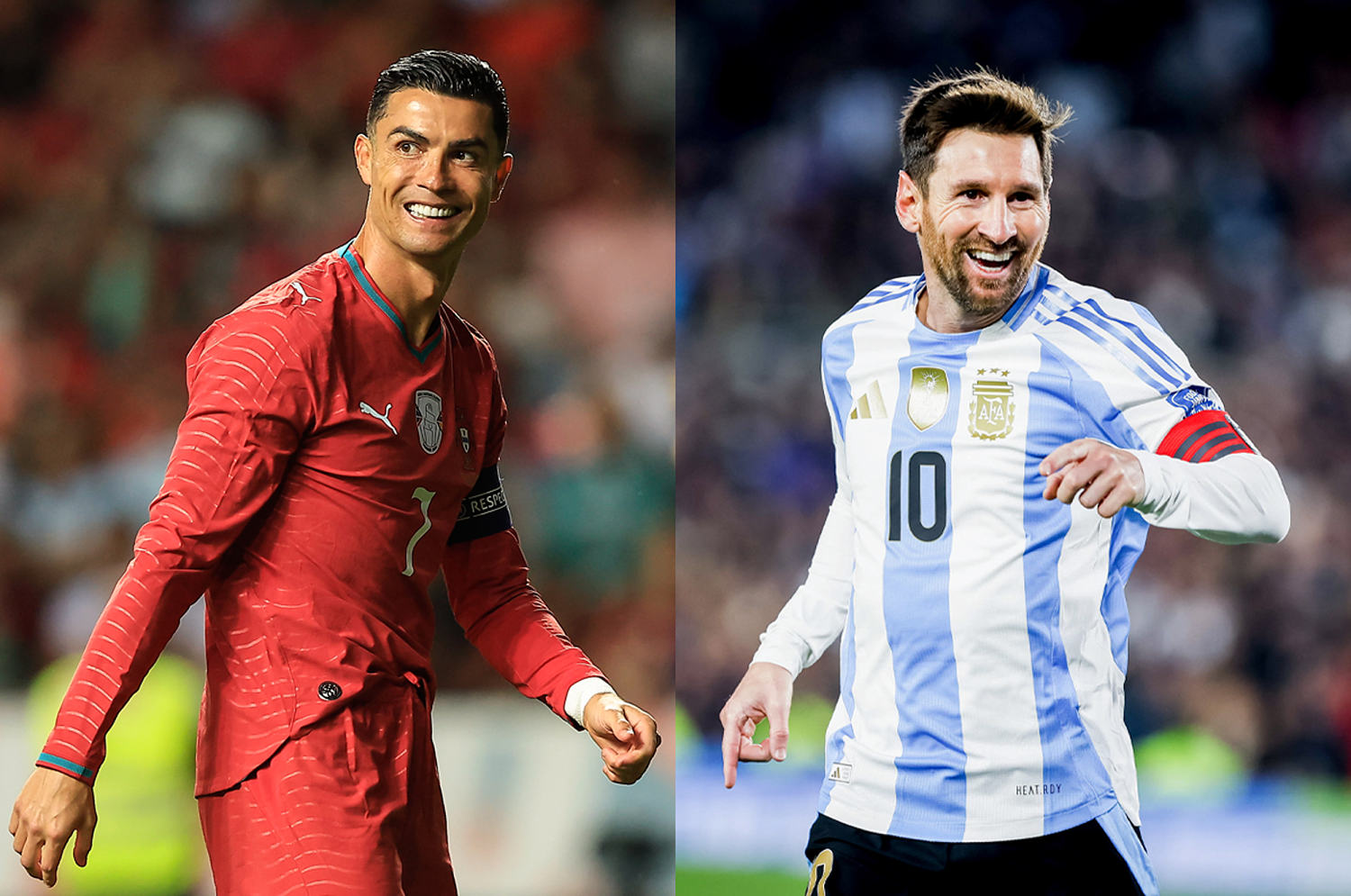
For Cristiano Ronaldo, the game has always been an intense, theatrical war against human limitation. He built his body into a machine designed to defy gravity, a testament to what happens when human will refuses to bend. But when the whistle blows now, you can see the micro-expressions of frustration when a pass falls two inches short of where his mind knew it should go. The determination is still absolute, but the vessel is human.
Across the technical area stands Lionel Messi. If Ronaldo is a monument to human will, Messi has always felt like a freak accident of nature—a man who moves as if the ball is an extension of his own biology. Yet, even he has had to adapt. The bursts of speed that used to leave four defenders tumbling like bowling pins have been rationed. He walks. He observes. He waits for the precise millisecond where the opponent’s defense creates a microscopic tear, and then he strikes. It is beautiful, but it is the beauty of a grandmaster playing chess because his lungs can no longer support a track meet.
The world wants a storybook ending. We crave the neatness of a Hollywood script where one of them lifts the golden trophy into the night sky, cementing an undisputed status as the greatest to ever live. But sports are rarely neat. The invisible stakes here are rooted in the terrifying possibility of failure. Imagine giving twenty years of flawless excellence, sacrificing everything, only to have your definitive legacy decided by a deflected ball or a referee’s split-second decision.
The Ghosts in the Stadium
There is a quiet cruelty to how we treat our icons. We demand that they remain frozen in the moments we fell in love with them.
Every time Ronaldo steps up to a penalty or Messi looks up at a wall of defenders, they are not just playing against the opposing team. They are playing against the ghosts of their younger selves. They are competing with the 2012 versions of who they were—prime, unstoppable, and seemingly immortal.
Consider the kid watching from a bedroom in Buenos Aires or a flat in Lisbon. To them, these men are not just athletes; they are the anchors of their childhood. When these two finally walk away from the international stage, a massive chunk of collective cultural memory goes with them. The existential dread surrounding this tournament isn't about who wins a plastic trophy. It is about the terrifying realization that an era is ending, and nothing is waiting in the wings to replace it.
The media tries to frame this as a bitter feud, a grudge match fueled by animosity. That is a lie manufactured for television ratings. The truth is far more poignant. They are the only two people on Earth who truly understand the isolating weight of their specific existence. They are two gravity wells that have kept each other in orbit. Without Messi, Ronaldo would not have pushed his body to these lengths. Without Ronaldo, Messi might have grown complacent in his genius. They are partners in an accidental dance, bound by a shared excellence that has alienated them from the rest of the sporting world.
The Choreography of the Last Dance
The tournament bracket is a cruel playwright. As the group stages blur into the knockout rounds, the mathematical probability of a direct confrontation begins to harden into reality. A semifinal. A final. The logistics do not matter as much as the emotional inevitability of it.
Every match they play leading up to that potential collision is a high-wire act. One bad night, one hamstring pull, or one inspired performance from an underdog nation, and the dream dissolves. The pressure is structural. It is felt in the hotel lobbies, the training grounds, and the heavy silence of the tunnel before kickoff.
When you watch them take the pitch this time, watch their hands. Watch how they adjust their captain’s armbands. It is a small gesture, but it looks heavy now. They are dragging their respective nations behind them, cultures that view football not as entertainment, but as a validation of national identity.
We often forget that underneath the wealth and the global fame, these are just two boys who started kicking a ball because it was the only thing that made sense to them. Now, that simple joy is buried under the expectations of billions. The game has become a trial.
The Light is Growing Short
There will be no warning when the end arrives. There will just be a final whistle, a sudden eruption of noise from the crowd, and the realization that it is over.
If they meet, the world will stop turning for ninety minutes. The streets will be empty. The screens will flicker in every corner of the globe. We will look for meaning in every pass, anointing a king and consoling a loser. We will try to write the final chapter of a book we never wanted to finish.
But if you look closely in those final moments, past the flashing cameras and the falling confetti, you will see the truth. You will see two aging men looking across the grass at each other, realizing that the long storm is finally over. The debate will continue in bars and internet forums for decades, completely detached from the human beings who actually bled for it.
The lights will eventually dim. The crews will pack up the cables. The fans will stream out into the cold night air, leaving the stadium dark and empty. And the grass, indifferent as always, will begin to grow back over the studs marks, erasing the footprints of giants as if they were never there at all.